

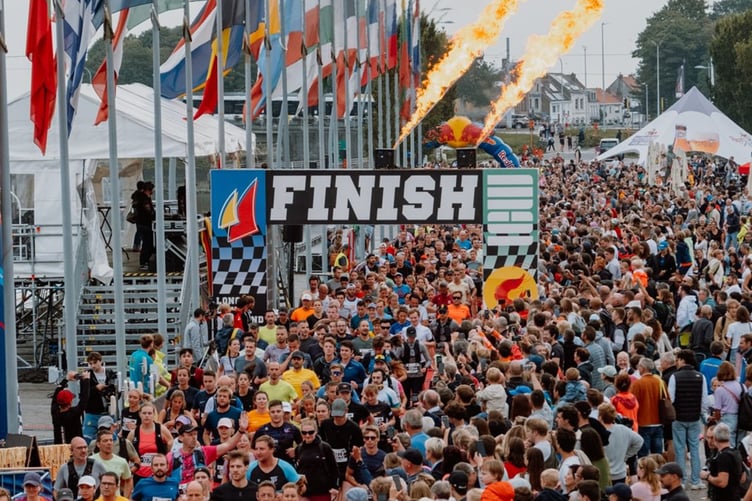
SINCE its launch in 2010 in Tenby, the Long Course Weekend’s popularity and global growth continues at pace.
From the outset, Tenby offered something special: a natural amphitheatre of coastline, a supportive local community, and an atmosphere that turned competition into celebration. Athletes swimming off North Beach, cycling through the surrounding countryside and running back into a town lined with cheering spectators created a formula that resonated far beyond Wales.
Today, that Tenby-born model continues to thrive — and its global footprint has just grown again. The Long Course Weekend has announced a new seven-year extension for its events in Belgium and the Netherlands, securing their futures through to 2033 and reinforcing their status as two of Europe’s leading endurance festivals.
The extension reflects not only the sporting success of these European events, but also their increasing role as drivers of tourism, economic activity and healthier lifestyles.

Across Belgium and the Netherlands, Long Course Weekend has rapidly become far more than a series of races. It is now a full-scale community celebration, where first-time participants compete alongside elite athletes, families line the streets in support, and entire towns embrace the occasion.
The Dutch event in Maastricht, for example, has already attracted close to 6,000 athletes in just its second year, delivering a major boost to local hotels, restaurants, cafés and retailers.
Crucially, the impact extends well beyond race weekend. Host locations are seeing growing demand for training camps, repeat visits and international exposure, turning the events into year-round tourism assets. Yet despite this global growth, the ethos remains the same as it was in Tenby — putting people, participation and community at the heart of the experience.
At the centre of the Long Course Weekend philosophy is accessibility. Unlike traditional endurance formats, participants can choose to compete in individual swim, bike or run events, or combine them into the full Long Course challenge. This flexible approach opens the door to people of all ages, abilities and ambitions, making the sport more inclusive and less intimidating.
The new long-term agreements will also bring increased investment in community-focused initiatives. Programmes supporting youth participation, women in sport, active ageing, swimming confidence and grassroots access are set to play a major role in the next phase of development. The aim is clear: to ensure that every event leaves a lasting positive legacy.
Founder and CEO Matthew Evans said the concept has always been about more than finishing times. For him, the vision first realised in Tenby remains the guiding principle. The goal was to create something that made people feel they belonged — an environment where a first-time 5k runner receives the same recognition as an athlete completing the full endurance challenge.
That spirit, he says, has been embraced wholeheartedly in Belgium and the Netherlands, where local communities have adopted the events as part of their identity. Race director Matthias Lievens echoed that view, highlighting the unique atmosphere created when entire towns come together, businesses feel the immediate benefits, and competitors leave with a sense of connection far beyond sport.
As Long Course Weekend continues its international expansion, its success still traces back to Tenby where it all started. The finish lines may now stretch across Europe and beyond, but the heartbeat of the event remains the same: community, inclusion, and unforgettable shared experiences.
Comments
We've recently changed our login process. If you have an account for commenting, you will need to re-register on the login window.
This article has no comments yet. Be the first to leave a comment.