
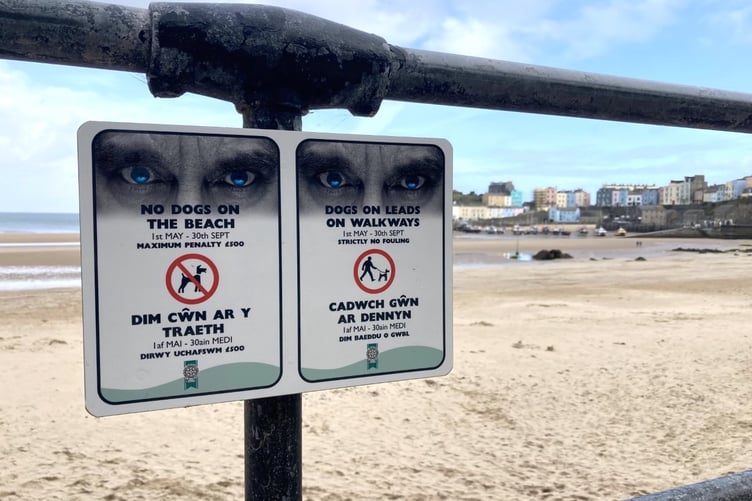
Could what some call ‘dranconian’ restrictions on dogs across some of Pembrokeshire’s beaches finally be scrapped in 2027, after the County Council admitted once again that it is not enforcing the restrictions.
The local authority’s bye-laws prohibiting dogs from areas of certain beaches across the county exists primarily to protect the interests of bathers during the summer season, with the restrictions in force between May 1 until September 30., which amounts to a whopping whole five months or the year!
However, with the county presenting itself as ‘Dog Friendly Pembrokeshire’ in recent years, many believe it’s time that coastal communities such as Tenby and Saundersfoot adopt a similar approach as other seaside resorts across the UK, such as Cornwall that only has restrictions between 10am and 6pm.
Also, factor in the fact that Pembrokeshire County Council who are responsible for most of the area’s public beaches, have fully admitted again this year that the restrictions aren’t being enforced.
The Council said this summer that it was continuing to operate a “warn and inform” approach to tackling to dog restrictions on beaches.
Towards the end of the summer school holidays, across Pembrokeshire, the county council stated that officers had recorded 721 interactions concerning the restrictions during 2026, with almost two-thirds of those taking place in Tenby.
However, they also confirmed that not one single fixed-penalty notice had been issued.
Heading into this summer, Cllr Rhys Jordan (who represents the wards of New Hedges and St Florence on the Local Authority), and had previously said he felt that “blanket bans” on some of the county’s beaches were “overly punitive on dog owners” - once again questioned the Council’s stance surrounding dogs on beaches bylaws.
PCC’s Cabinet Member for Residents Services Cllr Rhys Sinnett said the authority “remains satisfied the current restrictions continue to operate lawfully and doesn’t consider there to be grounds to suspend enforcement relating to these restrictions”.
He said, however, that the council would be reviewing enforcement implementation and wider authorisations as part of ongoing work relating to antisocial behaviour and public protection matters.

.jpeg?width=209&height=140&crop=209:145,smart&quality=75)


In a series of supplementary questions, Cllr Jordan asked: “If a member of the public ignores dog beach restrictions today, what statutory enforcement will Pembrokeshire County Council take?”
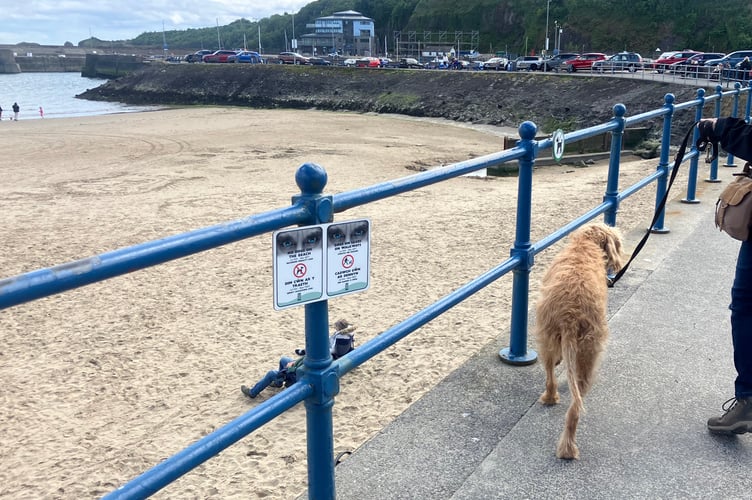
Cllr Sinnett said the council was continuing a “warn and inform” approach as it had since the cessation of the WISE [Waste Investigations Support & Enforcementcontract], adding: “Officers provide advice, guidance and warnings as a primary approach.
“For known or persistent offenders the authority retains the ability to utilise statutory measures such as community protection warnings or community protection notices.
“While breaches of a bylaw may result in a financial penalty it’s important to note this is not automatic and any decision will be proportionate and evidence-based.
“No Fixed Penalty Notices are being issued this season,” he stated.
Back before the summer beach ban began in 2025 WISE enforcement officers had been instructed by Pembrokeshire Council to ‘engage’ with offenders, rather than issue on the spot fines, after a wealth of criticism was aimed at them for being ‘heavy-handed’ and ‘overzealous’ in dealing with members of the public.
One visitor caught out that summer on Tenby’s South Beach, wrote to the Observer at the time to voice their disgruntlement at what they described as a ‘brutal beach’ ban.
“Dog friendly Pembrokeshire?? Unfortunately, we were fined £75 for straying into an area that prohibits dogs,” they stated.
“I will of course pay my fine given to me by a smug enforcement officer but after holidaying in Tenby for over 55 years myself and my family will never return again!”
County councillor for Saundersfoot’s south ward, Cllr Chris Williams has hinted that indeed there could be alterations to the restrictions on the way next year.
Saundersfoot’s main beach has a full ban, howvere, Glen Beach welcomes dogs all year round with no seasonal restrictions.
There is also a voluntary dog restriction on the beach at Coppet Hall between 10am and 6pm.
Cllr Williams remarked: “Since May, I don’t think a single week has gone by without me having conversations with residents about dogs on our beaches. What particularly disappoints me is the small minority of dog owners who walk past clearly displayed signs and knowingly take their dogs onto restricted beaches, seemingly believing that little or nothing will be done.”
“The restrictions are there for a reason and they should be respected. What is even more frustrating is the increase in the number of dogs being taken onto our beaches and, in some cases, owners then failing to pick up after them. Leaving dog waste on the beach is simply unacceptable.

“Equally concerning is the practice of leaving filled dog-poo bags in piles on the cut through half way down the Strand, which quickly escalates into larger amounts of waste and creates an even greater problem. I own a dog myself and I respect the current byelaws.
“Wherever I walk my dog I carry the bag with me until I can dispose of it properly. It really isn’t difficult, and responsible dog owners should not be made to feel that they are somehow responsible for the actions of others.“
Cllr Williams said that he recently spoke to a visitor who had her dog with her and was carrying around 20 individual dog-waste bags!
“She actually told me that she was embarrassed by the behaviour of some other dog owners because their actions were giving responsible owners a bad name. I think that says a great deal,” he continued.
“The resentment I hear most often is actually from dog owners themselves, who are incredibly frustrated that a small minority are damaging the reputation of the vast majority who follow the rules and dispose of their waste responsibly.
“It is always the minority who spoil things for everyone else, and I think we need to be honest about that.”
Cllr Williams also shared the following update from Pembrokeshire Council officers: “PCC officers are reviewing the existing arrangements and considering what options may be available for future seasons across Pembrokeshire.
“However, any changes to the current restrictions or byelaws would need to follow the appropriate legal process and where necessary, be approved by Full Council.
“Officers are also considering whether byelaws remain the most appropriate approach or whether alternative legal measures could provide a more practical and effective solution across Pembrokeshire.
“There are a number of questions that need to be properly considered before any changes are proposed, including whether any time restrictions should apply to an entire beach or particular areas, whether such an approach would genuinely address concerns around cleanliness, public enjoyment and water quality, and when the majority of problems actually occur.
“There also needs to be clear and consistent communication so that residents and visitors understand exactly what the rules are. Enforcement is clearly one of the biggest issues. While the majority of dog owners act responsibly, there is a growing perception that some individuals knowingly disregard the restrictions because they believe there is little chance of enforcement action.
“Unfortunately, PCC has limited resources following years of financial pressures. At present, the Council is relying largely on beach lifeguards to provide advice during their operational hours, alongside the Beaches Officer, who is one individual covering the whole Pembrokeshire coastline. That clearly creates challenges when it comes to consistent enforcement across the county.
“Many residents will remember that when external enforcement contractors were previously used, there appeared to be fewer reported problems with dogs on restricted beaches. However, there were also concerns about the way that enforcement was carried out.

“Any future approach therefore needs to strike the right balance between effective enforcement and maintaining positive relationships with residents, visitors and responsible dog owners. There is also a cost associated with enforcement, and that ultimately has to come from public resources.”
Cllr Williams said that he doesn’t believe enforcement should be viewed primarily as a revenue-generating exercise, and that the priority should be protecting our beaches, ensuring people can enjoy them and making sure the rules are fair and respected.
He continued: “There is a much wider question about whether communities want to retain beach restrictions at all and, if so, what form those restrictions should take. This also links to recognised beach awards and environmental accreditations, which many communities value because they provide reassurance about environmental standards, cleanliness and the quality of our beaches.
“I believe there is a real need to listen to everyone before decisions are made. Residents, businesses, visitors and, importantly, responsible dog owners all deserve an opportunity to have their views heard.
“A small minority should not dictate the future arrangements for everyone else, but equally we need a system that is realistic, enforceable and works for our community.
“It is clear that the current PCC system isn’t working. However, I know that officers have confirmed that they are currently gathering information and exploring the available options.
“At this stage, no decision has been made about when this will formally come before the Services Overview and Scrutiny Committee.
“In the meantime, I would simply ask all dog owners to be considerate, and please pick up after them and take the waste home or dispose of it responsibly.
“Our beaches belong to everyone, and we all have a responsibility to look after them,” he added.
RSPCA Cymru recently called on local authorities across Wales to offer dog owners “greater flexibility” when it comes to walking their dogs on and around beaches.
The organisation’s call comes amid consultations held by two councils which could see tighter restrictions for dogs on, and adjacent to, beaches in two parts of Wales, where dogs and their owners could be impacted by the proposed additional restrictions.
Neath Port Talbot Council consulted over the summer on proposals to renew a current Public Spaces Protection Order (PSPO) which would extend the requirement for dogs to be excluded from large parts of Aberavon Beach from 1 May to 30 September to 2030.
The council also asked the public for their views on dogs being kept on leads on Aberavon Promenade throughout the year.
Meanwhile, a similar consultation also got underway in Conwy, which would resurrect previous plans to prohibit dogs from a large part of Rhos on Sea beach - making it a permanent dog exclusion zone.
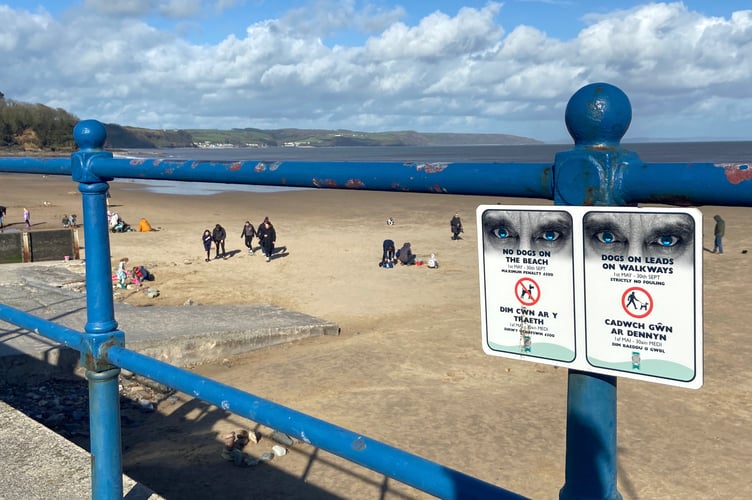
RSPCA Cymru joined local dog owners and Members of the Senedd in raising concerns about such proposals in 2023, with the backlash against the plans leading to them being shelved by the local authority at the time. But the animal welfare charity is “disappointed” they have now returned.
Senior Public Affairs Manager Billie-Jade Thomas said: “Dog restrictions are an emotive issue in communities across Wales, so it is important that the views of everyone - including local dog owners and welfare experts - are heard loud and clear.
“We would always urge any council to closely consider whether a PSPO is always needed to achieve their aims of protecting human health.
“Local authorities should instead offer greater flexibility when it comes to allowing dogs on and around beaches, especially in terms of blanket exclusions and year-round measures. Such measures risks punishing responsible dog owners for the actions of the less responsible, while potentially creating less spaces for dogs to exercise and express their natural behaviours within our local communities.
“Responsible dog owners need to walk their dogs all year round - and we'll keep working with local authorities across Wales to help find more positive ways forward. This could include allowing dogs on leads on beaches during busy months and the prioritisation of seasonal measures as opposed to year-round blanket bans.
“The animal welfare charity routinely responds to consultations regarding PSPOs which provide local authorities with a means of tackling dog fouling and other dog-related issues, such as access to public spaces,” they added.
The RSPCA has recently co-launched a new resource for dog owners to advise them on how to be a responsible dog owner, which can also be promoted by decision makers such as local authorities.
The new Dog Ownership Guide (DOG) can be found online.
Comments
We've recently changed our login process. If you have an account for commenting, you will need to re-register on the login window.
This article has no comments yet. Be the first to leave a comment.