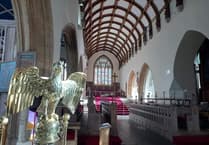
Last Friday evening the subject of the talk was 'An Introduction to Stained Glass', given by Neil Croucher, a young artist fast becoming a very successful stained glass producer with a studio in Carmarthen. His illustrated talk began with explaining that glass is made of three main components, silica, soda and potash, with metal oxides added to give colour. Glass has its origins in Ancient Egypt. A glass crucible dating back to 1250 BC has been found in Egypt. On of the first uses of stained glass was by the ecclesiastical authorities in churches and cathedrals. Bible stories could be illustrated in coloured glass and the result created an atmosphere of wonder and mystery. Later, leaded glass began to be used in town house windows; decorated glass in large houses was a sign of superior status and wealth. In the 19th century, during the Industrial Revolution, glass became mass produced, the Crystal Palace being a fine example. The Victorians were prolific users of stained glass in churches, public buildings and in private houses. During this period, many names emerged; Charles Rennie McIntosh, Frank Lloyd Wright, both architects, used stained glass to great effect, as did L. C. Tiffany, who designed over 300 windows as well as lamps made from small pieces of coloured glass all cut by hand. The use of stained glass fell into decline just before the Second World War, but in the 1950s, a recovery period began, especially in Europe, where a number of large cathedrals had been bombed. New designers emerged, mainly from Germany. In this country, John Piper was influenced by the German designers when working on the new Coventry Cathedral, Patrick Reyntiens in his work on Ampleforth Abbey. The speaker spoke in detail about the four methods for making stained glass, which are appliqué, leading, foiling and fusing. Most artistic glass is acid etched, sand blasted or moulded. Neil Croucher's own work includes restoration, clear leaded glazing, producing new designs, Tiffany style lamps, mirrors, gifts and jewellery. He also teaches. He showed many examples of his own remarkable work, each piece displaying the talent and imagination of a very gifted artist. Finally, Neil Croucher answered questions from members of an appreciative audience who had enjoyed a fascinating evening. There is no meeting this Friday. On November 24, the photographer, David Wilson, will be showing 'West Wales in Black and White'. It is highly recommended. Non-members are welcome at £2 per person.