

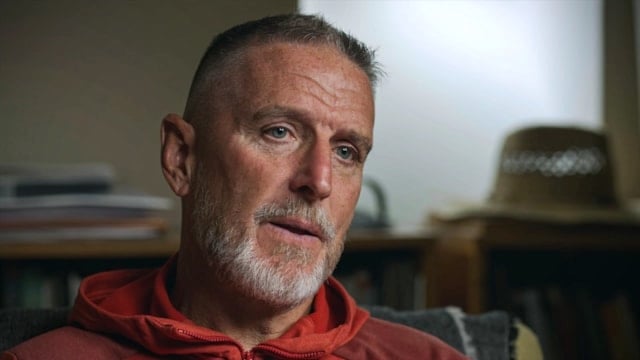
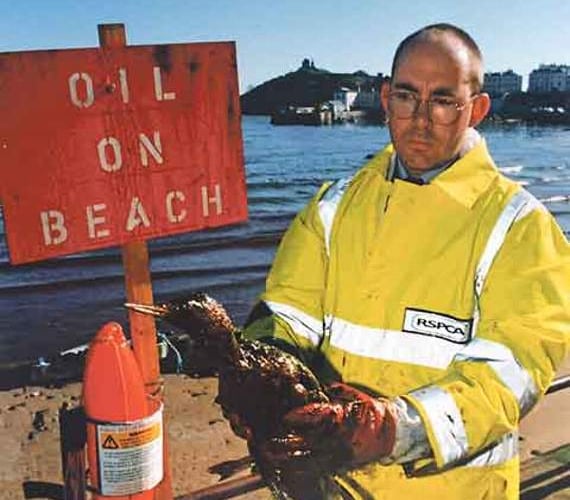
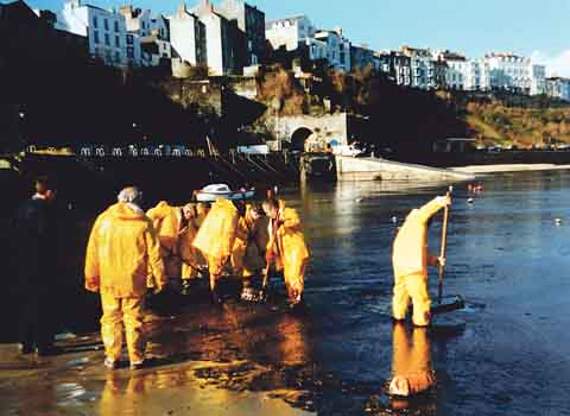
Wildlife presenter Iolo Williams has said the Sea Empress disaster in Pembrokeshire was the “worst event” he’s ever witnessed - as a new documentary to mark 30 years since what was at the time one of the largest oil spills in the world, looks back at that fateful day on February 16, 1996.
The ‘Springwatch’ and ‘Iolo: Natur Bregus Cymru’ host’s comments come in a new S4C documentary - Dŵr Du: Trychineb y Sea Empress (Black Water: The Sea Empress Disaster) which will be broadcast on Tuesday, February 3 at 9pm on S4C.
It will be available to watch on S4C Clic and BBC iPlayer, with Welsh and English subtitles.
The Sea Empress was an oil tanker that got into difficulty near the port of Milford Haven, Pembrokeshire, in 1996.

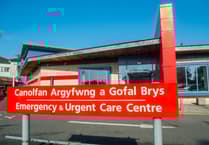
At the time, Milford Haven was one of the world’s most important ports and the second biggest of its kind in Europe.
After the Sea Empress collided with underwater rocks, 72,000 tonnes of oil spilled into the sea – the equivalent of 32 Olympic-sized swimming pools.
Most people living in the area at the time will remember what they were doing on that fateful day in February 1996, when the news first broke, and shockwaves were sent through communities across the county.
To give an idea of scale, at the time it was Britain's 3rd largest oil spill and the 12th largest in the world, taking place within one of Europe's most important and sensitive wildlife and marine conservation areas.
Iolo Williams worked for the RSPB at the time of the Sea Empress disaster.
He remarked: “When I first heard the news, I thought is it true? I went down to Pembrokeshire the following morning. I put the radio on in the car as I drove down. It was on everywhere, every channel, Radio Cymru, Radio Wales, Radio 1, Radio 2, Radio 4, everything talking about this.
“No one knew exactly how big this disaster was going to be at the time.”
The eyes of the world were on Milford Haven in the aftermath of the disaster, with journalists from right across the world descending on St Ann’s Head.
“I was sleeping in the car because there was no hotel, there was no B&B or anything like that, they were full of press,” Iolo continued.
After three weeks in Milford Haven, the Sea Empress was moved to Belfast to be fixed.
But 30 years after the disaster, Iolo believes it’s important that what happened on the Pembrokeshire coast isn’t forgotten.
“For centuries we’ve used the sea like a dumping ground. I love Pembrokeshire, it’s one of the most beautiful areas in Wales without a doubt, but I’ll never look at Pembrokeshire in quite the same way again,” Iolo added.
“30 years later, it’s important that we all remember and re-tell the story of the Sea Empress, so that we never forget what happened to our wildlife, that we never forget why it happened.
“I’ll always say that if there is a disaster, if you have a difficult period in your life, if you can go through that and learn something, at least something good will have come out of the bad.”
Comments
This article has no comments yet. Be the first to leave a comment.