
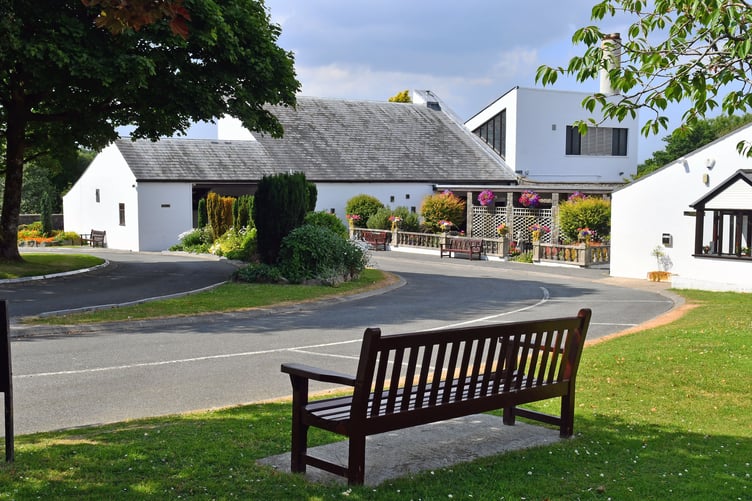
Charities associated with end-of-life care and bereavement could benefit from a share of up to £10,000 a year generated from metals left after cremations at Pembrokeshire’s Parc Gwyn Crematorium.
At the September meeting of Pembrokeshire County Council’s Cabinet members were asked to approve an approach for the distribution of funds generated through the recycling of metals recovered following cremation at Parc Gwyn, near Narberth.
A report for members presented by Cabinet Member for Residents’ services Cllr Rhys Sinnett said: “Following cremation, small quantities of metal may remain, which are carefully recovered as part of the post-cremation process. These materials commonly include orthopaedic implants, artificial joints, surgical pins and other specialist medical metalwork.
“At Parc Gwyn, families are provided with the opportunity to determine how such materials should be managed. Where requested, recovered metals may be returned to the family. Alternatively, permission may be given for those materials to be recycled with proceeds distributed to bereavement-related charities which serve the locality.
“Whilst the quantities of metal recovered from individual cremations are generally small, collectively they generate a valuable charitable fund. The funds arise from decisions made by bereaved families, and it is therefore appropriate that they are used to support charitable causes which reflect the nature and purpose of bereavement services.
“Whilst there is broad agreement amongst members and officers that such funds should be distributed to charities connected with terminal illness, end-of-life care, death and bereavement, there is currently no formally agreed approach governing how recipient charities should be identified and selected.”
It said it is anticipated that approximately £10,000 will be available for distribution annually, and the council will not to retain any of the income generated for administration purposes.
The report added: “To ensure the process remains simple, transparent and equitable, available funding will normally be distributed on an annual basis and will be capped at £5,000 per charity in any financial year. The £5,000 limit represents the maximum award that may be made, and lower amounts may be allocated where appropriate.”

Members backed the recommendation to conditionally approve the distribution of any funds generated through the recycling of metals at Parc Gwyn.
Comments
This article has no comments yet. Be the first to leave a comment.