
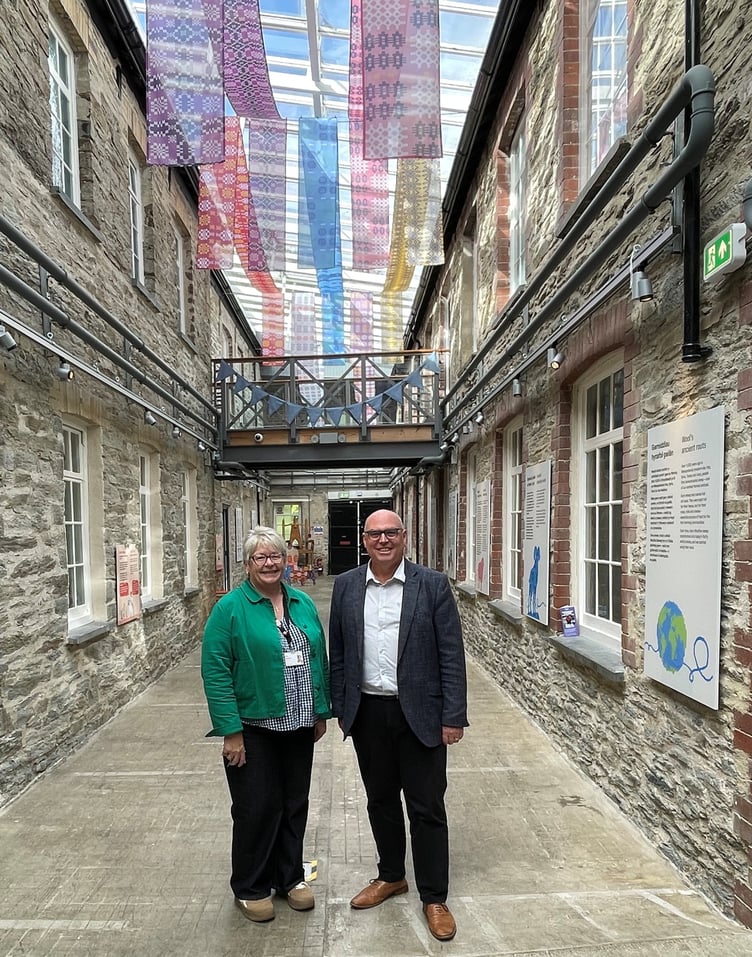
PAUL Davies MS has marked the 50th anniversary of the National Wool Museum at Dre-fach Felindre, highlighting its vital role in protecting Wales’s woollen heritage and preserving endangered textile skills for future generations.
During a visit on October 2, the Ceredigion Penfro MS and Conservative Spokesperson for Culture saw historic machinery in operation, met craftspeople keeping traditional techniques alive and heard how the museum is combining heritage with new technology and innovation.
Housed in the former Cambrian Mills, the museum stands in a community that was once at the heart of the Welsh woollen industry. Dre-fach Felindre became such an important centre of textile production that it earned the nickname the “Huddersfield of Wales”.
At the industry’s 20th-century peak, there were 217 woollen mills, producing blankets, flannel and tapestry cloth and supporting skilled employment in communities across west Wales.
Today, the National Wool Museum is working to ensure the machinery, knowledge and practical skills behind that industry are not lost.
Visitors can see the journey from fleece to fabric and watch craftspeople operating historic machinery and looms. That work has taken on added significance following the inclusion of Welsh double-cloth weaving on the Heritage Crafts Red List of Endangered Crafts in 2025.
Paul also visited the reopened Weaving Shed, heard about investment in a modern rapier loom and learnt more about the museum’s work with schools, organisations and community groups – using textiles and creativity to educate younger generations, support wellbeing and mental health and strengthen people’s connection with their local heritage.
Paul Davies MS said:
“Fifty years on, the National Wool Museum isn’t just keeping the story of our woollen industry alive – it’s keeping the skills alive too.
“Dre-fach Felindre was once at the heart of a major industry, with woollen mills providing jobs and livelihoods for communities across west Wales and Welsh textiles becoming known far beyond our shores.



“What particularly impressed me was seeing the historic machinery still working and craftspeople keeping these specialist skills alive. With Welsh double-cloth weaving now considered an endangered craft, passing that knowledge on to the next generation has never been more important.
“But Welsh wool isn’t simply a story from the past. Here in Ceredigion Penfro we still have businesses carrying on that tradition, including Solva Woollen Mill and Melin Tregwynt in Pembrokeshire, alongside other textile and weaving businesses across West Wales.
“I was also impressed by the museum’s work with schools, community groups, and its series of practical workshops. It shows how our industrial heritage can educate younger generations, bring people together, support wellbeing and reinforce that important sense of place and connection with our past.
“And while there is a huge focus on preserving traditional machinery and skills, it was encouraging to see the museum looking forward too, with new investment and an emphasis on innovation and sustainability.
“Celebrating 50 years is a fantastic milestone, but the real achievement will be making sure these skills, this machinery and this knowledge are still here for generations to come. We should be preserving our woollen heritage for the next 50 years and beyond.”
The National Wool Museum is one of seven museums in the Amgueddfa Cymru – Museum Wales family. Its 50th anniversary programme celebrates the history of Wales’s woollen industry alongside traditional craftsmanship, contemporary textile production and innovation.
Comments
We've recently changed our login process. If you have an account for commenting, you will need to re-register on the login window.
This article has no comments yet. Be the first to leave a comment.