
Sir,
Maybe I can answer Ivor Jenkins's concerns regarding the recent disposal of the old Tenby slipway lifeboat house.
Whilst this is a perfectly standard condition in a lease of this type, it placed a significant liability on the RNLI as the cost of demolition was estimated at some £400,000.



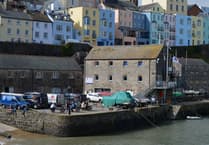
It is true that the initial intention was to fulfil the requirement of the lease and to demolish the structure.
As the boathouse was a Listed Building, planning consent to demolish was required. This had been initially refused at the time that consent was given for the new boathouse as the planning authority wished to see both buildings in place before revisiting the decision.
When this happened some three years ago, it is true that the planning authority, endorsed by the town council, supported demolition. This decision was reversed following the intervention of Cadw and an inspector's enquiry that required further efforts be made to find an alternative use.
The inspector acted under the requirements of the law relating to listed buildings and would not have been concerned with existing opinions of planners, councils or the RNLI.
The RNLI had previously investigated other uses prior to submitting the original application to demolish, but the inspector considered that a further marketing exercise was warranted. This had to be undertaken by the RNLI and it was they who appointed the selling agents. There was no involvement or interest by the Welsh Assembly Government in this appointment.
The outcome of the marketing exercise was that a private buyer was identified and, after a thorough evaluation, his proposal was judged suitable and he duly obtained planning consent.
The initial refusal of Listed Building consent to demolish combined with the terms of the Crown Estates lease requiring demolition had placed the RNLI in a very difficult position.
In order to facilitate a solution, negotiations took place that resulted in an agreement by Crown Estates to accept surrender of the RNLI's lease without demolition and the sale of the site to the new owner.
The RNLI's duty was to dispose of the liability for the old boathouse at minimum cost and in compliance with the various statutory regulations and the terms of its lease.
What constituted an acceptable alternative use rested with the planning authority.
There was no U-turn by the planners as when they made their original decision they did not have the new proposals in front of them.
The process was protracted, but carried out with full transparency and the situation was fully reported in the press on a number of occasions.
Ultimately, the RNLI has benefited from the result as it has disposed of a significant liability at a much lower cost than that of demolition and the new owner is committed to significant cost to convert and maintain a listed building.
The benefit to the national heritage of Wales and Tenby must be judged by others but has resulted from the democratic process.
Howard Richings,
Head of estates
management,
RNLI,
Poole,
Dorset