

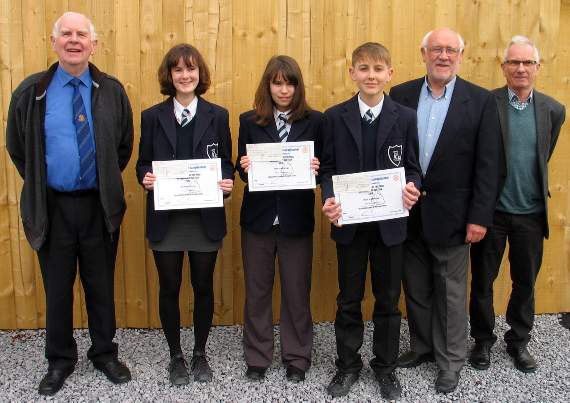
Will Letten, of Castle School, successfully secured his place in the next round of this year’s Rotary Young Writers Competition against stiff opposition. The judges from the Rotary Club of Saundersfoot were impressed by his story and the novel way in which he cleverly made sure it worked with this year’s theme - ‘A Different Perspective’.
Pupils from the local area were invited to enter and tasked to produce a piece of writing of no more than 500 words on any subject of their choosing. It could be fiction or non-fiction, a story or a poem. The only requirement was that it must relate to the theme.
Members of the club were fascinated by the variety of stories produced. Topics included the impact of humans on the environment, the ticking of a clock and the battle between wild animals.
They told us: “We know the children from Castle School put a lot of effort into their entries, so it’s always difficult to choose a winner. And of course, creative writing is subjective.’ They were, however, intrigued to read Will’s take on the not-so opposing views of two soldiers from either side of no-man’s land during the First World War.
Will was surprised and excited to have won in the Intermediate age-group and told us: “I am very interested in everything about World War One. There is a lot about that time in the news at the moment, because of the centenary, but for me it’s about an event that changed the course of history. I was particularly inspired by the tale of ordinary men in both the English and German trenches who held a temporary truce on Christmas Day to play a game of football.”
One of the judges, Jim Ball, commented that it reminded him of conversations he had shared with one of his grandfathers, a WWI veteran and his recurring memories of the horror of war and of the casualties, both those who had fallen and those lucky enough to survive. This, he reflected, was in stark contrast to his other grandfather who had chosen never to raise the subject again.
Imogen Grimes and Hope Raymond were also picked out for their entries in the same age-group and, so difficult was it to choose between them, the judges decided to award two runner-up prizes.
Imogen was also surprised to win. She told us: “I wrote about aliens coming to earth because I wanted to write something light-hearted. I wrote about humans from their perspective, making them out to be very judgemental, believing themselves to be a superior race and shocked by the damage we were doing to our own planet.”
The judges clearly agreed. Mr Ball told us: “It was full of humour and made me laugh!”
In contrast, he felt that Hope’s poem was very moving and thoughtful. She had approached her chosen subject from a very different point of view, dealing with the way in which people cruelly regard others who are different from them.
Hope explained: “I feel very strongly that people who may appear ‘different’, perhaps having mental health issues. Often, they are misjudged and ignored or ill-treated and I think this is very wrong. I wanted to write a poem that challenged many people’s preconceptions about mental illness and to make them realise that they should be more sympathetic and supportive and not dismissive,”
Will now goes through to represent the region in Cardiff. Although judging is already in progress, he won’t find out the results until June 21 when the prizes are awarded in Cardiff. If successful, he will then go on to represent the country in the national finals which will take place later in the year in London.
Comments
This article has no comments yet. Be the first to leave a comment.