

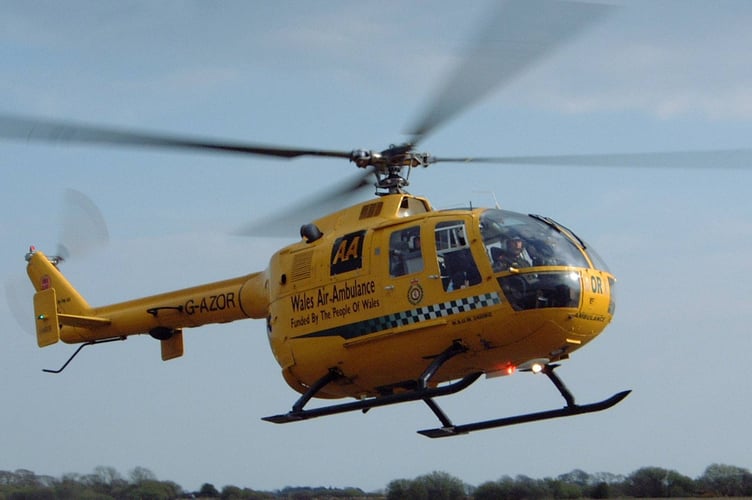
This year marks the 25th anniversary of the Wales Air Ambulance – a special milestone for the Charity and all who have contributed to it.
Formed on St. David’s Day in 2001, Wales Air Ambulance began as a paramedic-led service, operating one helicopter just five days a week. Fast forward 25 years, and the service has evolved into one of the most advanced operations in the UK.
Now consultant-led, with four helicopters and a fleet of rapid response vehicles, it delivers 24/7, hospital-standard care to people across Wales, wherever and whenever they need it. The service is a mobile emergency department.
Over 56,000 missions have been conducted since the first flight a quarter of a century ago.



The Wales Air Ambulance Charity is the only air ambulance charity based in, and dedicated to, Wales. Registered charity number 1083645.
Dr Sue Barnes, the Charity’s Chief Executive, said: “Wales Air Ambulance was created by the people of Wales, for the people of Wales. You are a big part of this Welsh success story, helping us grow into the world-class service it is today.
“It costs £13 million each year to keep our helicopters in the sky and rapid response vehicles on the road. We cannot do what we do without your generosity and kindness.”
She continued: “As we mark our 25th anniversary, we give thanks for all those who continue to support Wales Air Ambulance.
“Whether through regular or one-off donations, playing our lifesaving lottery, fundraising, offering services in kind, or using our shops, it all helps save lives across Wales.
“Of course, the service also owes much to those, past and present, who have been directly involved; Charity employees and volunteers, medics, pilots, engineers, allocators and patient liaison nurses. You can all take pride in the service you helped to create.”
“We will be marking this special occasion throughout the year.”
Dr Barnes added: “Our silver anniversary deserves a moment of reflection, but equally, it is an opportunity to look to the future. We have a duty to the people of Wales to improve our service and ensure its security for our future generations. We can only achieve this with the continuation of the incredible support we receive from across Wales.”
There have been many ‘milestone moments’ during the past 25 years”, says Mark Winter, who is the Operations Director for the Charity’s medical partners, the Emergency Medical Retrieval and Transfer Service (EMRTS). Mark was a medic on the very first mission in 2001.
He continued: “Being on the first aircraft to take off, and the camaraderie among the first crew to make it work, is among my highlights.
“If anyone had said at the launch event for Wales Air Ambulance Charity that in 25 years, we would have four aircraft covering the whole of Wales, working overnight, with the most advanced interventions, I wouldn’t have believed them.”
Wales Air Ambulance takes hospital-standard treatments to the patient and, if required, transfers them directly to the most appropriate hospital for their illness or injury. It is delivered via a unique third-sector and public-sector partnership.
The Wales Air Ambulance Charity relies on public donations to raise the £13 million required every year to keep the helicopters in the air and rapid response vehicles on the road.
EMRTS supplies highly skilled NHS consultants and critical care practitioners who work on board the Charity’s vehicles. This advanced critical care includes the ability to administer anaesthesia, deliver blood transfusions and conduct minor operations, all at the scene of an incident.
As a pan-Wales service, its dedicated crews, regardless of where they are based, will travel the length and breadth of the country to deliver emergency lifesaving care.
Lead Consultant, Dr Ami Jones, was awarded an MBE in 2017 for her contributions to military and civilian pre-hospital critical care. She has worked on board the Charity’s vehicles for over ten years.
She said: “As a doctor, you often treat one patient at a time. But being part of the team that helped set up the development of the consultant-led service in 2015 was a great privilege.
“You touch every single patient via your colleagues because if the service had not been put in place, no one would be receiving the care.”
Past patient, Joanna Hicks, was on holiday in Pembrokeshire when she got into difficulty whilst swimming on Newgale Beach.
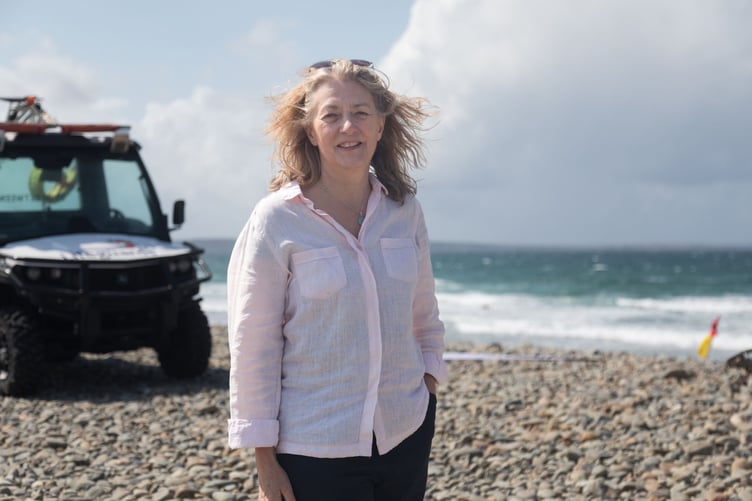
On July 29, 2023, Joanna was out swimming with her friend at Newgale beach when sea conditions rapidly changed and she almost lost her life.
Joanna was caught in a rip current and given just a 1% survival rate after being rescued. She spent 10 days fighting for her life in hospital.
Joanna and her friend Phillipa found themselves out of their depth and in choppy water. Phillipa was able to get back to the beach but Joanna was dragged out to sea by the rip current.
A grateful Joanna said: "I cannot thank these amazing, truly impressive people enough. Without the Wales Air Ambulance, I really would not be here today to tell the tale.”
Last summer, Joanna returned two years on to the beach to be reunited with her lifesaver RNLI lifeguard Matty McLeod, and members of the air ambulance crew who helped save her life.
The incident occurred before 10am so Royal National Lifeboat Institution (RNLI) lifeguards hadn’t started their patrols, Phillipa called 999 and asked for the Coastguard which launched the charity’s lifeboats from Little and Broad Haven and St Davids.
RNLI lifeguard Matty McLeod was at home preparing for his patrols on the beach that day when he became aware of the situation. He immediately left home and headed to the beach, once there he grabbed his rescue board and made his way through the surf and swell to find Joanna.
“She was face down in the water,” recalls Matty. “I jumped off the board and rolled her over. She was blue and unresponsive. I had to keep her airway open.”
The conditions at this point were too dangerous for RNLI lifeboat to pick them up so Matty dragged Joanna through the water to the shore, when the battle to bring her back to life began.
Matty said: “An on-call nurse on the beach helped me giving Joanna CPR. I was shattered from bringing her in and was trying to catch my breath, so this was a massive help. Then the paramedics arrived and took over from us.”
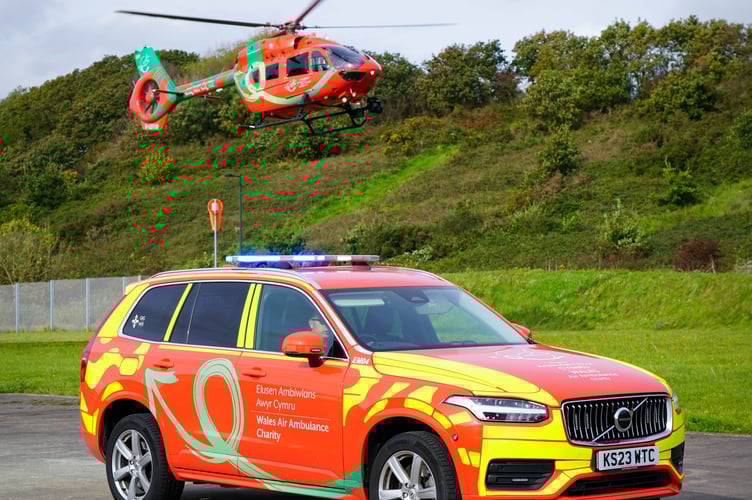
Joining the effort of the RNLI lifeguard team were Coastguard rescue teams, a Cymru High Acuity Response Unit, the Wales Air Ambulance and a rescue helicopter from the Coast Guard.
The Wales Air Ambulance took over Joanna's care and delivered pre-hospital interventions on the beach, which included taking over her breathing through administering an anaesthetic and placing her on a ventilator.
Matty held Joanna's hand whilst the medics stabilised and transferred her into the air ambulance, he remembers thinking, “We’ve done all we can.” But it didn’t look good.
Joanna was cared for by the medical team at Carmarthen and Glangwili Hospital. She spent 10 days in an induced coma until regaining consciousness, over the following months at a rehabilitation centre she went on to make a full recovery.
Comments
We've recently changed our login process. If you have an account for commenting, you will need to re-register on the login window.
This article has no comments yet. Be the first to leave a comment.