
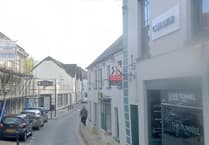
Tenby's controversial walled town pedestrianisation scheme looks set to be extended next summer.
Despite outcry from some groups of businesses and residents, the walled town was closed off to all but emergency vehicles from 12 noon to 4 pm daily throughout August.
Now director of transportation, Mr. Huw Roberts, is proposing that the pedestrianisation be extended to take in all of July, with the traffic ban starting earlier and ending later in the day.
In a report to next Monday's cabinet meeting of Pembrokeshire County Council, Mr. Roberts claims that, while there are objectors to the concept, there is "overwhelming support" for a repeat of the pedestrianisation scheme next summer.



He says that of visitors surveyed in August, 85 per cent were in favour of the pedestrianisation, a household survey showed 68 per cent in favour and a survey of businesses showed 58 per cent in favour.
"Residents and businesses within the Walled Town still show more people in support of a repeat of the pedestrianisation than objectors," Mr. Roberts adds in his report.
As such, Mr. Roberts is recommending to cabinet that pedestrianisation within the town centre of Tenby becomes accepted as an annual event for the future.
If cabinet agree to this, Mr. Roberts is then recommending that the scheme be extended to cover the months of July and August and that the daily period of pedestrianisation be extended from 11 am to 5 pm from next year onwards.
Mr. Roberts also suggests that the ban prohibiting large goods vehicles operate between these hours, instead of starting at 10 am, as it does now.
Mr. Roberts acknowledges several points raised about disabled access, safety and licensing regarding the 'café culture' which pedestrianisation will allow, and feels these need to be addressed for future years.
He also acknowledges that some walled town residents felt the prohibitions "trapped them or denied them access to their own properties."
He added that 'permits' or a 'two-tier' scheme could be employed to allow these residents greater freedom of movement, but he feels that this strategy would need to be "balanced against the potential for increased safety risk... particularly for those who visit the town and assume pedestrianisation means just that."
The transportation chief feels that the authorisation of individual journeys worked 'reasonably well,' but adds that 'greater dialogue' is now required to 'fine tune' the system and work would proceed with residents and businesses within the walled town, the harbour area and Caldey island as to how to take this forward.
Further work would also be required as to how to address parking within the walled town outside the prohibition period and to consider the allocation of parking spaces for the disabled and "any appropriate concessions for residents to park outside the town walls during the pedestrianisation."
With the police believing that White Lion Street can continue to work "reasonably well" on a two-way basis, Mr. Roberts feels that, for the time being, there is no need to introduce a one-way system that operated for part of August's experiment.
Mr. Roberts also proposes "liaison with the main funding agencies, like the Welsh Development Agency and the Wales Tourist Board, with a view to indentifying funding for "a complimentary programme of environmental improvements."