

People often ask me why and how I come to settle on a topic for this column. I have to tell you that there is no easy answer to that question but I do think I get a little ‘heavenly help’ along the way).
Personal taste and interest clearly play a part, and I if I am honest, I must admit I am constantly on the look out for something that will allow me to wax lyrical about the things I believe, hopefully in relevant and fairly interesting ways.
And so it was that I found myself lying in bed around 5 o’clock last Thursday morning listening to the World Service and wondering what I should talk about this week. And then it came, in a flash. I heard the tear-jerking story of a young 14-year-old girl who had won her fight to be frozen in the hope that one day we will know how to bring her back to life again.
It certainly got me thinking. To begin with her tragic demise is a sobering reminder that age does not guarantee our immunity against death. It also shows us just how silly it is to say that death is ‘nothing at all.’ I reckon the Bible’s picture of death is far more realistic when it speaks of death as an enemy, an enemy that wrecks lives on a daily basis and leaves a trail of devastation in its wake.



“I don’t want to die, but I know I am going to die,” this valiant young teenager told the judge, Mr. Justice Peter Jackson. We can all echo those sentiments which is why the Christian faith is so relevant. For Christianity claims to have the best news the world has ever heard: Jesus has conquered death and there is an empty tomb to support that assertion.
Interestingly enough, just a few weeks ago, a group of researchers were granted unprecedented access to the Church of the Holy Sepulchre, the site long-venerated as the place where Joseph of Arimathea placed Jesus’ body on Good Friday. And what did they conclude? Let me quote Dan Bahat the former city archaeologist of Jerusalem. “We may not be absolutely certain that the site of the Holy Sepulchre Church is the site of Jesus’ burial,” he said, “but we certainly have no other site that can lay a claim nearly as weighty, and we really have no reason to reject the authenticity of the site.”
All of this is a great reminder that contrary to much popular opinion Christianity is no fairy tale. It asserts that the events that began on Good Friday and came to a wonderful climax on Easter Sunday occurred in a real place and at a particular moment in time history. And because it claims to be rooted in history it is open to investigation. And if I’m honest, I have to tell you that I don’t think anyone has come up with a better explanation for the empty tomb.
And that’s not the end of the story because prior to His death Jesus promised His disciples that he would do the same thing for all who would put their trust in Him too. And so if we choose, we can put our trust in future medical advances and have our bodies frozen. But I reckon that’s a pretty flimsy hope. Indeed, Simon Woods, an expert in medical ethics from Newcastle University has gone so far as to suggest the whole idea is science fiction. As far as he is concerned: “The diagnosis of death is that death is irreversible.”
He may well be right about cryopreservation, but I have to disagree with him when he says death is irreversible, for I believe in the promise of resurrection. And for one simple reason: the tomb that was opened in Jerusalem last October is and has been empty since the first Easter Sunday.
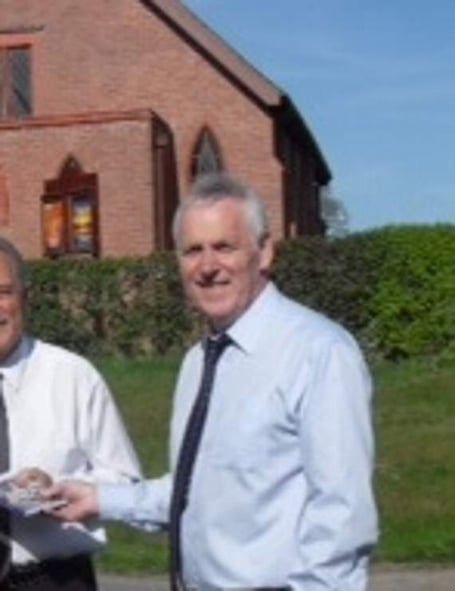
Rob James is a Baptist Pastor broadcaster and writer who currently operates as a church and media consultant for the Evangelical Alliance Wales. He is available for preaching and teaching throughout Wales and can be contacted at [email protected]
Comments
This article has no comments yet. Be the first to leave a comment.