
August is usually the month when most of us go on holiday and leave our gardens to fend for themselves. A little thought before you go and some tender loving care when you return will be enough to make sure that you can go away without worrying about all of your hard gardening work going to waste.
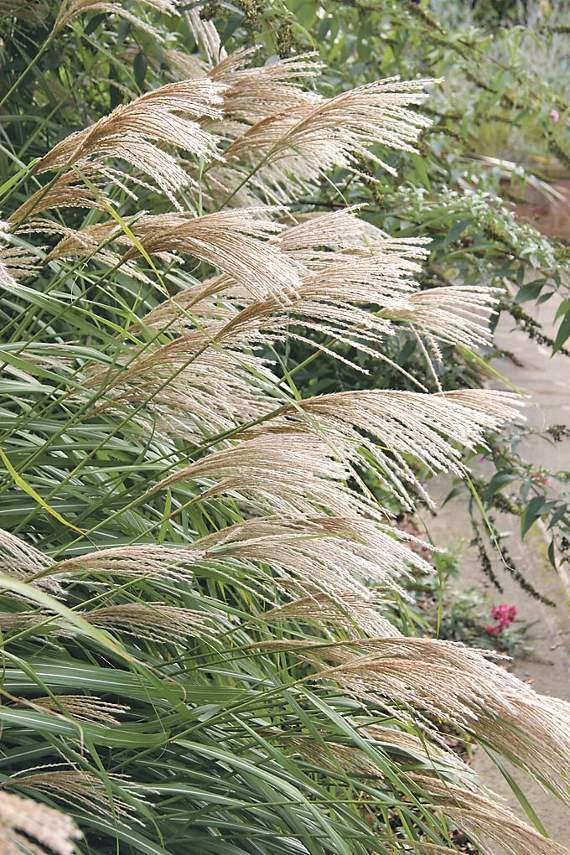
If you travel a fair amount, then it might be worth considering some plants that need slightly less watering but still look impressive in flower beds and borders such as ornamental grasses. They provide texture, character and form to any garden and develop through the seasons as bright and colour foliage is joined by graceful swaying flower heads that last well into winter.
In large borders grasses can be planted in bold groups or striking drifts, but many varieties perform well in large patio pots, positioned where their individual shape and arching form can be fully appreciated. Popular grasses for pots include compact Blue Fescue Grass or taller varieties such as Zebra Grass. By positioning grasses close to paths and seating areas you can run your hands over their feathery foliage and flowers as you pass, and taller grasses such as the showstopper Golden Oats add movement to otherwise static displays. Ornamental grasses offer great value and variety and are Plants of the Moment in garden centres around the UK this month.
For August watering and summer pruning are key - as the experts will tell you …




August is usually one of the hottest months of the year - making watering essential. Try to use grey water wherever possible, especially as water butts may be running low if it has been a dry summer. August is traditionally holiday-time, so you might need to enlist the help of friends and family to look after the garden while you are away. When you are at home, take the time to prune summer-flowering shrubs
RHS
High summer is the best time to get outside and enjoy the garden – just remember to keep everything watered. However, Wisteria needs pruning twice a year, in August and again in January to ensure good growth and flowers next year. It’s also the ideal month to take cuttings of woody herbs such as rosemary, sage and lavender - making sure you take new growth that hasn’t flowered this year. Don’t forget to trim lavender after it finishes flowering to encourage bushy new growth in the spring. If you don’t prune them, they will look bare and woody next year.
David Domoney,
TV gardener and presenter
The hour of hard work is at hand for the owner of a spring meadow garden, as the flowers have, by now, ripened seed. If the skills are available, cut it with a scythe. Otherwise, a range of options present themselves, such as the disc mower, the wheeled scythe and the cord trimmer, depending on the scale of the operation. Don’t chop it up, but cut it all off cleanly at the base, then let it lie for a few days to allow the insect life to return to the earth.
Country Life
If you Grow Your Own then make sure you water consistently as Irregular watering can lead to problems with blossom end rot in tomatoes, splitting of root vegetables and flower dropping in runner beans. Weeds can also compete with vegetables for water so make sure you remove them regularly by hoeing. Quick maturing salad crops such as summer lettuce, radish, rocket, sorrel, chicory and fennel, can be sown in the south of England. Elsewhere, sow green manures such as crimson clover and Italian ryegrass to act as a soil improver and to cover bare areas. When dug in, they conserve nutrients and improve soil texture. Rooted strawberry runners can be planted out and it’s time to prune nectarines, apricots and peaches after they have fruited and plums, gages and damsons immediately after they have been harvested.
Comments
This article has no comments yet. Be the first to leave a comment.