

Rural support
However you may have chosen to vote yesterday, the newly-elected Government must seriously think now about farm and rural support after Brexit.
Experts from the University of Kent’s School of Economics advise that the government must create suitable replacement support for UK farmers once the country leaves the European Union and Common Agricultural Policy (CAP) payments stop.
In a paper written jointly by Professor Sophia Davidova, Dr. Alastair Bailey and honorary Professor Ulrike Hotopp. of the National Institute of Economic and Social Research (NIESR), they note that the loss of the CAP could have a significant effect on the UK farm economy, the agri-environment and rural jobs.

Analysis shows that the removal of the CAP without a replacement suggests the loss of about 250,000 jobs in non-farm small and medium-sized enterprises (SMEs), by considering both the direct and indirect effects of farmers’ purchasing power.
Furthermore, the majority of affected jobs, around 200,000, would be in the greater rural areas, which would have a significant negative impact on rural job markets and economies.
The paper also notes that currently more than half of UK farms are heavily reliant upon CAP payments for their survival. Therefore, the government must think seriously about post-Brexit support to be put in place to ensure that UK farmers continue to contribute around 60 per cent of domestic food supplies and to maintain the 70 per cent of the UK land area they care for.
The paper adds that the new government should see the end of access to the CAP as an opportunity to create a more effective system of subsidies that avoids the current situation where large, commercial farms receive the largest subsidies.
Specifically Alastair Bailey reminds me: ‘While it is true that the EU CAP payment represents a very large budgetary cost and that a large share of that is received by a small number of well off farmers, there are many farmers, particularly in the parts of the territory where farming is hard, who rely heavily on the CAP for survival.
“Since Brexit will result in the removal of CAP in its current form, the UK has the opportunity to design a replacement subsidy programme which targets need and helps to boost the rural and urban economic linkages.”
Choices
People today have the choice of living in a city or in the country. Some would prefer to live in the busy overpopulated cities, while others prefer the peace and quiet of country life. Although both are parts of a central government and the people may supposedly share the same benefits, they offer ways of life that are very different.
A city is a large settlement that has advanced sanitation, utility, housing, and transportation systems. It is a central trading place that allows its inhabitants to live close to establishments that offer trade, education, certain amenities, and other interaction.
Life in the city is very fast-paced. You see tall buildings instead of colourful trees and because cities are overcrowded with people and vehicles, it can be a highly polluted place. Everything in the city is expensive; housing, food, utilities, and education.
What makes it better than being in the country is that the best hospitals are usually located in cities and you are exposed to the arts, better education, and entertainment when you live in the city.
Country is a term used for a sparsely populated settlement that is comprised of farmlands and rural districts. It is a place where there are only few business establishments, providing its inhabitants with only their basic needs.
Living in the country is more laid back; you get fresher air and food. People are also more open to each other and are more willing to help out their neighbours. It might not have all the amenities of the city but it offers you a chance to be with nature.
Although considerably more expensive, the country is a good place to live for people who are looking for the tranquillity, peace and quiet they can’t get in the city. It is essential that you have your own means of transport and does not offer the business or professional opportunities that the city does and deciding where to live depends upon one’s goals in life.
The birth of the Church
Last Sunday (June 4) was the true Whit Sunday - widely celebrated particularly across Wales in bygone days as Pentecost - I suppose now the word has an unfamiliar ring to it. Fifty days after Easter - a festive holy day borrowed directly from our Jewish forbearers and infused with a brand new meaning: The birth date of the Christian church, no less.
An event that transformed the followers of Jesus from a group of disheartened and defeated individuals to persons who were enthusiastic and excited about the presence of God’s Spirit within them.
Gathered in an upper room, they experienced first hand the spirit of God like wind coming into their lives and tongues of fire that set their lives ablaze with a new sense of purpose and vision.
And so it is that each year we celebrate Pentecost - the birth date of the church.
Pentecost provides for us an opportunity to celebrate who we are as a community of God’s people. We (Welsh) remain a people who are proud of our history, our language and our culture. But, as God’s people, it is not enough to glorify our past, our heritage and traditions.
The Church of Jesus Christ in all its varied forms and structures continues to be a work in progress. A community of faith cannot be static - a memorial to the past. The Christian church is continually evolving in an attempt to be relevant and creative in each succeeding era.
We cannot be simply a monument to the past once glorious. Our challenge is to be on a cutting edge to the future. To become a church of people (largely of Welsh background) who are enthusiastic and excited about creating a future that will be relevant and visionary.
May Pentecost challenge us to be God’s people willing and eager to respond to God’s Spirit blowing through our lives and setting us ablaze with creativity and a renewed sense of hope for the future.
Open Farm Sunday
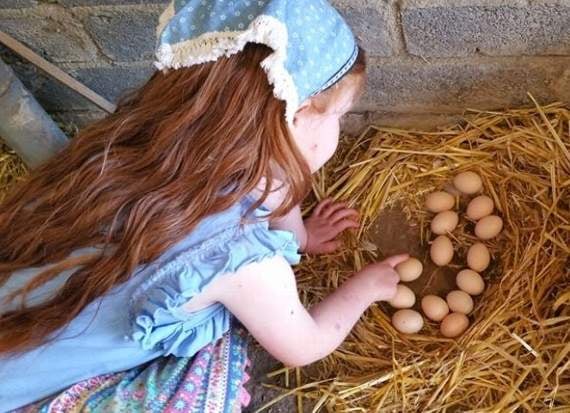
Have your ever wondered what farm life is really like? Well, wonder no more because for one day only you can visit a nearby farm - for free!
Open Farm Sunday was started in 2006 and has seen over 1,500 farmers across the UK open their gates and welcomed 1.8 million people onto their farm for just one day each year.
This is an amazing opportunity for all members of your family, old and young, to discover what it is like to be a farmer, as well as helping children understand how farmers work hard producing our food.
You can expect each farm open day to offer your family a different experience, for example some activities during the day may include a farm walk, nature trail, tractor and trailer rides, demonstrations, pond dipping, activities for children, a mini farmers market or farm shop.
In Wales, all the Open Farm days will be next Sunday, June 11, and we hope you have a fabulous visit.
Please don’t forget to keep clean and wash your hands thoroughly with soap and water before eating, and at the end of your visit - do not rely on sanitising hand gels or wipes to protect yourself or your children against germs that may be present in animal dirt around the farm. Hand gels cannot remove contamination in the manner that soap and water can but you should consider the risk of becoming unwell is very low. Don’t forget farms are working businesses so please follow instructions from the farmer and his helpers. Keep an eye on your children and help them to keep safe during your visit.
At Lower Treginnis Farm, overlooking the seas near St. Davids (SA62 6RS) - which includes the school for city children - activities such as bottle feeding goat kids, walking donkeys, feeding pigs and bottle feeding molly lambs will be available. A treasure hunt to a neighbouring potato farm will also be happening and food and drink will be available but please feel welcome to take a picnic.
At this time, there will be a visiting school from London in residence who will be showing everyone around.
In contrast, Esgair at Llanpumsaint (SA33 3JU) is a small picturesque 72 acre family run farm with a 25 cow suckler herd and pigs. Barley is also grown. Here you may find out how the animals are kept and what they eat and why the family think its important that they lead as natural a life as possible - view the cattle in their fields, meet the pigs, see how we produce our own beef and sausages, sit on a tractor and view our vintage combine harvester. Why not join them for a cuppa and a Welsh cake?
A day of family, farming fun with tractor and trailer tours, animals to meet, activities for all ages and a range of conservation, wildlife and other stalls is on offer at Penlan - a mixed farm near Kidwelly (SA77 5AF) which has a small beef herd (including rare Welsh Whites), free-range chickens, sheep, alpaca and a strong emphasis on conservation.
Think on
If it is an opportunity for you, you’ll find a way. If not, you’ll find an excuse!
Comments
We've recently changed our login process. If you have an account for commenting, you will need to re-register on the login window.
This article has no comments yet. Be the first to leave a comment.