


Negotiating skills
In attempting over the next 18 months to arrive at a Brexit deal that may be generally acceptable, David Davis and his team are faced with an unenviable and, possibly, a thankless task.
Davis is a graduate of Warwick University where he studied molecular science /computer science before going on to achieve an MA in business from London Business School.
He subsequently studied at Harvard, but I wonder, in his present role, if he might have benefited a little from the ways of farming!
.jpeg?width=209&height=140&crop=209:145,smart&quality=75)
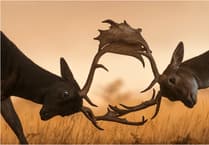
Most farmers, when it comes to farming could possibly boast a master degree in the business of haggling when the asking price is just too much - or maybe you need to convince others differently.
I’m not suggesting that political wheeling and dealing is a joke but, either way, polite haggling is a fun and skilful way to negotiate a price everyone can agree on.
Decide what you’re willing to pay secretly - not broadcast to all manner of politicians and the national media - then bargain the other side down to that amount with offers and counteroffers.
For example, you can begin by offering to pay half what is being suggested: if this seems unfair to the other side, don’t be afraid to disagree, make a face, or act disappointed - the others may just lower the price to keep you happy?
Showing hesitation or remaining silent can cause the seller to respond with a better offer. If they start turning away, immediately start talking again - but you don’t need to raise your offer right away.
Suggestions of alternative strategies and compromises need to be considered at this point. Compromises are often positive alternatives which can often achieve greater benefit for all concerned compared to holding to the original positions.
If you are rude, people might be less willing to negotiate with you than if you treat them politely and respectfully. It may be necessary to agree to their last offer on the condition they throw in another item you’re interested in for a reduced rate.
This stage focuses on what is termed a ‘win-win’ outcome where both sides feel they have gained something positive through the process of negotiation and both sides feel their point of view has been taken into consideration.
A win-win outcome is usually the best result although this may not always be possible, through negotiation, it should be the ultimate goal.
In the case of Brexit, setting a limited timescale can only be helpful to prevent the disagreement continuing.
If, at the end of the day, negotations flounder then the alternative is to walk away - a situation which benefits no one.
While bargaining work is in progress, these delicate negotiations can only be successfully concluded if conducted behind closed doors and with the minimum of political and media interference and speculation.
Addressing politicians
During the season of national conferences, organised by each of the political parties, the NFU had an important role to play by drawing in delegates to its own fringe meetings.
Food and farming took centre stage at the Labour Conference in Brighton and there was standing room only as over 100 conference delegates and NFU members gathered to hear Labour’s spokesperson on environment, food and rural affairs, Sue Hayman, speak at one such meeting chaired by Julia Glotz, managing editor of The Grocer.
Questions came from the floor on international trade, future domestic agricultural support and the role of UK retailers. Hayman argued that retailers needed to take their responsibilities seriously -issues like the supermarket’s fake farms undermining the credibility of British farming.
Having been appointed to the role earlier this year she confirmed her intention to work closely with the NFU. It was over to the Union’s deputy president, Guy Smith, who had the last word by saying: “If you can’t feed a country, you haven’t got a country.”
Politicians and delegates at the Conservative Party Conference were able to smell, touch, feel, hear and see British farming at the NFU’s ‘Sensory Barn’ - the Barn took all the elements of the British farmed countryside right into the city of Manchester as the stand brought to life the environmental and economic importance of farming, as well as its crucial role in helping to deliver food security for Britain.
Each of the farming sectors - livestock, dairy, horticulture, poultry, sugar and arable -were showcased within interactive displays to the 11,000 conference attendees.
NFU president Meurig Raymond remarked: “The Conservative Party Conference gave us the perfect opportunity to speak to thousands of delegates and the party in power about the importance of British farming. The Sensory Barn certainly grabbed this opportunity and put farming and the importance of farming at the forefront of people’s minds.
“With the UK now entering an important political period, it is vital that the value of farming and its contribution to the economy - in terms of jobs in the sector and GDP -our beautiful landscape and the food we all eat every day, is fully recognised.”
Delegates had an opportunity to see the economic value of farming and food production in their own area, and to make clear their support for British farming.
Standing in too many cemeteries
Commenting on four deaths which occurred on Irish farms during September, their Agriculture Minister, Michael Creed, has urged the farming community and all stakeholders to ‘redouble efforts on farm safety.’
He said: “What needs to change is this attitude that ‘it won’t happen to me’ because it is happening to too many people. It’s just calamitous and the statistics are unacceptably high. We can have stick, we can have carrot and we can have common sense; and I would really like that we would have the latter. I’ve stood in too many churchyards and graveyards and family homes at wakes, it has to stop.”
A farmer wrote
“Is it just me, or does anyone else find it amazing that during the mad cow epidemic, our government could track a single cow, born in Cheshire almost three years ago, right to the stall where she slept in the county of Shropshire?
“And, they even tracked her calves to their stalls. But they were unable to locate 125,000 illegal immigrants wandering around our country.
“Maybe we should give each of them a cow.”
Year of the Sea
Following on from the 2017 theme, A Year of Adventure, and the current Year of Legends, the Wales tourism authority tell me that 2018 will be all about celebrating our epic shores and Wales’ outstanding coastline.
During Year of the Sea, they plan to promote Wales as a 21st-century coastal destination, putting coastal communities, world class products and experiences front and centre of all marketing strategies.
Promotions during this third thematic year will see a series of guides becoming available to give an overview of the year with suggestions on how businesses connected with tourism can get involved.
The Volvo Ocean Race will be amongst the key events taking place throughout the year and various funding schemes are to be available.
Now you know
10 Downing Street is one of the most heavily protected buildings in Britain. Apart from the ‘decorative’ policeman, the front door cannot be opened at all from the outside because it has no handle, and no one can enter the building without passing through an airport-style scanner and a set of security gates manned by armed guards.
Despite this, it is supposedly confirmed that in the first five years after Tony Blair became Prime Minister (1997 -2002), 37 computers, four mobile ’phones, two cameras, a mini-disc player, a video recorder, four printers, two projectors and a bicycle were stolen from inside the house!
Quote
Rita Levi-Montalcini, Italian neurologist and politician, who, together with colleague Stanley Cohen, received the 1986 Nobel Prize in physiology or medicine for their discovery of nerve growth factor insists: “I tell young people: Do not think of yourself, think of others. Think of the future that awaits you, think about what you can do and do not fear anything.”
Comments
This article has no comments yet. Be the first to leave a comment.