

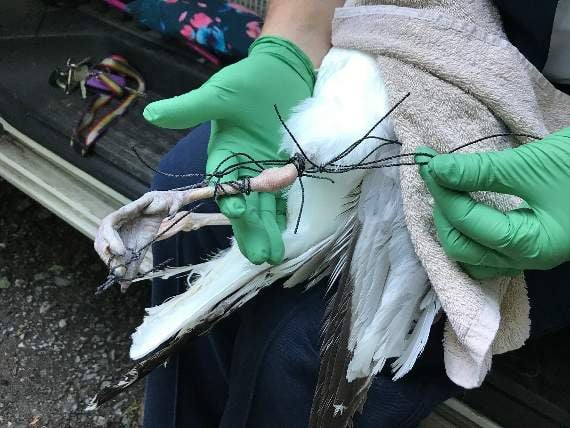
The dangers outdoor netting can pose to wildlife has come under the spotlight - with RSPCA Cymru continuing to deal with incidents across Wales amid coronavirus lockdown restrictions.
Wild birds - like gulls and pigeons - are too often victims of unmaintained bird deterrent netting, becoming entangled and trapped. In recent weeks, officers in Wales have raced to help gulls and a jackdaw in precarious situations.
The animal welfare charity has issued a reminder about the importance of correctly installing, maintaining and monitoring deterrence netting to protect wild birds.
Failure to do so leaves gaps where birds are able to enter and become trapped; and - as proven the case during lockdown - there is a risk of birds suffering and dying from injury or starvation.


RSPCA Cymru believes lockdown restrictions may have resulted in many netting structures being checked less regularly.
Each year around 2,000 reports are made to the RSPCA about wild birds trapped in or behind netting, many incidents involving bird-deterrent netting.
Netting at the same site often leads to multiple animal welfare calls, and casualties.
An RSPCA?spokesperson said: “There are circumstances where netting appears to be an effective means of keeping birds off structures as it can prevent problems without needing to resort to other measures such as killing birds.
“However, proper installation and subsequent maintenance is vitally important.
“All types of bird netting should be professionally installed and regularly maintained as birds can suffer a long and painful death if they become trapped. It’s important that netting is checked regularly.
“Unfortunately bird-deterrent netting is often fixed in high or hard-to-reach areas, making the rescue of trapped animals difficult and dangerous.
“With the streets so much quieter during lockdown, it also seems very possible that netting hasn’t been checked so regularly, or that people haven’t seen entangled birds in distress so often.”
RSPCA inspector Jemima Cooper added: “Sometimes, netting can be so high up or out-of-reach, that we need to enlist the support of our friends from the Fire and Rescue Service to help us to reach animals, given the equipment and expertise they have at their disposal.
“But when we see incidents happening time and time again at the same location, it takes up a lot of the RSPCA’s time, and - in these cases - the time of brave firefighters too.”
Fiona Thomas, RSPCA ACO, added: “Everyday objects - like football netting - can pose a risk to wild birds and other animals. When not in use, football netting should be put away to avoid accidents occurring.”
Birds are the animal most commonly stricken by netting - but the RSPCA regularly rescues other wildlife such as foxes, hedgehogs, deer and snakes trapped in this way.
“We’re reminding anyone with outdoor netting to be cautious and ensure it is checked regularly - or, where appropriate, replaced by structures like a solid metal mesh on ponds or near fruit.
“This could help save animals’ lives - and help divert our resources to other animals in need,” added the RSPCA spokesperson.
Members of the public who have seen a dead bird or other animal trapped in netting, or who are aware of regular incidents, can forward the address, property owner (if known) and date of incident to [email protected]; and the RSPCA can then seek to contact the owner with guidance about resolving the issue.
Animals seen entangled in, or trapped by, netting should be reported immediately to the RSPCA’s emergency line on 0300 1234 999.
RSPCA officers have remained on the frontline throughout the Covid-19 pandemic, responding to animal emergencies like these.
The charity has launched an emergency fundraising appeal to help this work continue, and supporters can donate online.
Comments
This article has no comments yet. Be the first to leave a comment.