
The top two performing recycling authorities in Wales are seeking ways to make their waste service even better by pooling their resources.
Waste management teams in Pembrokeshire County Council and Ceredigion are discussing ways to ensure they remain ahead of the game in reaching strict recycling targets by coming together to share information and best practice.
Ceredigion currently recycles 68 per cent of its waste, with Pembrokeshire recycling 65.
The authorities already combine to send their black bag waste to a highly efficient energy from waste plant in Sweden, while a further partnership has been forged with Pembrokeshire, Ceredigion and Powys to recycle food waste at an anaerobic digestion plant that produces renewable energy that is fed into the National Grid and a bio-fertilizer which is used on farmland.




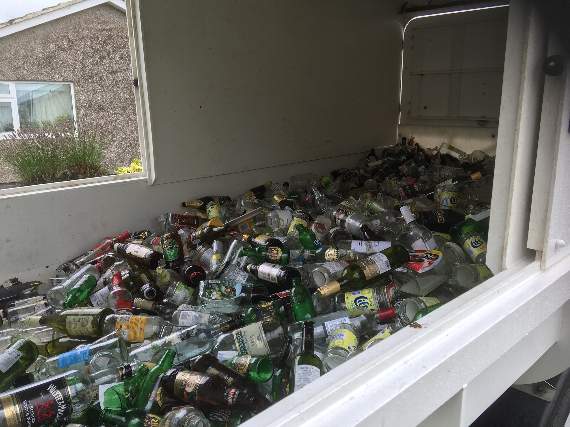
Recently, Pembrokeshire County Council has been working with Ceredigion to provide their glass collection trial in Cardigan by sharing a collection vehicle, driver and glass waste boxes. The majority of the collection crew are from Ceredigion.
“Partnership working allows both our authorities to build on existing relationships to further improve our performance whilst at the same time seeking opportunities to share best practice and reduce costs,” said cabinet member for the environment and regulatory Services Clr. Huw George.
“Authorities across Wales need to reach strict recycling targets and while Pembrokeshire and Ceredigion are doing well at this moment in time, it’s imperative we keep improving to ensure we meet them in the future and avoid potential fines.
“By working with Ceredigion we can discuss and develop ways of making the service we provide more productive and efficient by increasing the amount of recycling that is collected while driving the down the costs of providing the service.”
While no proposals have been tabled in developing a joint service with Ceredigion, early discussions have taken place and Clr. George is interested to see how those discussions turn out.
“We are all under pressure to provide cost efficient services and we shouldn’t be afraid to explore all options available to us.”
Comments
This article has no comments yet. Be the first to leave a comment.