


A group of 150 youths from Carmarthenshire who arrived en masse in Swansea were expected by South Wales Police, a Council meeting has heard. News about the planned gathering had circulated on social media the day before and been picked up by officers monitoring the online world.
Superintendent Mark Kavanagh said it was one of two planned mass gatherings which the force had become aware of through social media activity. “They had all jumped on the train in Llanelli,” he said. “We knew it was coming.”
He said police resources and a dispersal order enabling officers to move people on from a defined area were prepared in readiness.
Supt Kavanagh was speaking at a Swansea Council committee meeting which heard about the work of multi-agency group which aims to make Swansea a safer and more welcoming place for residents and visitors.




The group, called Safer Swansea Partnership, has six key priorities including reducing neighbourhood crime and anti-social behaviour – and it was this priority that took up much of the discussion.
Supt Kavanagh said the overall trend in terms of reducing anti-social behaviour was “very, very positive” in Swansea.
But he added that police were concerned about some young people in their early to mid-teens who were “on the cusp of engaging in violent crime” and criminality.
He said police in Swansea and Neath Port Talbot were keen to prevent a situation in Cardiff where stabbings between young people had, he said, become very common. He said a dedicated serious violence board had been set up to help address the matter.
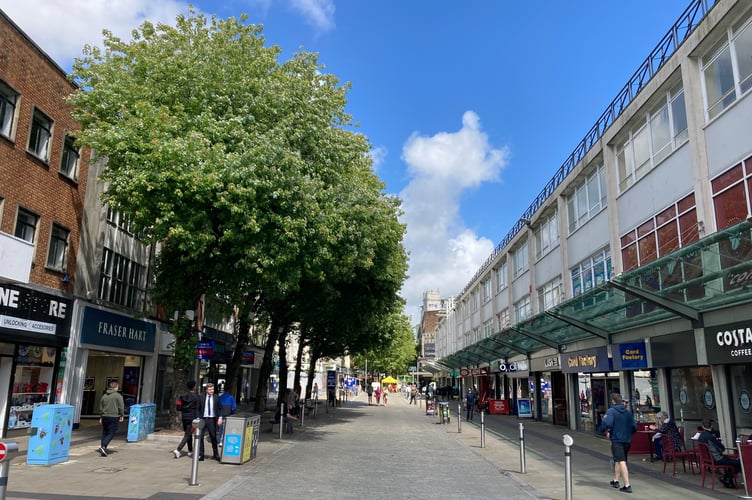
Turning to anti-social behaviour, South Wales Police imposed a 48-hour dispersal order covering much of Swansea’s central area last week following a rise in such behaviour over the Easter holidays.
Supt Kavanagh said the criteria for such orders was very strict and that they weren’t taken lightly.
He explained that in the previous six weeks large gatherings of youths had resulted in two police officers being assaulted – one requiring medical attention – and a 71-year-old man being pushed to the ground.
“And we’ve had a serious assault between two young people which was filmed and then broadcast on social media,” he said.
Cllr Chris Holley said he could understood the reason for dispersal orders but was concerned they could put people off from visiting the city centre. He added: “The vast majority of youngsters in this city are great.”
Supt Kavanagh said police officers, community support officers and neighbourhood beat managers were very good at gaining a rapport with young people and that officers were trying to get the message out to parents to be vigilant.
Speaking during the recent dispersal order acting chief inspector Andrew Hedley said: “We stress that it is only a small cohort of young people who are engaging in this anti-social behaviour, and we do not want to deter the others from coming to the town centre and enjoying all it has to offer.”
Cllr Mike White said anti-social behaviour data showed an overall reduction in Swansea in 2025-26 but he wondered if it was felt across all neighbourhoods.
Supt Kavanagh said this downward trend has been experienced in Townhill, Gorseinon, Eastside and Morriston among other areas.
There were other places with very localised hotspots, he said, such as Penlan where a parking dispute caused a real headache for the authorities. Swansea beach and even an area as small as the rear of Clydach Library, he said, were also areas of focus.
The superintendent said he was really pleased with the willingness of other organisations to get involved with an operation in the Dyfatty area of the city which a report before the scrutiny programme committee said had led to arrests and drug warrants.
Senior council officers spoke about the prevention work their teams carried out including youth club activities, talks in comprehensive schools and targeted work with young people whose behaviour was at risk of escalating.
Reducing substance misuse and drug-related deaths in Swansea and Neath Port Talbot is another of Safer Swansea Partnership’s six priorities, and a rise in the use of Class B drug ketamine was noted at the meeting.
Matthew Rafferty, from an area planning board which coordinates substance use services in the two counties, said heroin was less of a concern than previously but that “poly-drug” use – the use of more than one drug at the same time, sometimes involving illicit drugs and legal substances – was an issue.
And he said ketamine use among people aged 16 to 24 nationally had increased by more than 200% since 2013 and that prices of around £10 per gramme in some areas were significantly below that of cocaine. He said users frequently under-estimated ketamine’s harms.
Julie Davies, the council’s head of child and family services, said various support was on offer to parents and young people including fast-tracking to a specialist community drug and alcohol team. She said there was a need for such support. “Specifically we are finding crack cocaine among our families in Swansea,” she said.
Comments
This article has no comments yet. Be the first to leave a comment.