
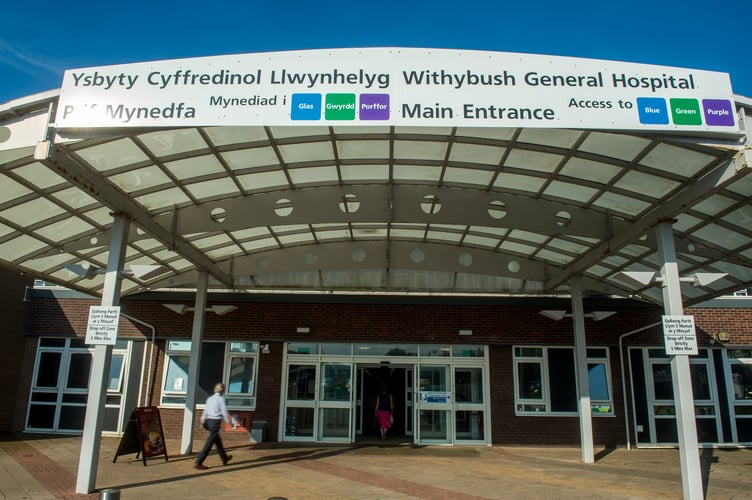
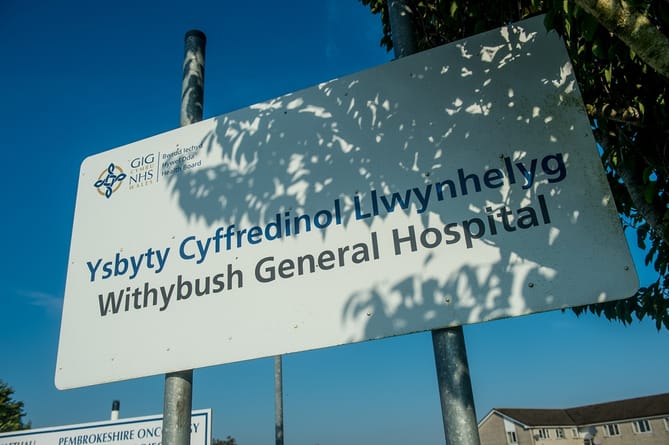
A petition will be presented to the Senedd after the summer - calling on the Welsh Government to establish one national health board for Wales with a view to empower county hospitals such as Withybush, Glangwili and Bronglais - as a local campaign group in Pembrokeshire states: “We have no confidence in the current multi-board structure - after decades of decline, trust has been damaged. Wales deserves better!”
The damning verdict follows the end of a second consultation by Hywel Dda University Health Board on stroke services in Pembrokeshire, Carmarthenshire and Ceredigion, which saw over 3,000 people take part.
Hywel Dda University Health Board endorsed the launch of a second phase of public consultation on the future of stroke services across its four main hospitals in late May.
It forms part of the wider Clinical Services Plan that the Health Board engaged upon in summer 2025.
A public consultation on the Clinical Services Plan last year drew more than 4,000 responses and more than 17,000 signing one of the biggest petitions in the Senedd’s 26-year history.
Hywel Dda Health board members in February were told the current service being offered was not achieving the standards required, but the board was told the service is safe currently. No definite decision was made at that meeting on the future of stroke services, but a new plan then emerged - an amalgamation of new options presented to the health board in February.
The preferred option being consulted on includes a 24-hour acute stroke and rehabilitation unit at Glangwili Hospital; a stroke rehabilitation unit at Bronglais Hospital; and treat and transfer services at Bronglais, Prince Philip and Withybush hospitals, with patients transferred to Glangwili Hospital or a specialist thrombectomy centre where appropriate.
The latest petition put forward by the ‘Save Withybush Campaign’ group in Pembrokeshire highlights ongoing concerns about the future of local hospital health services.
“For three decades, healthcare services across Wales have declined. Departments have closed or been downgraded, maternity, mental health, and specialist services centralised or removed, and waiting times have grown intolerably,” it states.
“In some counties, provision has reached “ground zero”, where timely access to essential care cannot be guaranteed. We have no confidence in the current multi-board structure, which has created inconsistency, duplication, remote decision-making and weak accountability. Wales is a small nation and should not face postcode inequality in healthcare.

“Patients travel further, staff are overworked, and communities feel abandoned.”
“A single national health board would reduce bureaucracy, strengthen oversight, and ensure fairer distribution of funding and standards.
“County hospitals must have defined authority to manage core local services and respond to local needs. Healthcare is a public lifeline. After decades of decline, trust has been damaged. Wales deserves better.”

Local campaigner Jackie Gilderdale said of the petition [created by Hayley Wood of the Save Withybush Campaign]: “This is a crucial opportunity to make your voice heard on an issue that affects many people and every signature genuinely helps.
“The petition will be presented to the Senedd in September, so there is still time to build strong public support and ensure it receives the attention it deserves.
“If you care about this issue and all the hospitals within Hywel Dda please consider adding your name and encouraging others to do the same so it reaches as many people as possible.”
The consultation on the future of stroke services across Hywel Dda closed on July 26. During the eight-week consultation, patients, carers, staff, partner organisations and neighbouring communities shared their views on proposals for the future of stroke services across Carmarthenshire, Ceredigion, Pembrokeshire and neighbouring health board areas.
A spokesperson for Hywel Dda stated: “We received feedback through questionnaires, events, meetings and online sessions, helping us better understand people's views on the preferred option for stroke services.
“This includes over 700 questionnaire responses received to date, alongside conversations with more than 3,000 people at 120 engagement events and activities.
“No decisions have been made. All feedback received will now be reviewed alongside responses gathered during the first phase of consultation in 2025, the latest clinical evidence, data and updated impact assessments.
“This will be followed by a period of conscientious consideration.
“This means taking time to carefully review and reflect on all feedback before any decisions are made.”
A full report on the consultation findings will be available and shared as part of Hywel Dda’s November Board meeting, where a final decision on the future of stroke services will be made.
However, a Ceredigion-based campaign group set up in the wake of what it calls ‘reckless’ plans to remove stroke services from Bronglais Hospital has warned of ‘consultation fatigue’ for residents.
The second phase of the consultation ran for eight weeks from May 28 until 26 July 26; and cost £71,809 to undertake, documents show.
Protect Bronglais Services (PBS), established in 2024, has written to the health board as part of a second consultation on stroke services in Ceredigion, Carmarthenshire and Pembrokeshire with preferred plans seeing the unit at Bronglais downgraded despite mass protests.
PBS said it is a “collective feeling that it is something of a travesty that we should all have to go through this again”, and said during its meetings with residents that they had “encountered much ‘consultation fatigue’ as you might well expect.”
In its submissions to the second consultation, the campaign group said that it remains “strongly opposed to any proposal which would seek to dismantle or reduce stroke services at Bronglais.”
“The proposed centralisation of stroke services is based on models developed for large urban areas and does not reflect the geography, transport challenges and the population density,” stated PBS.
“A key rationale for change to stroke services given by the Health Board is fragility of service, but to reduce four currently functioning acute stroke units in Hywel Dda down to just one covering such a huge area would make the service more fragile, not less.
“It would be a reckless act to base acute stroke services for the whole of Hywel Dda at a single hospital.
“Retaining more than one acute stroke unit within Hywel Dda would provide greater resilience and better reflect the needs of our rural communities.
“PBS remains firmly convinced that the downsides of the ‘preferred option’ heavily outweigh the benefits.”
Following its Annual General Meeting held on July 30, Hywel Dda Health Board has outlined what it calls ‘progress’ in reducing waiting times, improving patient experience and strengthening community-based care.
The meeting reviewed performance during 2025-2026 and highlighted priorities for the year ahead, including further improvements in urgent and planned care, and long-term financial sustainability.
The Health Board reported progress in several key areas, including cancer services, mental health, infection prevention and workforce stability.
Dr Neil Wooding CBE, Health Board Chair said: "2025-26 has been a challenging year, with extremely high demand, staffing pressures and financial constraints. These pressures have at times been difficult for our patients, staff and communities. Despite this, our focus has remained on keeping people safe, supporting our staff and improving care wherever possible.
“We are making steady progress, but we know there is more to do. Looking forward, we will focus on improving access to care, supporting our staff and delivering sustainable services for our communities.”
Comments
This article has no comments yet. Be the first to leave a comment.