


An official application for the controversial DARC ‘space radar’ scheme at Pembrokeshire’s Cawdor Barracks has now been lodged with county planners.
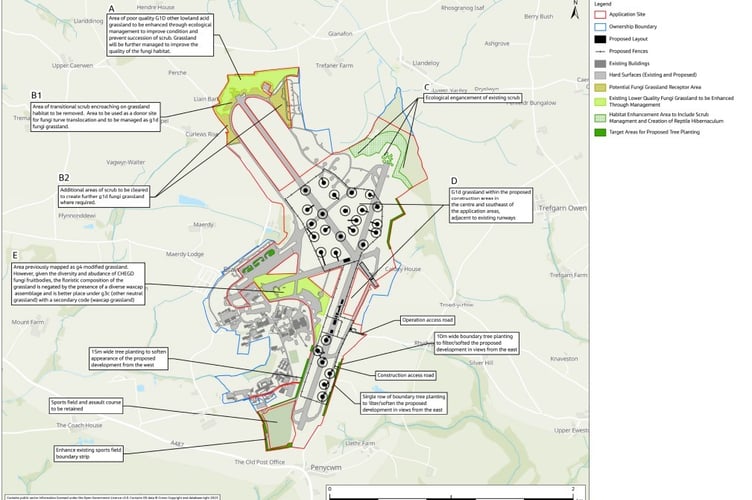
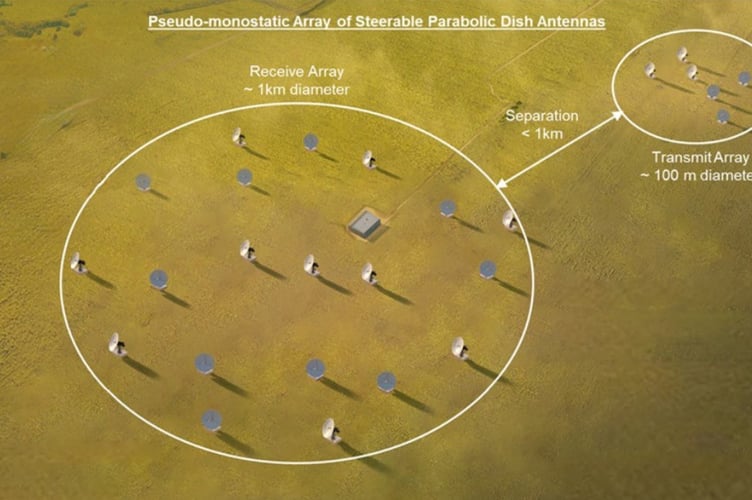
The Ministry of Defence wants to install 27 radar antenna and a long list of associated works at Cawdor Barracks, Brawdy for a worldwide network of sensors called the Deep Space Advanced Radar Concept (DARC) to track active satellites and other objects which would utilise three sites worldwide, part of the AUKUS trilateral security partnership, in the USA, the UK and Australia “enabling 360-degree coverage of the sky at all times of day and under any weather conditions”.
In late 2023, Cawdor Barracks was identified as the preferred UK site by the-then UK Defence Secretary, Grant Shapps.

.jpeg?width=209&height=140&crop=209:145,smart&quality=75)


A supporting statement accompanying a recent pre-application consultation, through agent Montagu Evans LLP said: “The Deep Space Advanced Radar Capability proposal will enhance the UK’s ability to detect, identify, and track objects in Earth orbit, including satellites, space debris, and potential threats.
“This capability is vital for ensuring the resilience of UK space systems, enabling the UK to secure attribution, maintain stability and provide information for managing emerging challenges. Fundamentally, the project forms a key site that will support wider international space traffic management and enhance collective international security.
“As part of the ongoing investment into this domain, the UK has been working with its allies to identify a location for a new deep space monitoring facility to protect and defend both military and civilian infrastructure that supports our way of life.”
Following that consultation an official MoD application has now been lodged with Pembrokeshire County Council, which would be the main UK contribution to DARC.
A supporting statement says of the DARC scheme: “This capability is critical to protect and defend the services provided by satellites, ensuring continuity and resilience against collisions or debris-related incidents.
“Without DARC, the UK faces a significant risk of losing access to these vital services, which would have severe consequences for national security, economic stability, and public safety. For context, the economic impact of losing GPS services alone is estimated at £1.422 billion per day, highlighting the scale of potential disruption.”
It says the scheme would create 90 full time equivalent construction jobs, and, when operational, will result in the creation of 60 full time equivalent jobs including operation, maintenance and security staff.
It concludes by saying the proposals would have many benefits including protecting and defending “in-orbit critical national infrastructure, which supports UK Armed Forces operations at home and abroad,” and will also “provide previously unavailable data that will be distributed amongst all branches of UK government, through the UK Meteorological Office and the UK Space Agency, to better inform national and regional decision-making, improve planning and identify resilience priorities”.
St Davids City Council members recently unanimously opposed the pre-application consultation proposals, and public objectors have raised concerns with protests recently taking place outside the barracks and County Hall, Haverfordwest.
South Pembrokeshire Labour MP Henry Tufnell has welcomed the proposals; however Welsh Labour leader Eluned Morgan has not.
Comments
This article has no comments yet. Be the first to leave a comment.