
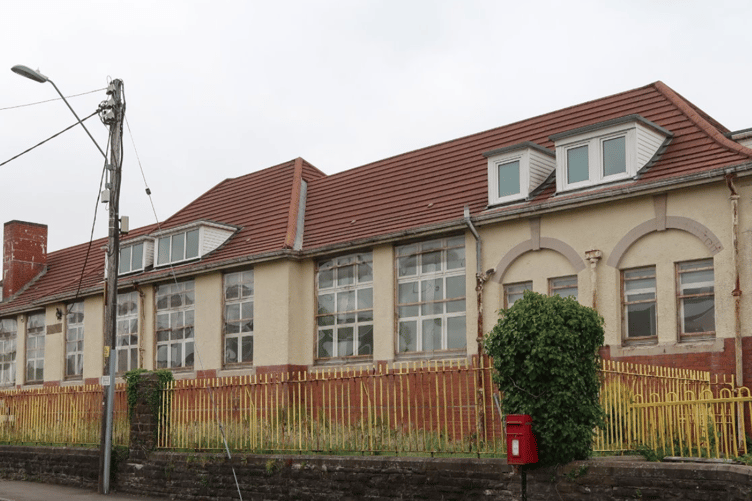
Cwmgors primary school closed in 2015 after years of protests. Sat on the market for years, many worried it would continue to degrade or be demolished.
A place children and parents would gather, it was one of many spaces closing its doors in the ex-mining community.

Struggling with isolation, listed in the top 10% most deprived communities in Wales, and compounded by the pandemic, the area was in desperate need of spaces to gather and connect.
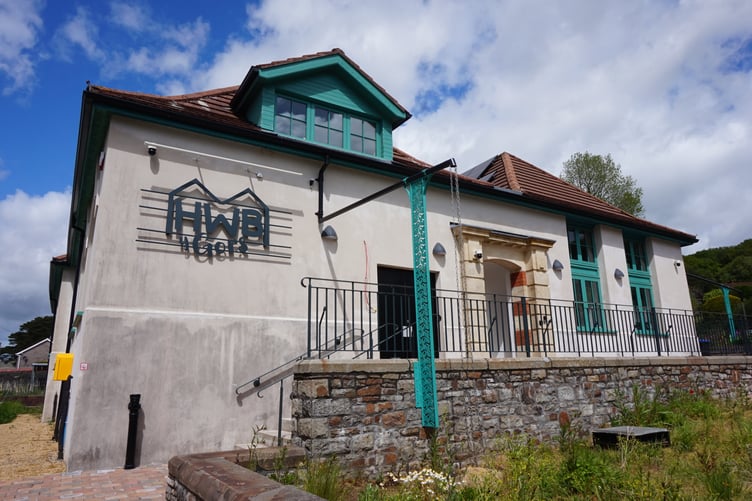
In 2018, community energy charity Awel Aman Tawe (Aman Tawe Wind - AAT) stepped in and bought the school, and the newly rebranded Hwb y Gors recently opened its doors for the first time.
Louise Griffiths, a parent whose children went to the school, is now the hub’s centre manager: “This building was so well loved.
“There are real ‘pinch me’ moments when you see past pupils and ex-staff coming in; we’ve got kids running up and down the corridors again - that’s really special.”
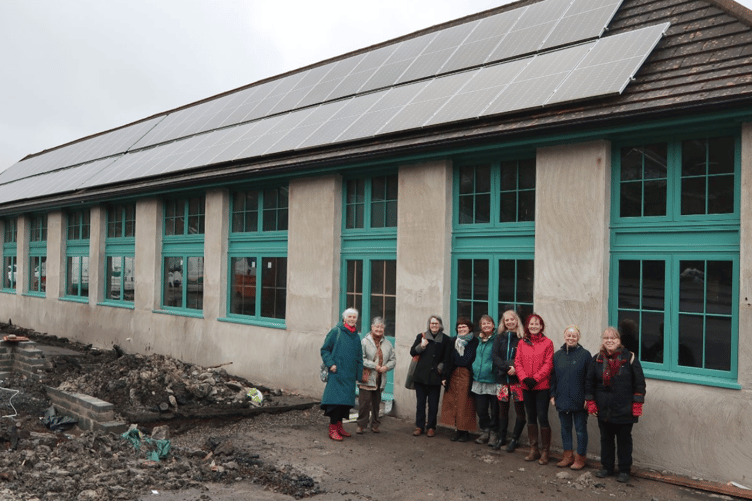
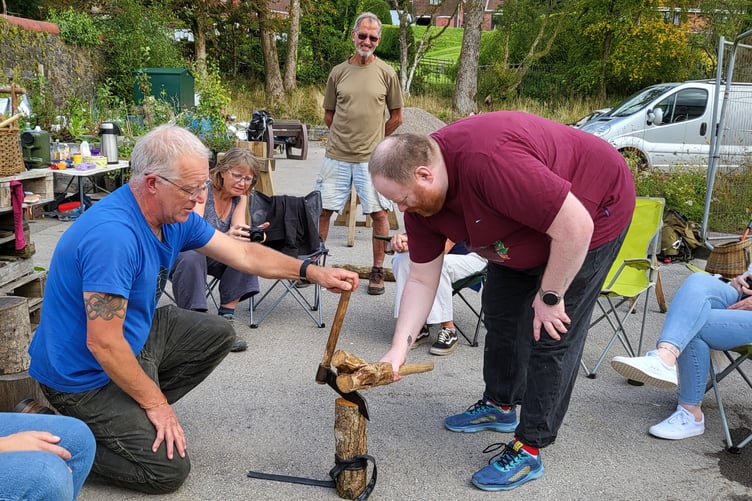
Hwb y Gors now provides a low-carbon community space for groups that didn’t have a space to gather before, including a mental health group, Welsh-learners group, film club, monthly repair cafe, cooking workshops and youth theatre.
It offers a hall, co-working office space, community cafe, art studio with a kiln, and garden, making space for new groups too, including school art groups.
Louise Craik, Founder of Shadows Depression Support Group, said the joined-up nature of the hub has become a crucial part of her attendees' recovery, with her group reaching capacity on its very first session: “It’s a lovely welcoming place.
“People arrive isolated, they’re scared, they don’t talk much to anybody.
“So when they come in and see all the activities in the Hwb, we can see them growing every week.
“We work hand in hand [with the Hwb]; like it’s part of the journey to recover.
“They stay afterwards and go to the caffi, have lunch; with extraordinary friendships being made. What’s created there is amazing.”
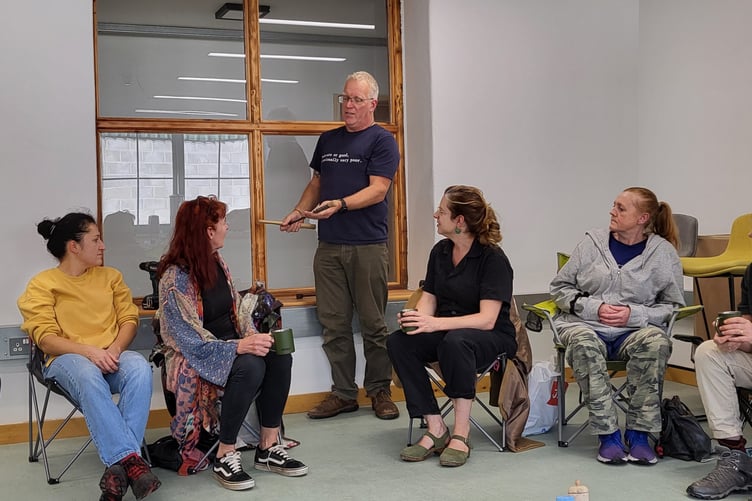
The packed sessions are often attended by men, which she describes as “extraordinary”, spanning ages 18-74.
Both the money to pay for the mental health sessions and to buy the building came from the wind that courses through the valley, thanks to the charity’s community-owned windfarm.
In 2017, two wind turbines were erected above Cwmgors by an entrepreneurial group of locals who wanted to harness local wind for local good.
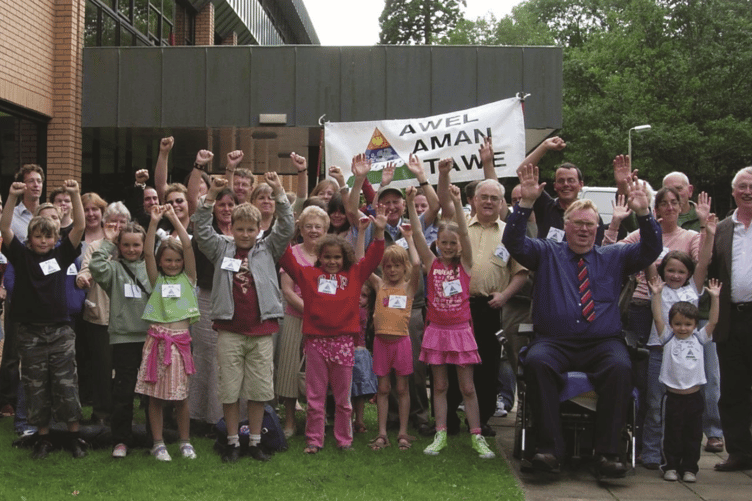
Couple Emily Hinshelwood and Dan McCallum led the charge in 1998 with a vision.
Emily, now the Creative Director at AAT, said: “We just realised it was a very windy place.
“It was about 15 years after the miners’ strike. The area was quite run-down; there was a lot of unemployment and disillusionment, and many services were being withdrawn from the area.
“We felt that if we could build a wind farm, we could sell the energy and put all the profits back into the community and do something to support the area's regeneration.”
It wasn’t a straightforward mission, taking 19 years, battling misinformation, planning inspectors who three times rejected the scheme on grounds of ‘visual impact’, two common land applications, a public enquiry and a judicial review.
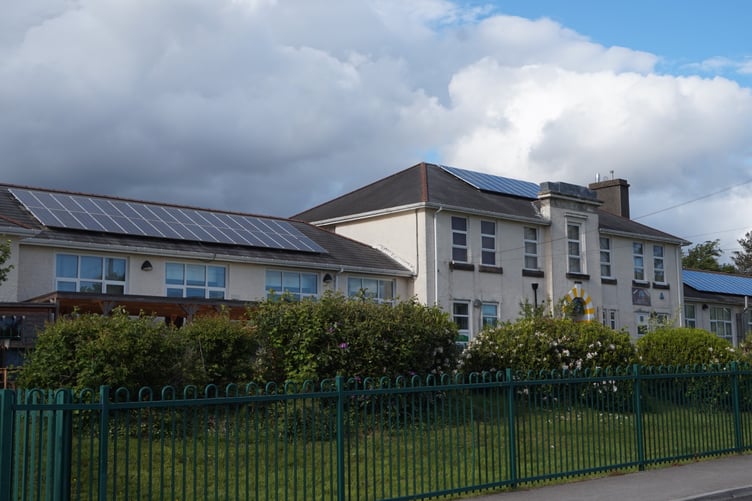
It took so long to get planning consent that AAT established a successful solar energy cooperative in the meantime (Egni Co-op), which has installed solar panels on over 100 sites from schools to community buildings to businesses, becoming one of the largest rooftop solar co-ops in the UK.
A simple scheme in theory, putting up a wind farm to make money through electricity, it’s still a rarity, with fewer than ten community-owned wind farms accounted for in Wales, and all with single turbines.
Though private wind farms usually have a community fund, recent research found community-owned wind farms in Scotland generated 34 times the wealth for locals than privately-owned wind farms.
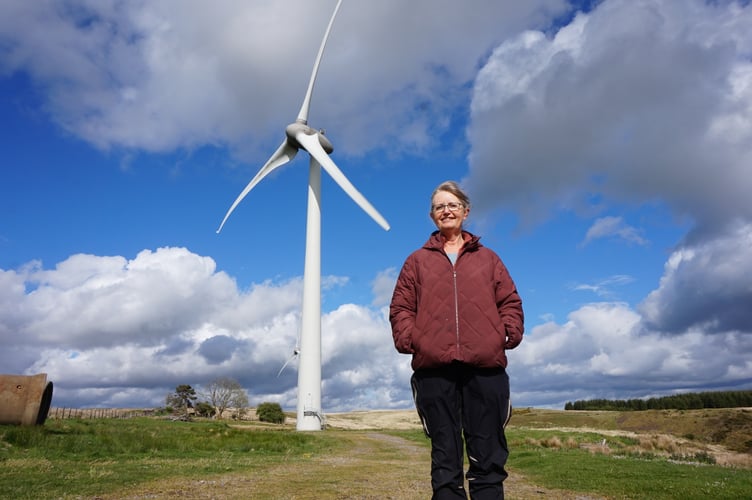
The turbines are powerful - only a year after the turbines were up, AAT bought the school building using their very first energy pay cheque, earning an average of £300k a year, generating about 11,000,000KWh/ year - enough to supply about 3,000 homes.
The money transformed the old school, which was suffering from dry rot and subsidence. Their flagship project now stands as a much-desired community resource built with the future in mind.
The 110-year-old building now has solar panels, heating through ground-source heat pumps, nature-based drainage recycling rainwater for toilets and watering the gardens, and is insulated using natural cork, aiming to keep running costs low and the building secure for years to come.
Asked about their financial model, which pools money for community projects, Emily said: “Community is fragmented right now; greater connectedness is needed.
“Isolation and a lot of mental health issues all around, anxiety and not being able to communicate with other people - it’s a big thrust of what we want to do, to bring people together.”
Often compared with Tower Colliery, the coal mine bought by the community in the 90s, the team see wind as the new energy source bringing money back to the valley and helping to unite communities once more.
And they aren’t stopping here - their community electricity turned community energy is now focusing on its next venture: restoring a closed pub, the New Star, and reopening it for community use - and hopefully adding a few more turbines to their wind farm to help.
Comments
This article has no comments yet. Be the first to leave a comment.