
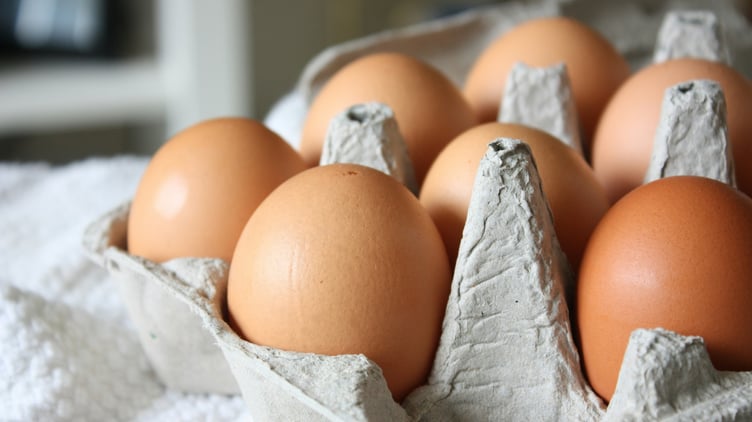
A national outbreak of salmonella food poisoning has seen hundreds fall ill and one person die.
Following the outbreak that UK experts believe could be linked to eating food made with imported eggs, food hygiene experts at High Speed Training have reported a 900% increase in online searches for "Salmonella outbreak," with public interest hitting its highest point in over 20 years, according to search data.
Foodborne pathogens such as norovirus, Campylobacter, Listeria, Salmonella and Shiga toxin-producing Escherichia coli (STEC) cause approximately 2.4 million cases of disease in the UK population and impose an annual cost to society equivalent to £9.1 billion every year.
Salmonella infection can be life-threatening, and Dr Richard Anderson, Learning Experience Director at food hygiene experts High Speed Training, explains the causes and effects it can have.
He said: “Salmonella is a common bacterial disease that is most often caused by the cross-contamination of faeces with our food or drink, making food hygiene and safety absolutely vital in prevention. Salmonella is more common in raw food, fruit and veg, eggs and seafood, giving any establishment that deals with food a major responsibility to be trained sufficiently when preparing and cooking food, so that salmonella doesn’t become an issue for them.
“Salmonella can have some serious side effects for those who contract it, from a fever to diarrhoea, and in some very serious cases, it can be life-threatening. This makes it all the more important for establishments to put the right practices in place to prevent occurrences of the bacteria.”
Dr Anderson continued: “Product recalls are generally issued as a precautionary measure, and are mainly for the notice of the retailers themselves, who will be required to remove the products in question from sale as quickly as possible.
“However, knowledge of product recalls is beneficial to the public for two reasons. Firstly, if they haven’t yet eaten the product in question, they can dispose of the product safely. And secondly, if they have already eaten the product, they can monitor for potential signs and symptoms of food poisoning.”




For more tips and in-depth guidance, visit: What is Salmonella and How Do I Prevent It?
Comments
We've recently changed our login process. If you have an account for commenting, you will need to re-register on the login window.
This article has no comments yet. Be the first to leave a comment.