
The impact of this summer’s drought on one of Pembrokeshire’s iconic products will be the main talking point when NFU Cymru meet with the Cabinet Minister for Rural Resilience and Sustainability, Llyr Gruffydd MS, on the NFU Cymru stand at Pembrokeshire County Show today (August 18).
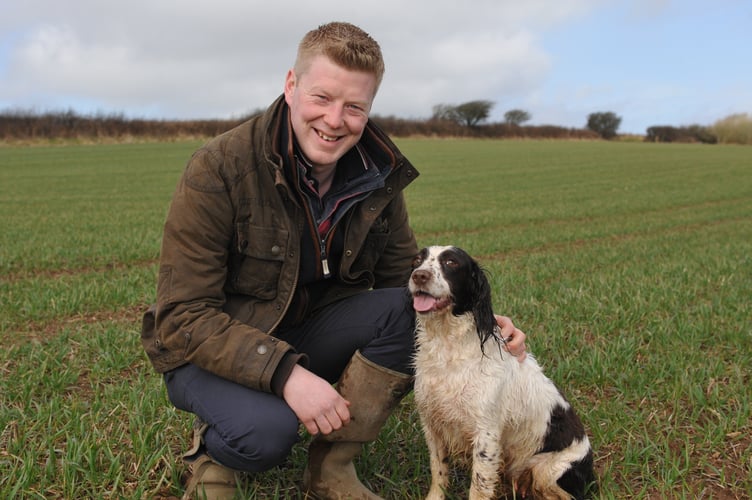
Pembrokeshire potato grower and Chair of the NFU Cymru Combinable Crops and Horticulture Board, Tom Rees, will outline how the drought is having a major impact on yields of potatoes and the confidence of growers in the county.
Tom said: “The lack of rain and the intense heat over the last two months have had a dramatic effect on our potato crops; on our own farm we estimate a probable drop in yield of 25-30% compared to a normal year.
“It’s not just the drop in yield, the lack of water means that our potatoes have stopped growing, with many smaller than normal it means we have a greater percentage not reaching the size required to become a saleable product.
“Speaking to fellow growers across the county they are seeing a similar drop in yield. Potatoes are a high-cost crop to grow and this level of reduction in yield will have a significant impact on cashflow over the next 12 months. There is no doubt that after this summer there is a crisis of confidence in the sector.”
Puffin Produce, the major purchaser of potatoes in the county, the home of the Blas y tir brand and suppliers of a host of retailers and wholesalers across Wales and further afield also share the concerns of growers in the county.
Huw Thomas, CEO of Puffin Produce said: “Yields of our normal ‘white’ potatoes are down by around 20% in Wales this season. These potatoes are hugely popular with our customers being ideal, in particular, for mashed potato.
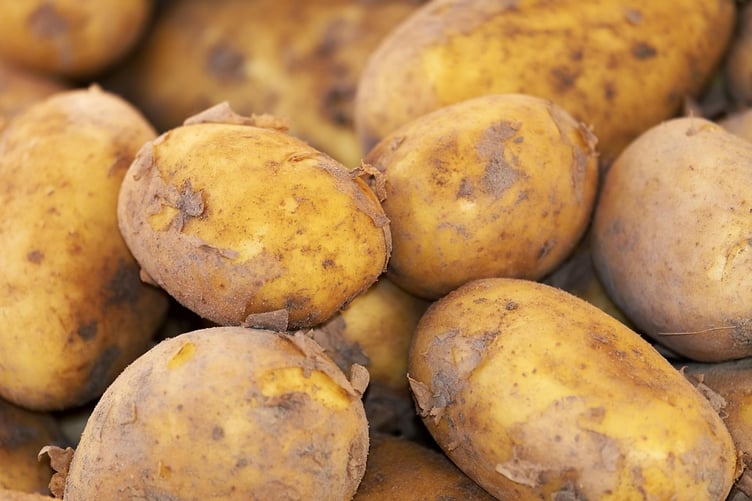
“What we are seeing is that the bone-dry conditions are meaning that potatoes are a lot smaller than we would like, and whilst yields are down by 20%, in actual fact the number of larger potatoes that we have that are suitable for ‘baking’ are down by nearer 50%.
“For our growers, a 20% loss in yield can have a dramatic effect on the viability of growing the crop, meaning the difference, for many, between making a profit to a significant loss on their crop this season.”



Whilst there is no doubt that 2026 is one of the most challenging on record for the sector both Tom Rees and Huw Thomas believe that the county must remain a place renowned for growing a quality potato.
Mr Thomas added: “Despite the challenges we face this year, we firmly believe that the Welsh potato sector has a bright and prosperous future, we have growing demand for our produce within the retail and wholesale sector and we have growers who are passionate and experts in growing a world class product.”
Also, at the show today and meeting with the Cabinet Minister is NFU Cymru President Abi Reader.
Abi will talk about the support that government can provide to help the sector deal with an increasingly volatile climate.
She said: “We need to be better at harvesting the plentiful rainfall that we have in Wales for much of the year, storing it for use at times of shortage like we are seeing now. We look to this new Welsh Government, through the optional layer of the Sustainable Farming Scheme, to provide investment support for the construction of farm scale irrigation ponds along with the associated irrigation equipment to secure the continued growth and success of the Welsh potato sector.
“Our growers have also told us of the significant costs and bureaucracy associated with placing an irrigation pond on farm, a pond that can often have multiple benefits, providing water at times of stress for our crops but also biodiversity benefits on the farm. We’ll be meeting with John Davies, Independent Chair of the Welsh Government review into Red Tape at the show today to highlight how we believe this process could be streamlined.”
Abi will also talk of the impact of the drought across all sectors and the important role that the SFS Universal layer plays in underpinning high-quality food production.
She continued: “The impact of this summer’s drought is hitting all sectors and all areas of Wales hard, with crop yields down in the arable and horticulture sector, our livestock farmers are having to provide additional feed to their livestock, opening forage stocks that were set aside for this winter. Wildfires have ravaged through many of hill and mountain grazing lands. The impact of this drought will last for some time to come, our arable and horticulture farmers have less crop to sell, and our livestock farmers needing to purchase additional feed for the winter at significant cost.
“These severe weather events are further proof of the importance of the Universal Payment, and in particular the Social Value Payment, within the Sustainable Farming Scheme, which supports farmer resilience and underpins food production in the face of the increasing challenges faced as a result of the weather and global instability."
Comments
We've recently changed our login process. If you have an account for commenting, you will need to re-register on the login window.
This article has no comments yet. Be the first to leave a comment.