
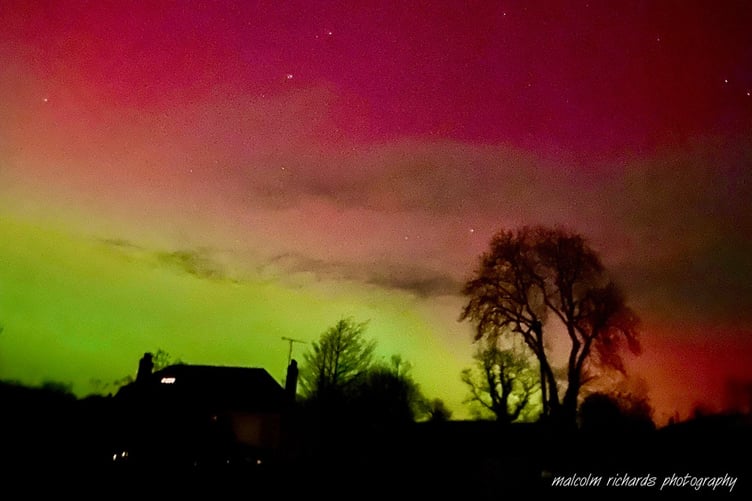
AURORA Borealis, the Northern Lights, painted the skies above Pembrokeshire in moving shades of magenta and green last night (January 19).
The phenomenon caught the attention of local photographer Malcolm Richards, who witnessed the changing hues from Wiseman’s Bridge.
Meanwhile, Kay Belle - a member of the Facebook-based ‘Picture This: Tenby Observer photography club’ - captured some amazing scenes from Stepaside.
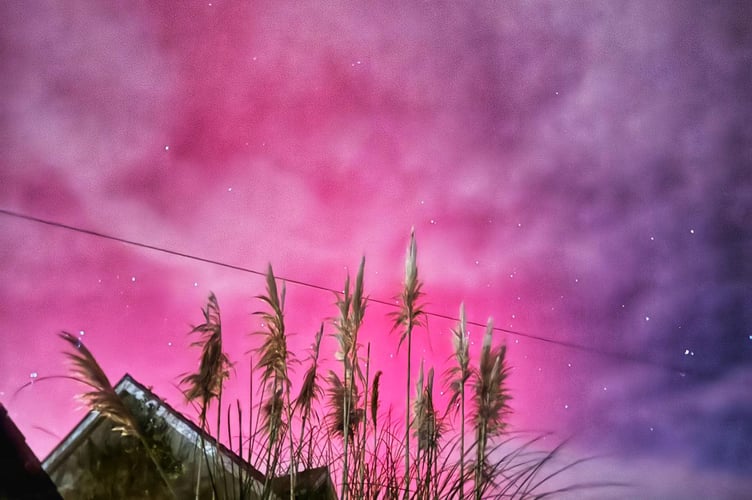
Around 9.30pm at Pembroke Dock, although the effect was more subtle than the above photographs imply, it was most definitely visible and created some personal excitement as it was my first experience of seeing the Northern Lights.
This past week, the stars in the night sky have been unusually clear above the town despite the many lights shining into the darkness from the homes and industries around the Milford Haven waterway.
The Northern Lights (aurora borealis) are caused by charged particles from the Sun colliding with gas molecules in Earth’s upper atmosphere. Oxygen creates green (most common) or red, while nitrogen creates blue, purple, or pink, depending on the altitude of the collisions.



The particles are carried by solar winds. While the aurora usually appears near the Arctic Circle, we are currently experiencing the peak of an 11-year cycle, known as the ‘solar maximum’. This means increased sunspots and more frequent solar flares/storms. It’s this significant solar activity that triggers geomagnetic storms, pushing the aurora further south, making it visible from locations like South West Wales.
Comments
We've recently changed our login process. If you have an account for commenting, you will need to re-register on the login window.
This article has no comments yet. Be the first to leave a comment.