

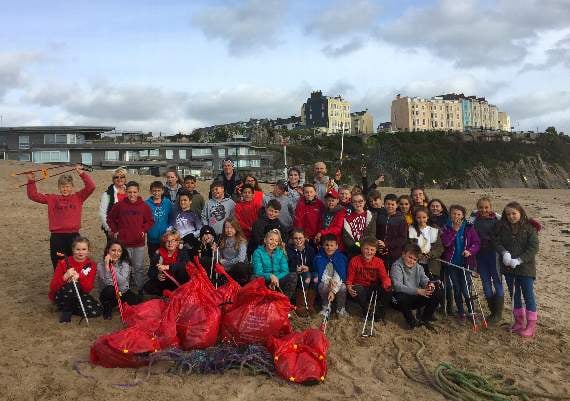
The Darwin Centre and pupils from Tenby Church in Wales School went back in time at a recent beach clean. Ex-hurricane Ophelia had torn up the sand dunes on the town’s South Beach and had revealed some picnic litter from the past. A crisp packet and a Corona Lemonade can were found together, both dating from the 1970s, a Nivea sun cream tube dating from the 1960s, and a Pepsi Cola can from 1984 were found in different areas of the dunes.



The children were amazed at the finds and it helped them to get a real sense of how long plastic and metal litter can survive in the environment. As well as the special finds, the pupils filled 10 bin bags full of plastic debris brought in by the recent storms. Learning about ocean currents, tides, waves and the properties of plastic. With marine litter becoming one of the hot topics across the globe, it is a stark reminder of the incredible amount of plastic in our oceans. It is estimated that around three million pieces of plastic enter the sea every day worldwide.
Plastic can have a catastrophic effect on the livelihood of marine creatures, entangling them, choking them, and drowning them, but it is the fact that plastic doesn’t biodegrade; instead it breaks down into smaller and smaller pieces that is causing the most worry among scientists. As the plastic breaks into tiny pieces, it absorbs toxins from the water, concentrating these pollutants on its surface; the tiny poisonous pieces of plastic are then being eaten by plankton and other tiny creatures at the bottom of the marine food chain.
As bigger and bigger creatures consume these plastic-filled animals, the toxic effect bio accumulates in their bodies causing devastating effects in top predators like whales, dolphins, turtles, and sharks. Among the effects are premature births and the poisoning of marine mammals milk. A study by the Vancouver Aquarium reveals that a humpback whale can swallow around 300,000 pieces of micro plastic every day whilst consuming its diet of plankton and other small creatures.
Recent reports suggest that by 2050, there will be more pieces of plastic in the oceans than fish.
Marten Lewis from the Darwin Centre said: “It really excites the children to find wrappers and cans from the past, and it really helps them to understand the massive problem we have with marine litter. The pupils did a great job collecting 10 bags of rubbish which would otherwise be floating off into the sea causing all manner of environmental problems. I would like to thanks the Tenby Church in Wales School, and our sponsors Dragon LNG for supporting our education programme.”
Comments
This article has no comments yet. Be the first to leave a comment.