

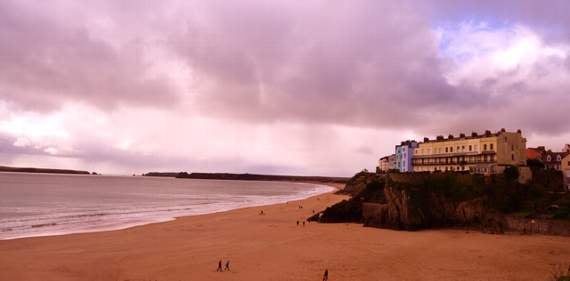
A Tenby councillor wants the resort to unite against the growing plastic pollution crisis and get on board with the ‘Plastic Free Coastlines’ initiative.
Cornish town, Penzance recently became the first community in the UK to be awarded ‘plastic-free’ status after dozens of residents and business owners backed a scheme run by the marine conservation charity, Surfers Against Sewage (SAS), aimed at helping clean up oceans and beaches.
Shops, cafés and visitor attractions worked together in Penzance to reduce single-use plastics, whilst children and adults have conducted regular beach cleans, to clear the sands and shore of ‘mermaid’s tears’ - the small plastic pellets that line the areas at low tide.
To win its coveted status, Penzance Town Council passed a motion pledging its support to all plastic-free initiatives in the town.




With another 100 communities across the UK taking part in SAS’s plastic-free coastlines scheme and working towards the status, Clr. Laurence Blackhall told his fellow councillors at Tuesday night’s meeting of Tenby Town Council that it would be great if the resort also signed up to the initiative.
“I’ve requested an ‘action pack’ which will point to information the town can consider on better recycling, beach cleans, and to reduce single-use plastic items such as coffee cups and plastic water bottles,” he explained.
“It would be good to meet up with Tenby Chamber of Trade and Tourism and LVA representatives, and work with local schools to have conversations with them about the scheme, before holding an open public meeting, to look at how we can take things forward and bring plastic-free initiatives into Tenby.”
It is estimated that around three-million pieces of plastic enter the sea every day worldwide, with plastics having a catastrophic effect on the livelihood of marine creatures, entangling them, choking them, and drowning them, but it is the fact that plastic doesn’t biodegrade; instead it breaks down into smaller and smaller pieces that is causing the most worry among scientists.
Recent reports suggest that by 2050, there will be more pieces of plastic in the oceans than fish.
“It’s hard to imagine where it all comes from,” commented Clr. Mrs. Tish Rossiter.
Clr. Blackhall said that one discovery on a beach in the UK recently had been a McVities Royal Scot biscuits package, which had been preserved in the dunes for seemingly 30 years.
“Items shift around, wash down local rivers, and can come from anywhere, especially after a big storm,” he explained.
The town clerk, Andrew Davies, told councillors that the Darwin Centre and pupils from Tenby Church in Wales School recently conducted a beach clean on the South Beach following hurricane Ophelia.
The exercise revealed some picnic litter from the past, including crisp packets and a Corona lemonade bottle dating back to the 1970s, a 1960s Nivea sun cream tube, and a Pepsi Cola can from 1984 in different areas of the dunes.
“The children were amazed at the finds and it helped them to get a real sense of how long plastic and metal litter can survive in the environment,” explained Marten Lewis from the Darwin Centre at the time.
“It really helps them to understand the massive problem we have with marine litter,” he added,
Tenby’s Mayor, Clr. Mrs. Sue Lane, backed Clr. Blackhall’s proposals to go forward with holding a meeting on the ‘Plastic Free Coastlines’ initiative, along with her fellow councillors.
Comments
This article has no comments yet. Be the first to leave a comment.