
WHILST Wales was remembering the anniversary of the Aberfan disaster, members of the Narberth and District Probus Club were reminded of the worst mining disaster in the UK which happened on October 14, 1913, at Senghenydd in the Welsh Valleys. On that day 439 coal miners and one rescuer were killed by a huge explosion.
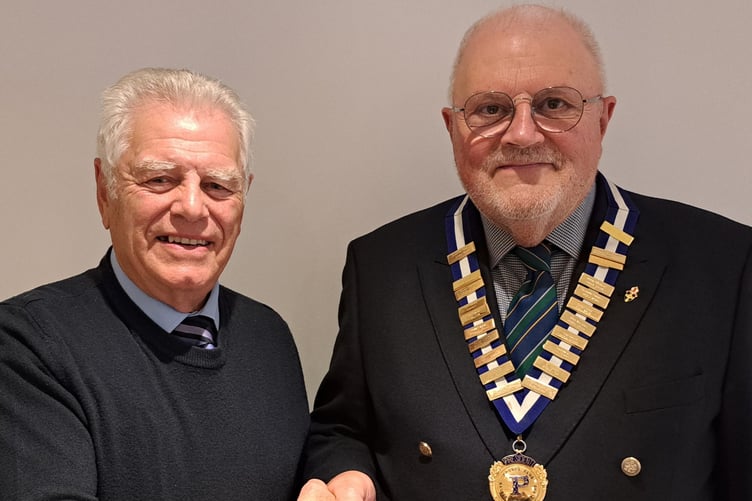
The speaker was club member Mike Richards who during his working life spent many years in the mining valleys.
Originally from Haverfordwest, Mike entered the Civil Service as a Trainee Cadet initially to the Department of Employment. He progressed to a Sub=District Manager in the Rhymney Valley followed by Senior Management posts in South Glamorgan and Gwent in the fields of employment, education and vocational training. He was seconded to the Welsh Office Education department in 1988 where he helped the WJEC to develop curriculum, pupil testing and examination standards and subsequently was awarded the OBE for services to the Welsh Office and the community.
Mike has always had an interest in sport and coached athletics for 20 years. He took up bowls and represented South Glamorgan and Pembrokeshire at County level. He took early retirement in 1997 and returned to Pembrokeshire. Upon his return he was assistant club secretary and supporters club secretary for Narberth RFC for eight years but now has a more sedate hobby as a member of Cor Meibion Hendy Gwyn. He is a Past president and treasurer of Narberth and District Probus Club.
An earlier series of explosions at Senghenydd in 1901 killed 81 miners and the subsequent inquest established that the colliery had high levels of airborne coal dust with methane and hydrogen (firedamp) which produced a lethal mixture exacerbating the likelihood of an explosion.
The cause of the 1913 explosion is unknown, but an inquiry concluded the most likely cause was a spark from underground signalling equipment that could have ignited any firedamp present together with a mixture of carbon dioxide, carbon monoxide and nitrogen (afterdamp) left after the explosion.
It took several days to get the fires under control and several weeks for most of the bodies to be recovered. An enquiry pointed to errors made by the company and its management. The colliery manager was fined £24 and the company £10. Newspapers calculated that this amounted to one shilling and 1 penny per miner lost (About £6 in today's currency).



In 1981, a memorial to the men who died was unveiled by the National Coal Board and in 2013 a memorial to the UK’s worst disaster was unveiled at the former pithead.
Comments
We've recently changed our login process. If you have an account for commenting, you will need to re-register on the login window.
This article has no comments yet. Be the first to leave a comment.