
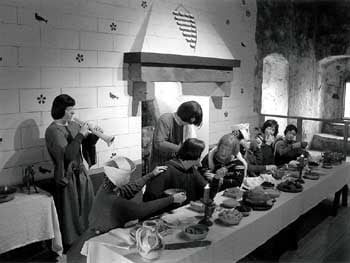
The interior of the Great Hall in the gatehouse of Pembroke Castle has been given a mediaeval makeover. The hall has been transformed into something far cosier and colourful than might have been imagined.




A popular image of the interior of a mediaeval castle or manor house is one of bare, damp stone walls, lit by flaming torches, with a few pieces of roughly cut furniture, but, in fact this was not the case for those who could afford it. They would have preferred to cover the walls with plaster that would have been lime-washed and often beautifully painted. Plastering not only helped to insulate the building, but using interior decoration was a symbol of status and wealth.
During the 13th and 14th centuries, a favourite technique was 'masoning' or ashlaring' where the plastered walls were picked out with red lines to imitate blocks and joints of fine ashlar masonry. Within these painted ashlar blocks there may have been painted flowers, foliage or birds. Patterned wall hangings draped over windows and doorways would have helped keep out chilling draughts.
In high status homes there would have been a few pieces of carved and painted furniture, particularly a chest, which would have travelled with the family and transported their valuables, including the prized wall hangings. A replica of a magnificent 13th century chest is to be found amongst the furnishings of this former home of the earls of Pembroke.
Visit Pembroke Castle and take a new look at life in the Middle Ages.