
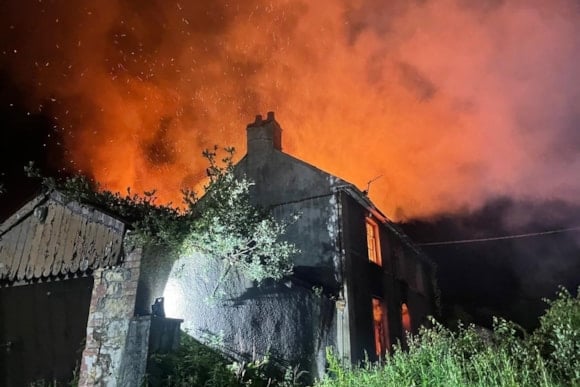
NFU Mutual’s new Farm Fires Report has revealed that fires cost farmers in Wales an estimated £6.2 million in 2025, up 29 per cent on the previous year, devastating the country’s farming communities.
Across the UK, record temperatures and hours of sunshine in 2025 saw the cost of fires to farmers increase 18 per cent to an estimated £118m while fires relating to agricultural vehicles added another £32m.
Agricultural vehicles often operate at extremely high temperatures, with the hot, dry weather of the previous two summers meaning a spark can quickly become a dangerous fire. Tractor fires made up over half of vehicle costs in the UK, at £16.1m, while combine harvester fires cost £4.8m in 2025.
The primary causes of fires involving crops, buildings and equipment on farms were arson, lightning strikes, and electrical faults.
With the prolonged heat and dry weather continuing into 2026, where temperature records across the country have again been broken, the rural community is shouldering a substantial risk of fires, especially during periods of harvest.
To manage the risk, NFU Mutual Risk Management Services offers pre-harvest training workshops to help farmers familiarise themselves with fire prevention tactics to help minimise fire breakouts across farms nationally.
NFU Mutual also supports the adoption of accredited fire suppression systems, providing agricultural vehicle insurance discounts to policyholders who install approved equipment onto combine harvesters.
Owen Suckley, NFU Mutual Regional Manager for Wales, said: “Agriculture makes up the very fabric of rural Wales, and farmers are key to caring for our countryside, so to see the cost of fires rising by almost a third is devastating for the nation.
“As the UK recorded the highest temperatures and most hours of sunshine on record in 2025, and 2026 seeing more extreme dry periods record temperatures, the risk of uncontrollable blazes has never been higher.
“The aftermath of this can be grave, threatening farm operations and traumatising those involved, as well as disrupting essential infrastructure which can further affect the wider community.




"Farmers do what they can to minimise risk, but prevention cannot fall to farmers alone. Stronger policy is needed, more than ever, to help tackle the causes of farm fires and protect rural businesses from their devastating impact.”
NFU’s Five asks to prevent farm fires
1. Ensure rural fire and rescue services have adequate funding to keep fire stations open and tackle the unique challenges of delivering services over wide rural areas with the growing threat of farm fires and wildfires.
2. Support the wider adoption amongst fire and rescue services of adaptors that enable fire engines to connect to on-farm water bowsers and static water tanks.
3. Create a database of the location of these bowsers and water tanks so fire and rescue services can find and use them rapidly.
4. Encourage local authorities to make use of Public Space Protection Orders to restrict high-risk activities such as disposable barbecues and sky lanterns during periods of heightened fire risk.
5. Develop a National Wildfire Strategy which sets out clear guidelines for prevention, preparedness and response, recognising the growing threat to farmland and the important role farmers play in supporting emergency services during wildfire incidents.
Five tips for fire prevention from NFU Mutual RMS
1. Have a plan in place – Put people at the heart of your fire plan and ensure everyone on site knows what to do in the event of a fire.
2. Keep electrics maintained – Electrical faults are a major cause of farm fires and a single spark can trigger a massive blaze.
3. Control hot work – Welding, cutting or grinding equipment, along with blowlamps and blow torches, produce sparks which can turn into fires if they hit combustible material.
4. Suppress the risk – Suppression systems and water bowsers play a critical role in quickly containing and extinguishing fire.
5. Keep things clean and clear – Good housekeeping helps to eliminate dust and debris and store machinery and stock safely, removing potential fuel for a fire.
What to do if a fire breaks out
• Call the fire and rescue service immediately and direct emergency services to the exact location of the fire.
• Keep the farm entrance clear for emergency service access and send somebody to direct the fire and rescue service.
• Evacuate people to a safe location as per your emergency plan.
• Only attempt to fight the fire if it is safe to do so and use the correct and maintained extinguishers.
• Prepare to evacuate livestock in the event of the fire spreading, but only if safe to do so.
• Be prepared to use farm machinery to assist the fire and rescue service, but only on their instruction.
Comments
We've recently changed our login process. If you have an account for commenting, you will need to re-register on the login window.
This article has no comments yet. Be the first to leave a comment.