
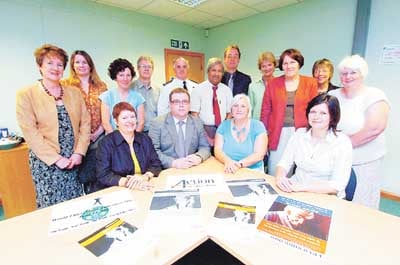
Pembrokeshire Adult Protection Committee is backing a national campaign aimed at raising awareness of the abuse of older people. To mark this year's World Elder Abuse Awareness Day (WEAAD)1 today (Friday), the committee is urging the public to make sure they understand elder abuse and know what to do if they think that someone is being abused. It is estimated that 500,000 older people are abused at any one time in the UK2. Abuse can take many forms and is often difficult to detect. For some older people it may mean having their savings slowly siphoned off and stolen. For others it may be psychological and involve being repeatedly shouted and sworn at. Some people are also subjected to sexual or physical abuse or are neglected. Pembrokeshire Adult Protection Committee - a partnership between the County Council, the Local Health Board, Pembrokeshire and Derwen NHS Trust, Dyfed Powys Police, Care and Social Services Inspectorate Wales and local voluntary organisations together with the independent sector -- is committed to tackling elder abuse. Clr. Sian James, cabinet member for health and well-being said the committee backed the national campaign because it wanted all older people to have the very best quality of life and live free from fear. "Everyone has a role to play in keeping older people safe from abuse and to make sure it doesn't go undetected," she said. "We can all help by keeping a watchful eye out for neighbours, friends and relatives." Pembrokeshire residents who have concerns that a vulnerable adult may be being abused can contact social services adult protection team on 01437 764551 or the police on 0845 330 2000. Action on Elder Abuse response line is a free confidential helpline for anyone worried that an older person is at risk. It is available 9 am - 5 pm Monday to Friday 080 8808 8141.



Key facts about Elder Abuse
Calls to the Action on Elder Abuse helpline indicate that: • Women and those aged 70 years plus are at higher risk of being abused • Typically the person committing abuse is known to the person experiencing abuse and is in a position of trust • Sixty-four per cent of abuse happens in the home and 28 per cent in a professional setting • Forty-six per cent of abuse is carried out by family members and 34 per cent by paid workers It is important to note however, that where the person committing abuse is a family member, that it is not normally the primary carer.