

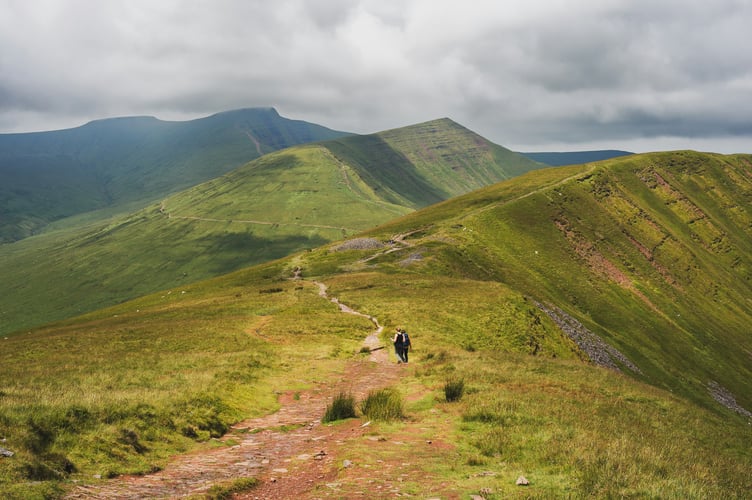
Sessions have taken place across Eryri, in partnership with the National Park Authority, and Ynys Môn, adding over 7,000 names to the list.
Work has now extended to Bannau Brycheiniog and Pembrokeshire Coast National Park with further sessions planned across Wales over the coming year.
Alice Thorne, Heritage Officer for Bannau Brycheiniog, said: “Place names carry generations of knowledge about how people have understood and shaped the landscape and are an important part of our shared heritage.



“We’re pleased to work with the Royal Commission and communities across Bannau Brycheiniog to capture this local knowledge and strengthen the National Park’s place name record for future generations.”
The List of Historic Place Names of Wales contains hundreds of thousands of place names, providing insights into the history of Wales and its language.
Its curator, Dr James January-McCann, has been running community sessions to capture place names that exist in local memory but have never been formally recorded.
He said: “A community’s sense of place, and its sense of itself is intrinsically linked with its place names. Through collecting them before they are lost we ensure the survival of these linguistic and cultural treasures, and the knowledge which they encapsulate.”
Dr January-McCann is also preparing a toolkit to allow community groups to run their own sessions independently and submit collected names directly to the list. Anyone can look up place names on the list’s online map, and they can submit their own unrecorded place names by using the Welsh Government’s recently launched online collection tool.
Welsh Government’s Welsh Language Secretary Mark Drakeford said: “Historic place names offer a window into the linguistic, social and historical forces that have shaped Wales over centuries. Once lost, they cannot be recovered. These sessions are vital to capture names held in living memory so that they can continue to be seen, heard and used.”
Comments
This article has no comments yet. Be the first to leave a comment.