

I’ve always had a concern for the Jews. Who wouldn’t given the treatment they’ve received from so-called ‘Christian Europe’ over the past two thousand years. I completely understand their desire for the land they can call their own. The creation of the state of Israel back in 1948 was, and still is a very understandable response to their suffering and their longing to return home.
But I have an equal concern for the Palestinian people. I identify with the well known Christian leader Brother Andrew who has says “It bothers me that millions of Christian tourists come every year from Western Europe and America to see dead stones. I want to see the living stones (Christian believers).”
My heart aches for those who have been dispossessed and are unable to return to the land they regard as their rightful home too, and I am angered by the injustice they experience. As some Palestinian Christian leaders have said “it’s right to love Israel but that doesn’t mean you can’t love us too.”
It’s a very complex situation of course. I realised that when I pursued my first degree in Middle Eastern history. Like so many others, many far wiser than me, I continue to wonder how this particular circle will ever be squared.




I was offered a glimmer of hope recently however when I was given a book written by a Palestinian Christian named Rayek Rizek. Rizek is an active member of an exciting initiative known as ‘Neve Shalom/Wahat al-Salam’ (The Oasis of Peace). ‘The Oasis of Peace’ he writes is the “only community inhabited by choice by Palestinian Arabs and Jews in the whole of Israel/Palestine”. Not surprisingly he has a challenging story to tell.
“Members of our community,” he continues “are among the very few in the general population who are wholly open to discussing every issue that has to do with the Israeli-Palestinian conflict, past, present and future. Tensions exist in our oasis, but they go with the territory so to speak. They bring teachable moments. They are for us fodder for enlightenment.”
As I read his words, I couldn’t help thinking that this world would be a much better place if we all had the same kind of attitude. Many a family and many a church congregation would do well to follow their example. Sadly all too few of us are ‘wholly open’ to discussing the issues that divide us, still less the injustices that plague us.
We all know that nursing a grudge or holding a grievance can cause bitterness and bitter people end up doing the most terrible things. Rizak has some wise advice for us here too. I found it in the section he entitled ‘Acknowledgements.’ I don’t usually spend time reflecting on the long list of people an author want to thank, but I’m glad I did on this occasion.
For having listed the large number of people who helped him, including a late friend who taught him ‘to think outside the box,’ he continued “Nor shall I forget to thank everyone who hurt me, because the hurt has also been a cause for my awakening and has made me the human I am today.”
That short sentence got me wondering how many of us would be able to show such generosity of spirit or whether we would be able to thank those who have hurt us because we are better people for it.
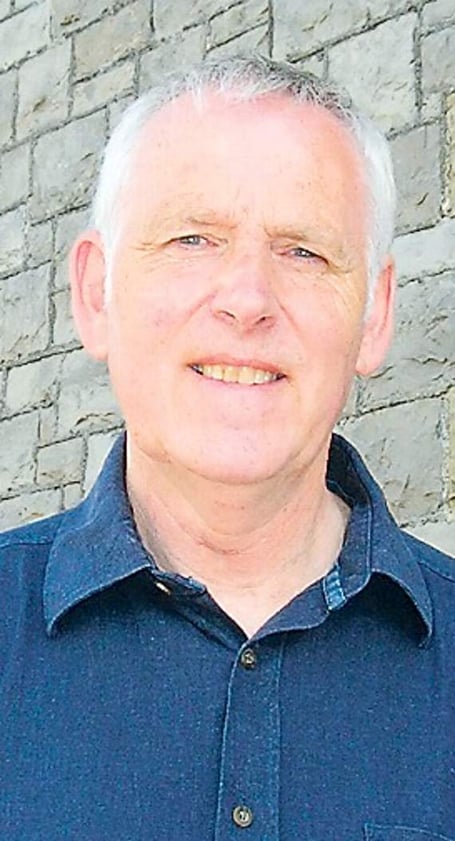
Rob James is a Baptist Pastor broadcaster and writer who currently operates as a church and media consultant for the Evangelical Alliance Wales. He is available for preaching and teaching throughout Wales and can be contacted at [email protected]
Comments
This article has no comments yet. Be the first to leave a comment.