

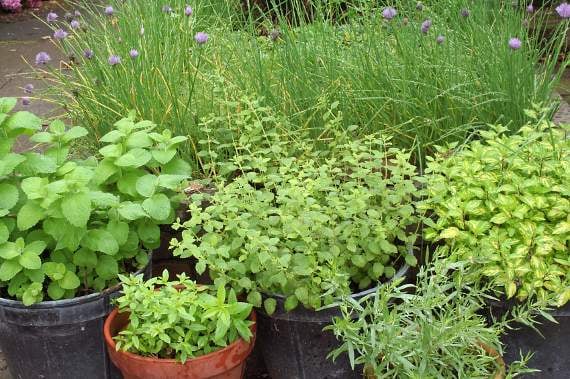
One of the simplest starter ideas for anyone new to gardening is to create an herb garden - perfect for novice planters and loved by cooks everywhere. From sage to thyme, rosemary to clipped bay and flowering chives, you can combine a variety of herbs in one space that will produce long-lasting displays as well as regular pickings for the kitchen.
If you don’t have much or any outside space then think about keeping a few pots of herbs on your balcony or windowsill – easy to reach to and there’s no rushing out to take cuttings in the pouring rain when you are cooking your favourite dish!
There are so many herbs to choose from, but the top five classic favourites are …
Mint - really easy to grow and it will cope with shady parts of the garden as well as full sun, but you need to keep it well watered and feed it. If you pick regularly it will grow bushy and give you leaves from April to November. Whenever it begins to look straggly, repot into fresh compost.




Chives – great in salads or as a soup garnish, they have lovely bee-friendly flowers and do well in partial sun. They like damp soil, so make sure they don’t dry out. You can plant them from seed or pot a growing plant.
Sage –its velvety leaves and small, purple flowers look spectacular and it requires very little maintenance over the years. It thrives in dry conditions so avoid watering it too much. Sage loses some of its flavour after about three years, but you can take cuttings and grow new, aromatic plants.
Bay – bays are both practical and ornamental hardy evergreen trees with aromatic leaves and small yellow flowers in spring. They can grow to 40ft (12m) high but can be kept small by growing in a pot and pruning. Keep them in a sheltered area in full or partial sun. They have very shallow root systems so in dry conditions you will need to water them, but other than that they are very low maintenance.
Rosemary –an evergreen, perennial hardy shrub with aromatic leaves and small purple or white flowers in late spring. It thrives in good soil in full sun and needs minimal pruning or attention throughout the growing season. You can leave rosemary in a container for several years before repotting and it can grow to a height of around 3ft (1m).
These simple tips from the Royal Horticultural Society on how to plant herbs in a container should guarantee success and hassle free growing:
Choose containers that give herbs a deep root run where they can be left undisturbed.
Use a gritty, well-drained compost
Keep the compost moist, but never soggy and use a balanced fertiliser to encourage leafy growth
As many herbs have Mediterranean origins they like being in the sun, which means they really come into their own during the summer months … perfect timing for bringing an aromatic flavour to outdoor cooking or a zing to seasonal salads.
Comments
This article has no comments yet. Be the first to leave a comment.