
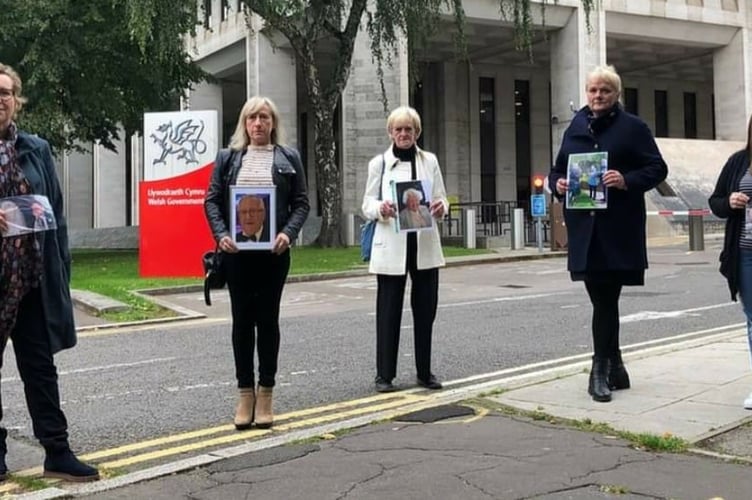
The 23rd of November just gone marked the fifth anniversary of the death of RAF Group Captain Harold Griffiths. He died of Covid-19 at Hafan y Waun care home in Aberystwyth. He was 86.
For five years his daughter Catherine, from Machynlleth, has relentlessly fought for justice for victims of the pandemic. As a member of campaign group Covid-19 Bereaved Families for Justice Cymru she co-led Module 6 of the inquiry regarding care homes in a bid to prove mistakes were made and thousands of lives were needlessly lost.
The report from Module 2 of the Covid-19 Public Inquiry has now been released and Catherine is disappointed.
“We always said that within the auspices of a UK-wide inquiry Wales would not get the appropriate level of scrutiny it needs and deserves and that’s exactly what’s happened,” she said.

“This was all about the UK Government and criticism of them, but health is devolved in Wales and Welsh Government made so many mistakes.
“There were many delays in Wales. Mark Drakeford said he was being cautious but he was abjectly slow in spite of scientific recommendations.
“It appears Welsh Government did things differently in Wales just because they could. Doing this led to Wales sustaining the greatest loss of life of all the UK nations. We didn’t need caution, we needed action and that would have prevented deaths.”
She added: “Over 12,000 people died from Covid in Wales and an enormous proportion of those were preventable. We knew that as bereaved families but that was very hard to hear.
“I read so much evidence about institutions like Public Health Wales, Care Inspectorate Wales, and The Older People’s Commission, and above all, Welsh Government, that were tasked with the protection of elderly people in Wales. They all failed us and some of the evidence is deeply shocking and offensive.
“Alasdair Donaldson was a high ranking civil servant in the department of health in Westminster. In his evidence he said this was “generational slaughter”. That’s a deeply shocking statement but entirely appropriate when you look at what happened in Wales and our government should be deeply ashamed of that.
“We know Welsh Government delayed in mask mandates, accepting asymptomatic transmission, and the testing of asymptomatic people, and this was catastrophic for care homes. They delayed the implementation of vaccines in care homes.
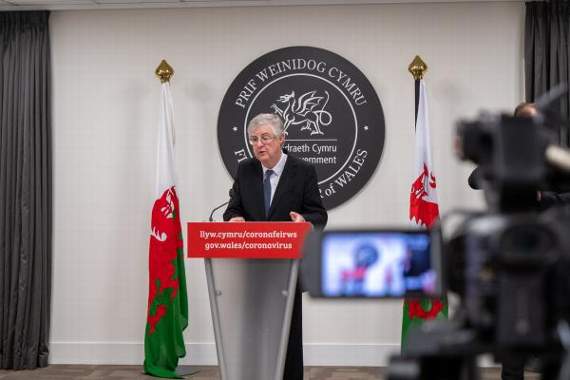
“England was slow – Wales was slower, and this proved devastating .
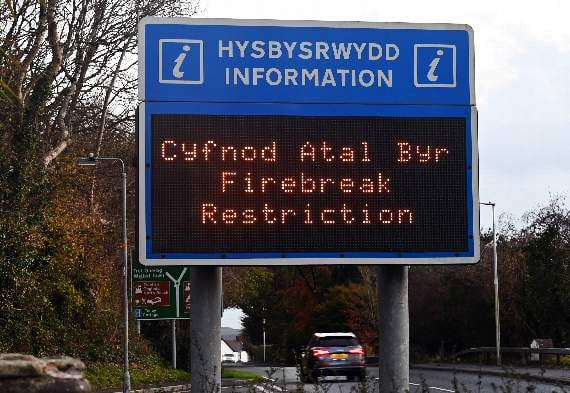
“After the firebreak lockdown in October 2020, which Wales implemented 18 days later than England, Welsh Government ignored scientific advice to stay locked down, and opened up with more cases than when we closed!
“Cases went up and up from August in Wales, way higher than other nations. We lost more people than any other UK nation and the majority of those deaths were older people.
“Because the inquiry is so big, the failings of these institutions, mainly Welsh Government, haven’t been analysed or evaluated.
“The inquiry chair, Baroness Hallett, did say there was a failure to prepare for the second wave.
“Welsh Government ignored advice from South East Asia and advice regarding reopening. People died as a result of these decisions. It is unforgivable. Welsh Government failed the people of Wales. My father deserved better. We all deserved better.”
Catherine says the fight for Welsh scrutiny goes on.
“The core group of Covid-19 Bereaved Families for Justice Cymru continue to call for a Wales-only inquiry. Not in the same shape or form as the UK one, but a small group of experts directly analysing the failings with a view to making substantive change to protect the people of Wales.”
Mary Sinclair, a native of Pembrokeshire, welcomed the latest report from Baroness Hallett: “When so many die in an epidemic like Covid-19, it is essential to assess what could have been done better, in order to save lives in future.
“The report notes the UK Government’s lack of urgency at the beginning of the epidemic. Yet this was a National Emergency for which the UK was ill-prepared. When the scientists warned the Governments of the danger, action was taken too late to prevent the spread of the disease. The lack of trust and poor working relationship between the UK and Devolved Governments like Wales, which led to a failure to engage fully with them, did not help. Even when the second wave of the epidemic came we were still not properly prepared for it.
“As a result too many people died from it. The worst affected in the populace were the elderly, the disabled, some ethnic minorities and those directly on the front line in the Health Service who were not properly or safely equipped, were horrendously overworked and thus put directly in harm’s way. The Office for National Statistics records that there were over 6,000 deaths of healthcare workers where Covid was mentioned on the death certificate. The Health workers are the front line heroes and heroines of this epidemic staying in post to serve others at huge risk to themselves.
“I am grateful to all those in the Health Service who worked unceasingly in very dangerous conditions, for those who looked after the elderly and disabled, for the Scientists who advised the Government, and those who produced the vaccines that safeguarded so many of us, and for the staff who delivered them to people so effectively. But saying thank you isn’t enough. We must take on board the recommendations in this Report, so we are prepared in future should such another epidemic arise.”
Phil Kloer, Chief Executive of Hywel Dda University Health Board said: “This report examines decisions and actions taken during the pandemic, a period that was challenging for all of us – our staff, patients and communities of Hywel Dda.
“The support of our communities and efforts of our staff and colleagues during those unprecedented times were extraordinary, and their commitment to caring for our communities will always be valued and remembered. While the inquiry focuses on lessons learned, it does not diminish the courage and resilience demonstrated by individuals and communities every day.
“I would like to thank all our staff for everything they did during the pandemic and all they continue to do to care for our patients and communities.
“Thank you to members of the public for all the support they have shown us over this difficult time, our thoughts continue to be with families who lost loved ones to Covid-19. Together, we will keep learning and moving forward with compassion and care.”
Meanwhile, Senedd opposition leaders have ramped up calls for a Wales-specific Covid inquiry, warning a major UK-wide report failed to fully scrutinise decisions made in Cardiff Bay.
The Conservatives and Plaid Cymru argued a dedicated Welsh inquiry remains necessary to deliver justice for thousands of families who lost loved ones during the pandemic.
Darren Millar, leader of the Tory opposition, said the case for an independent Wales-specific inquiry has not gone away despite last week’s UK Covid-19 Inquiry module-two report.
Mr Millar told the Senedd: “The focus of the inquiry is very much on the UK Government and, in my view, there needs to be more focus on many of the decisions which were taken here.”
Mr Millar stressed: “We must make sure that we learn lessons in the Welsh context and that’s why I still firmly believe – along with the Covid bereaved families and many others – that we need that independent Welsh Covid inquiry to take place.”
He accused ministers of refusing to engage with a Senedd committee set up to look at gaps in the UK inquiry which collapsed due to a row about witnesses swearing oaths. Mr Millar suggested the Welsh Government wants to “dictate” the terms of any inquiry.
He said: “The Welsh Government absolutely needs to be held to account for the different decisions that it took at different times during the course of the pandemic – some of which, regrettably, led to a greater loss of life.
“That’s what Baroness Hallett said herself in terms of some of those late decisions that were taken in respect of the second lockdown after those unsuccessful local lockdowns.”
First Minister Eluned Morgan stressed the Welsh Government is committed to learning every lesson from the pandemic to ensure Wales is better prepared for future public health threats.
She said the judge-led UK inquiry has extensively investigated decisions made in Wales while recognising the inter-relationship between governments of the UK.
“This was the most comprehensive review possible,” she stressed, pointing out that it is the inquiry’s second module with a further eight to come.
Plaid Cymru leader Rhun ap Iorwerth told the chamber: “It is clear again from this report that lessons weren’t learned as we progressed and we have to understand why.”
He said multiple opportunities to forge a more proactive pandemic response were missed, leading to what the inquiry described as an “inexplicable lack of urgency”.
But he stressed: “As comprehensive as this report may be in some ways, it cannot – as has been readily recognised by Baroness Hallett herself – provide a full assessment of how decisions made in Wales affected the impact of the pandemic.”
He added: “That is why we continue to believe we need a further, Wales-specific study to allow us to countenance the terrible legacy of the pandemic with the openness, the honesty and thoroughness that the people of Wales deserve.”
Mr ap Iorwerth accused the Welsh Government of “stubbornly and unjustifiably” digging its heels in on basic standards of accountability.
Baroness Morgan told Senedd members that ministers have engaged “positively and openly” with the UK inquiry throughout.
She said 14 Welsh Government witnesses gave oral evidence in early 2024, with more than 70 witness statements submitted and thousands of documents disclosed to the inquiry.
She told the Senedd: “I welcome the report and thank Baroness Hallett and her team for their work in producing it. Its publication represents a further important step towards understanding and learning lessons from the Welsh Government's pandemic response.”
She said the report is 800 pages across two volumes and will take time to digest, so the Welsh Government is not yet able to provide a detailed response to recommendations. She committed to providing a response before the five-year Senedd term ends in 2026.
Baroness Morgan pointed to strengths identified that the Welsh cabinet was “fully engaged” and an “effective decision-making structure” during the pandemic.
“We were faced with unenviable decisions during the pandemic,” said the first minister.
“We were making decisions at speed often with only emerging information about the virus and how it was spreading. We were working within a UK context but were determined to make decisions in the best interests of people and businesses in Wales.
“We recognise that there are areas where we have lessons to learn and I thank the inquiry for providing us with this report that will help us to do just that.”
The then-First Minister choosing a St David’s Day event over attending a Cabinet meeting, allowing two Stereophonics gigs to continue, and “a lack of trust” between the then-Prime Minister Boris Johnson and the First Ministers of the devolved nations were all criticised in the report.
In its second of 10 reports, the inquiry accused the Welsh Government, along with the other devolved nations, of failing to take timely and effective action and being too reliant on the UK Government to lead the response.
However, it praised the “careful, considered and compassionate” approach of then-First Minister Mark Drakeford, compared to what it described as a “toxic and chaotic culture” at the centre of the UK Government.
Chair Baroness Hallett made 19 recommendations to better protect the UK from future pandemics and improve decision-making in a crisis.
“All four governments failed to appreciate the scale of the threat or the urgency of response it demanded,” she said.
“When they did realise the scale of the threat, politicians and administrators in the UK government and the devolved administrations were presented with unenviable choices as to how to respond.
“Whatever decision they took there was often no right answer or good outcome. They also had to make decisions in conditions of extreme pressure. Nonetheless, I can summarise my findings of the response as ‘too little, too late’.”
The report criticised all four UK governments for failing to recognise the emerging threat of Covid.
In January 2020, when there were “clear signs of the virus’s growing threat” around the world, Welsh ministers were instead focusing on Brexit, budget concerns and adverse weather.
Days after the first case was identified in Wales in late February 2020, the First Minister chose to attend a St David’s Day event in Brussels rather than a Welsh Cabinet meeting.
This was despite Mr Drakeford claiming Covid was the Welsh Government’s priority at the time.
Comments
This article has no comments yet. Be the first to leave a comment.