
Last Friday at Tenby Arts Club, the Rev. Peter Lewis gave a fascinating talk on the Christmas Truce of 1914 (writes A.D.).
After displaying great ingenuity overcoming the wayward behaviour of his laptop, he spoke of his earliest memory at Carew Cheriton in 1948 when he and his brother were in bed with measles and were visited by German prisoners of war who were still waiting to go home, and had been invited at Christmas by his father.
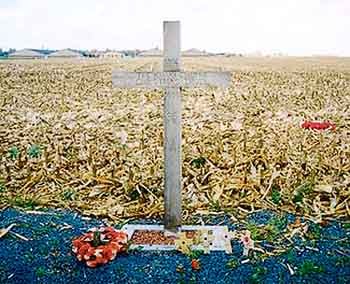
The Rev. Lewis had visited the site of the truce, and there are no official monuments. There is a plaque left by the Khaki chums (World War One re-enactors) when they camped at the site one Christmas.
There had been truces in other wars, including the peninsular wars in Spain, the Crimean and the Boer Wars. The truce occurred in only a few limited places and only along the British front line. The regular army had been withdrawn, so the conscripted troops were less martial. They were opposite Saxons who felt a sense of kinship with the Anglo-Saxons, and were less enthusiastic about war than other parts of Germany, such as the Prussians. The area had been relatively quiet, so it was possible to walk on no man's land. The ground was swampy from constant rain, and then froze over on Christmas Eve.



General Smith-Dorrien was Commander of the British sector, and heard tales of fraternising between the troops from December 2. He sent out orders for it to stop on December 15. Private William Tapp of the Warwicks, wrote in his diary on December 8 that 'at this rate, we shall all be pals by Christmas.' Major Archibald Buchanan Dunlop, a heavily fundamentalist Christian, wanted to 'bombard Jerry with carols'.
Christmas trees appeared along the German lines on Christmas Eve, and at dawn white flags came out. People walked across and suggested having no firing while they buried the dead. A British padre and German soldier studying for the ministry took joint burial services. The fog lifted at different times along the front, so the truces were staggered and patchy. Soldiers swapped helmets and buttons. Major Dunlop handed out St. John's gospels.
Everyone sent letters home - censorship was increased afterwards - and people wrote of football matches, kegs of beer from the Germans and a pudding from the British.
The truce carried on in some places through Boxing Day and longer. General Smith-Dorrien got a full report from all his officers with some ingenious reasons for the benefits of the truce such as for intelligence gathering. It was hoped that the truce would just fade into history, but many of the units involved felt that they were sent to unpopular parts of the front afterwards, and were disliked by the other soldiers and the local population for being too friendly.
Major Buchanan Dunlop was nearly court martialled after his former headmaster used his letter as a pacifist rant. General Smith-Dorrien was later relieved of his command. Private Tapp was wounded on January 23 while writing his diary, and died several weeks later.
At the end of Christmas Day 1914 he had written 'they say they won't fight again and we say we won't, but of course we must and shall, but it didn't feel right killing each other at Christmas'.
The Rev. Peter Lewis gave a scholarly and absorbing analysis of the subject, and the Arts Club is looking forward to a future visit from him already!
This week, November 15, there is no meeting, and next week, November 22, Andrew Dugmore brings a treat in the form of Storytelling from within the Oral Tradition. This will be at 7.30 pm at St. Johns Church Hall - all are welcome!
Comments
This article has no comments yet. Be the first to leave a comment.