
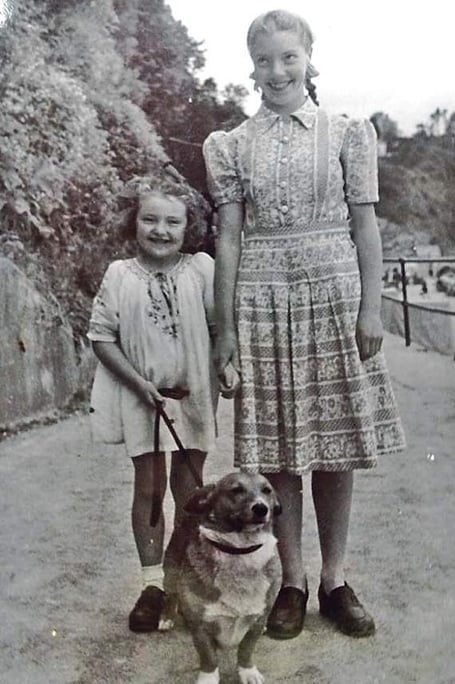
In the 1940s the working classes did not have holidays abroad or expect to be able to stay in hotels. Britain was barely recovering from the War and money was in short supply. Mothers did not go out to work, but stayed at home to look after their children.
I was five years old and my father worked for a railway wagon repair company in Newport. He neither smoked nor drank, so was able to save up for a holiday by the sea.
In places like Tenby, elderly widows or spinsters took in paying guests during the summer months to supplement their meagre income. Food was still rationed, so the system was called, “Rooms and Attendance”, which meant that you paid for your own food and the landlady cooked it and provided the rooms for a charge of about 30 shillings per week. (£1.50 in today’s money.)
The week before travelling, you would send a list of groceries required and the necessary coupons so that the landlady could have it delivered from Lillwall’s, the grocer at the bottom of Warren Street. (now the Barber’s Shop.)



My parents, older sister and I set off excitedly by train. A large trunk containing our clothes for two weeks, was sent in advance. This was called PLA or Passengers’ Luggage in Advance. Holders of a train ticket could use this facility for a charge of 5/6d. (25p). A British Rail van would arrive to collect the trunk a few days before travel and it was dispatched by train. When you arrived, it was standing inside the front door.
We stayed in Harding Street with the maiden aunt of my sister’s piano teacher. Most bookings were recommended by word of mouth.
We had two bedrooms and a sitting room. There was no bathroom and the toilet was outside. There was a large jug of water in each bedroom and a china bowl for washing.
We had the most wonderful time and fell in love with Tenby. The summers in those days seemed to be endless days of sunshine. There were tall square tents on the North Beach, which could be hired for about 10 shillings (50p) per week. You could change in there and shelter from the non - existent rain. Mr. Brenchley ran the café on the North Beach and people queued at a window around the back for trays of tea.
After breakfast each day we headed for the beach and stayed there until it was time to go back to our lodgings for dinner, which was served at 1 pm. After dinner, Mum made a pile of sandwiches and we headed back to the sands until evening, when we went home for a wash and a walk around the harbour or up Castle Hill.
Tenby has changed little since I first went there and seventy years later I am still enjoying it every year.
People’s expectations have changed. Everyone needs en-suite rooms and haute cuisine, but nothing will ever surpass those halcyon days spent in Tenby when I was a child. I am now bringing the third generation to enjoy the delights of Tenby - Queen of resorts in Wales.
Comments
This article has no comments yet. Be the first to leave a comment.