
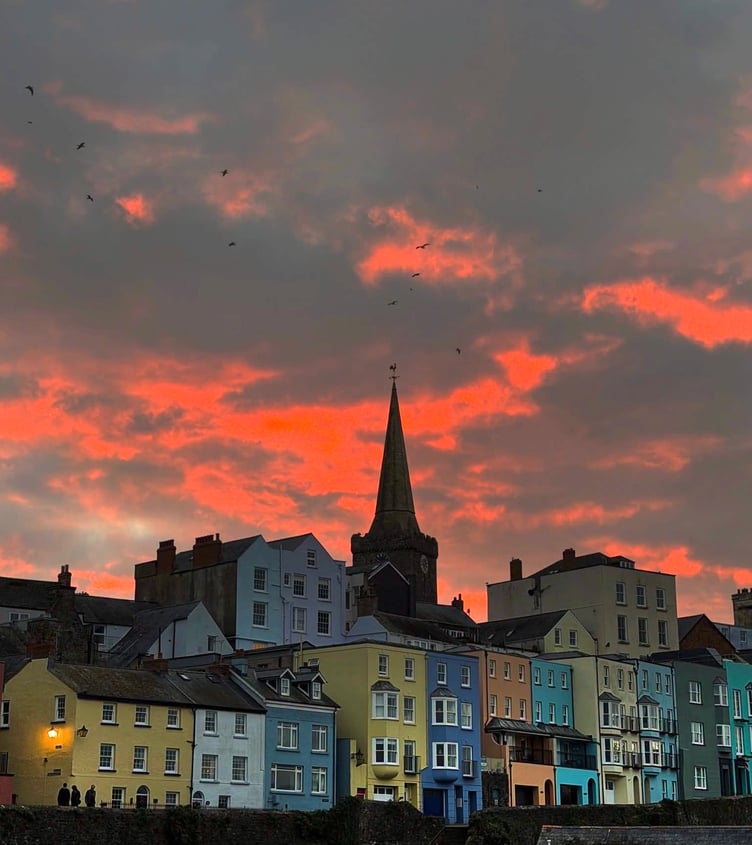
A Tenby county councillor has shared his ongoing concerns about second homes having a damaging affect on coastal communities across Pembrokeshire, stating that the impact is ‘emptying’ both secondary and primary schools in the locality.
County Councillor for Tenby’s North Ward, Cllr Michael Williams has pointed to figures showing the high percentage of second homes on various streets around the seaside town.
His latest comments come after members of the Local Authority recently rejected two calls to cut Pembrokeshire’s Council Tax premium for second-home owners.
Those in such properties will continue to pay a 125% premium in the next financial year.
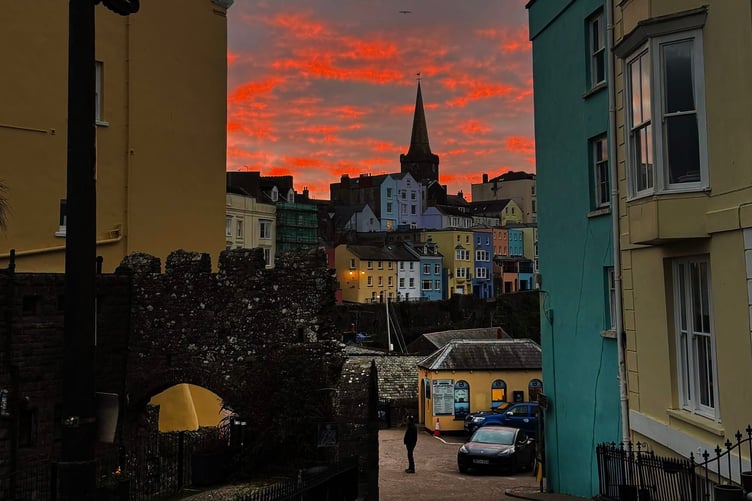
At its meeting held on October 5, members of Pembrokeshire County Council’s Cabinet backed keeping the current 125% premium on second homes, which took the form of a recommendation to full council meeting on October 15.
Cllr Williams, who represents Plaid Cymru on PCC, remarked: “After the recent contrived hysteria on social media following the decision of Pembrokeshire County Council to retain the level of second home council tax premium at 125%, I think that it might be of interest to see the actual number of second homes from a random selection of streets in the central area of Tenby.”
The percentage of second homes on some of Tenby’s streets shows figures as follows:
Lower Frog Street (41.03%); Culver Park (33.33%); Edward Street (18.75%); Park Place (18.75%); Cresswell Street (23.81%); Harding Street/Villas (36.36%); Harries Street (43.75%); Crackwell Street (46.67%); St Marys Street (50%); Norton Cottages (25%).
Cllr Williams continued: “To some these figures appear to be lower than anticipated but one must understand that there are ever more sophisticated methods being used to avoid paying the premium.


“The other knock-on which clearly shows the impact is the emptying of our schools, an example being Ysgol Greenhill which shows a decline in students from 1432 students in 2004 to 825 in 2019, numbers which remain approximately the same today.
“There is a similar impact on our junior schools in the County as we see some having to be closed due to falling roles, another example of the decreasing resident population of the area.
“Our social economic and cultural wellbeing is being eroded ever more rapidly with volunteer groups unable to find trustee or volunteers as so few reside locally to be able to commit to community wellbeing.
“There can be some benefit from a certain number of second homes, and I distinguish these from holiday lets which in reasonable numbers do bring an economic benefit. Possibly, 10 or 12% second homes might be economically sustainable, but at current levels they are causing huge damage to our communities.
“The second home premium was introduced at least partly to contribute towards building social housing and late though it might be we are now starting to see its impact with 100 plus social homes being constructed at Brynhir in Tenby, together with homes in Solva and St Davids which are partly funded from the premium.
“Unfortunately, it is a blunt instrument, and I wish the numbers could be better controlled by Planning regulation, but currently that isn't possible.
“My duty as a locally elected Local Authority member is to put the welfare of my local community first, and the provision of affordable housing in particular for local residents will always be a priority,” added Cllr Williams.

At the full council meeting in October, county councillors were recommended to back keeping the 125% rate in a report presented by Pembrokeshire Council’s Cabinet member for finance Cllr Jon Harvey, who said a reduction in the premium of 25% would increase council financial pressures by some £1.4m.
During a lengthy debate, members heard emotive examples of hardship and premium-payers facing bills and debts in five figures, with Cllr Rhys Jordan pointing out “behind every statistic is a person, a family in some cases pushed to breaking point”.
However, Cllr Michael Williams, a long-term supporter of the premium, said keeping it had a “moral dimension”.
“We see communities being hollowed out; we see it happening in Tenby and other communities,” he remarked.
“I’m hard-line on this, I always have been. Come to my community, walk around at night in winter, the place is hollow, properties in darkness because no-one’s living there.”
Comments
We've recently changed our login process. If you have an account for commenting, you will need to re-register on the login window.
This article has no comments yet. Be the first to leave a comment.