

Young and old at risk
All human life is precious as we were, I am sure, all numbed to hear of the tragic loss of young lives in Manchester brought about by a mindless assassin.
On our farms three recent accidents serve as a reminder that safety on farm remains an important issue for all those in the industry.
On May 1, a farmer in Scotland was killed in a cattle-related accident. On May 2, a farmer suffered fatal injuries when a section of the tree he was working on fell and crushed his tractor. On May 9, a person fell from the open edge of a mezzanine floor in Somerset.




The accidents occurred in different sectors, in different parts of the country and in different circumstances. However, one common factor in all three accidents is age. All the victims were aged 65 or over.
The risk to older people in the farming industry is not a new thing. Over the past 10 years, 30 per cent of fatal accidents in agriculture occurred to people aged 65 plus.
It is very common for people over the normal retirement age to continue in active roles in farming businesses. The wealth of knowledge and experience that older farmers possess is invaluable for the industry but at the same time it must be recognised that a decline in agility and resilience is inevitable with advancing years and needs to be taken into account.
One way to make sure that older people can continue to work in the industry and for their knowledge and experience to be utilised and passed on is to manage the risk that working beyond the state retirement age might bring.
The starting point is to look critically at the business and to conduct a thorough risk assessment. A risk assessment need not be a difficult exercise - it is a case of thinking about what might cause harm to people and then taking reasonable steps to prevent the harm.
All fatal accidents are tragic and the goal must be to reduce the number. A first step in achieving that goal is to identify and manage risk.
Beloved Branches
From time to time, I remember an old pear tree that grew for generations: In our childhood, objects that were a common everyday event may have taken little notice - as we grow older, memories come flooding back when we least expect them to surface.
Perhaps it’s the smell of a familiar fragrance, watching a trail of ants working together to carry a larger insect back to their nest, or the erosion of a ditch bank that reveals hidden treasures.
For me, it was picking up a ripe pear in a farmers market. This simple act reminded me of the pear tree from my childhood, whose branches and shade allowed me to visit a pretend land of make-believe.
A few feet from the back porch of my childhood home stood a huge pear tree. I recall stories of this being the only sweet pear tree anywhere around our community. Who planted this tree? Where did the seed come from? Could an early pioneer have dropped a pear while travelling this land, moving westward after crossing a mountain range.
Even without these answers, I knew the tree produced an abundance of fruit as generations of family and neighbours walked by, filling burlap bags with the juicy, sweet treats.
When you’re a child, many things appear much larger than they are in reality. As adults, we’re surprised by the actual size. But this tree was huge by any standard. Branches covered a span of 25 to 30 feet, at least. Each spring, robins scouted out the tree to find the best branches to build their nests.
A couple of months later, the prolific tree would produce gallons of fruit. Too soft for canning, the fruit was best eaten fresh. It was my job to pick up the fallen pears each morning.
I soon discovered that honeybees and open-toed sandals didn’t mix after an angry insect became entangled under my toe. My father understood - he annually threatened to chop down the tree when he had to mow under the low-handing branches and fight off the swarming bees. Fortunately, it was an idle threat because he enjoyed the treats as much as anyone.
As soon as the weather was warm enough, I set up a playhouse under its branches, protected from the sun. Here, I was in control of ‘the home’ and made all the decisions. I developed carpentry skills and design techniques by using blocks of wood from the lumber pile and nailing pieces together to make doll furniture. I created a cooking apparatus from two bricks and a metal paint can lid.
Underneath, I built a small fire. Using tin cans as pots and pans, I cooked squash and peas from the garden.
Balancing on a low-hanging limb, I climbed to a sturdy niche and read poems by Robert Louis Stevenson. ‘How do you like to go up in a swing, Up in the air so blue?’ was a favourite. I could imagine swinging higher and higher until I could almost touch the clouds.
There is a time and place for everything - even a beloved tree. One night, a fierce lightning storm struck the well-known landmark. Taking only part of the trunk, the tree struggled to produce for a few more years. Several years later, another windstorm was its demise. By that time, the beloved tree, my childhood friend, had helped raise me. I was a young married woman with a child of my own.
Returning to the home place, I eagerly wanted to introduce my own daughter to ‘the tree’ that had sheltered me during my youth. Opening the back door to my parent’s home, there was a blank space where the icon had stood for well over a century, maybe longer. Health green grass now covered the spot. No honeybees swarmed. No birds chose its branches for their brood. The tree was gone. It was like a curtain had closed and all that was left was memories.
Today, I often reflect on the sweet pear tree and recall hours of pleasure. Pleasures of a simple childhood that could only be found in a loving, secure setting in which I was privileged to grow up.
Thinking back to my childhood in a small community, I realised family responsibility, nurturing creativity in small things, and the value of lessons taught from nature -even an old pear tree. (Contributed).
Show respect to the farmer
The farming unions have joined forces to ask people to act responsibly when walking their dogs in the countryside this summer.
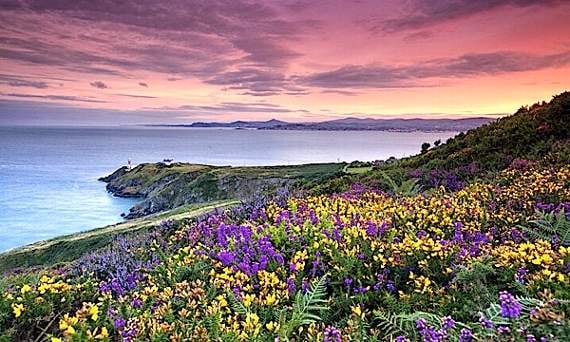
As we head into the holiday season, more people will start to get out and enjoy the stunning countryside about West Wales. While everyone is encouraged to make the most of the open spaces in and around the area, they are being pleaded with to remember that it is also a working environment and to make sure they act responsibly especially when walking dogs where livestock are grazing in fields nearby.
As a Union spokesperson reminds me: “Farmers are rightly proud of the environment they have created which underpins the local tourism industry and provides a resource that everyone is able to enjoy. While we want to encourage people to get out and explore the county, they need to be mindful that it is a working environment. Unfortunately, dog attacks on livestock are common, particularly during the holiday period when people spend more time in the countryside and the weather improves. All we ask is that if you are walking your dog over farmland that you keep it on a lead and clean up any dog faeces which can spread disease to cattle and sheep - in some cases causing cattle to abort if pregnant.”
A police representative said: “We are fortunate to live in such a beautiful part of the world and much of that beauty is maintained by local farmers. As we all head out into the countryside this summer, I’m working with the farming Union’s to encourage people to be mindful that many stunning walks - particularly coastal - cross farmland, and as such we need to ensure the safety of all involved, whether that be walker or farmer, pet or livestock. There are ongoing reports of dogs not on leashes on farm land, and this is a risk to both the dog and livestock in the area. If you are out walking this summer, please remember to keep your dog on its leash and to clean up after it.”
Reasoning
A woman walks into an optician to return a pair of spectacles that she purchased for her husband a week before.
The assistant asks: ‘What seems to be the problem, Madam?’
The woman replies: ‘I’m returning these spectacles I bought for my husband. He’s still not seeing things my way.’
Quotes
‘The most beautiful people wear their hearts on their sleeves - and their souls in their smiles.’
‘Think of all the joy you’ll find when you leave this world behind and bid your cares goodbye!’
‘Never trust a person that has let you down more than twice. Once was a warning, twice was a lesson and anything more than that is just taking advantage.’
Comments
We've recently changed our login process. If you have an account for commenting, you will need to re-register on the login window.
This article has no comments yet. Be the first to leave a comment.