

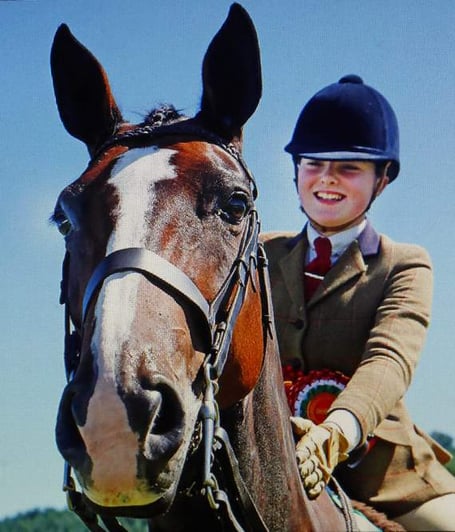
Kids go free!
Tomorrow (Saturday) and Sunday, 20 and May 21 - the Royal Welsh Spring Festival is expected to be in full swing, with thousands of happy visitors streaming to the Builth Wells showground, eager to explore everything the weekend-long event has to offer.
This year, the family friendly event - a celebration of smallholding and rural life - promises to be even more appealing with the expanded street food and music area.
Usually full to the brim with speedy shearers from around the world (and their cheering supporters), the Meirion Owen Shearing Centre, in the heart of the festival site, will be transformed into a busy street food and music area.


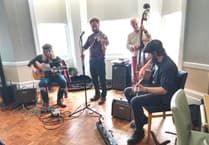

The large undercover area will be packed with local producers offering an array of tasty treats and gourmet bites, and - rather than for sheep - the stage will become a platform for live bands to perform and entertain throughout the weekend.
Once all the hustle and bustle of the busy livestock competitions, action-packed programme of displays and performances, demonstrations and workshops has died down a little, the street food area will burst into life.
Making the most of the time of year, the Spring-like weather and the longer days, the festival will again be open until 8 pm on the Saturday evening so, whilst enjoying feasting on the very best artisan food and drink sourced and produced from within Wales and the border counties, you will be able to relax and listen (or get up and dance!) to local bands, including Lucky Pierre, The Sam-Antonio Freeway, Cold Flame, Gruig, The Poor Boys of Worcester, The Troup and McCarthyism.
Looking forward to the weekend, director, Kay Spencer, reminded me: “Of all our society events, the Spring Festival is the most family orientated and relaxed. At a time of year when we are enjoying the longer, lighter evenings and the prospect of fine weather, we wanted to continue the celebration of rural life into the evening. We very much look forward to inviting you all to stay longer, or coming over to join us, and enjoy a spring evening of music and food with friends.”
There is free admission for all children aged 16 and under on both days and the festival will close at 5 pm on Sunday.
Despair of cattle farmers
The Welsh Government’s flagship bovine TB data document - TB Dashboard - has revealed disappointing progress towards the eradication of bovine TB in Wales.
According to the data presented, the levels of bovine TB in Wales have remained fairly static overall, with variable results across the counties.
Indeed, whilst the TB Dashboard document reports a general fall in TB herd incidence since 2012, the number of cattle slaughtered in the 12 months leading to January 2017 was 22 percent higher than in the previous 12 months.
Hazel Wright, of the FUW, found that with the exception of 2008 and 2009, the number of cattle slaughtered in the 12 months to January 2017 was higher than in any other year since 1996.
She said: “Losing TB-free status is devastating to farming families and their businesses.
“The restrictions on a farm business can be incredibly destructive and it is extremely distressing for those farmers who have worked hard to gain TB-free status, only to lose it again in the subsequent years - a breakdown is not only financially crippling for the farm, but also impacts more widely as struggling farm businesses are less able to contribute to both the local economy and further afield.”
According to Dashboard, over 80 percent of new TB incidents are in and near Pembrokeshire, with the last quarter of 2016 showing 71 new incidents and, sadly, the longer term results suggest that cattle measures alone cannot work to eradicate TB.
The latest official report on the IAA, published after the cessation of the £3.7 million badger vaccination programme in the county, concluded that: “consistent trends in indicators of bovine TB incidence have not yet been seen” over the five year period examined - the industry is well aware that the results after four years of badger vaccination in the IAA showed levels of bovine TB which are no different to other comparable areas where badger vaccination did not take place.
“Bovine TB is one of the most serious issues facing Welsh cattle farmers and a more holistic approach, which seriously tackles the wildlife reservoir, is required urgently,” said Dr. Wright, who added: “The number of cattle herds registered in Wales has declined by 43 percent since 1996 and the industry continmues to lose dairy producers at an alarming rate.”
Keep dogs under firm control
At the RWAS Spring Festival this weekend, the FUW plan to bring home to the general public the dangers uncontrolled dogs pose to livestock in country areas.
For the union, Teleri Fielden advised me: “We look forward to welcoming everyone to our stand where we will be highlighting current farming issues and where we will also put the spotlight on the escalating concern of livestock worrying and how much of a problem this is for farmers across the country.”
The FUW has long stressed that in order to protect farm businesses from severe financial and emotional stress, it is imperative that improved public awareness is coupled with central recording of incidences, tighter regulation and better enforcement
Financial assistance
The recently announced Farm Business Grant offered by the Welsh Government is designed to help farmers in Wales to improve the economic and environmental performance of their agricultural holdings, and provides a 40 per cent contribution towards capital investments in equipment and machinery that have been pre-identified as offering clear and quantifiable benefits to farm enterprises.
£40 million funding will be available over four years - the minimum grant available is £3,000 and the maximum is £12,000 and only one application will be approved per business throughout the lifetime of the scheme.
The proposal is to open three windows in the 2017 to 2018 financial year, with each open for two months - the first window is open now.
Be on the alert
With the Health and Safety Executive announcing its plans to run a new programme of 500 unannounced farm inspections by March 2018, Tom Price, of the NFU, warns: “It is our understanding that inspections will start imminently and have a seasonal focus to tie in with periods of high activity. Therefore inspections could well take place during harvest.
“The arable and livestock sectors are of particular interest to the HSE and the inspections will be carried out by the local field operations teams.
All businesses have a duty to operate safely and comply with their obligations and a useful starting point for farmers and contractors when dealing with health and safety is to carry out a precise risk assessment.
What’s to celebrate?
An aged farmer and his wife were leaning against the edge of their pig-pen when the old woman wistfully recalled that the next week would mark their golden wedding anniversary.
“Let’s have a party, Sam,” she suggested. “Let’s kill a pig.”
The farmer scratched his grizzled head. “Gee, Ethel,” he finally answered, “I don’t see why the pig should take the blame for something that happened 50 years ago.”
Comments
This article has no comments yet. Be the first to leave a comment.