

Tests for fast movers?
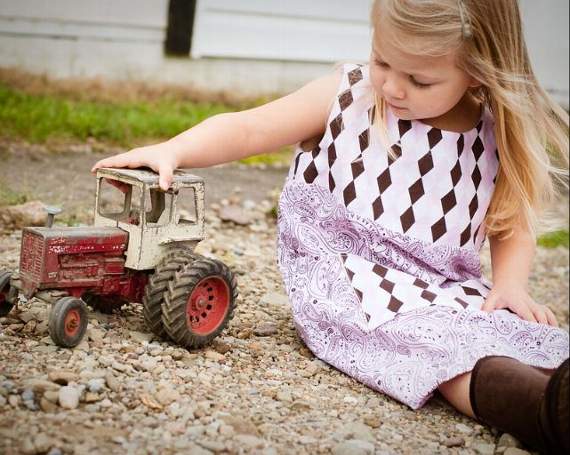
The Department for Transport has revealed some of the details being proposed with regard to road-worthiness tests for ‘fast’ tractors being used for commercial haulage set to be introduced in the UK in May of next year.
Testing will apply only to vehicles capable of more than 40kph.
This measure would be in line with limits contained in the EU directive on road- worthiness testing and means that the UK government would not be imposing additional requirements on vehicle operators, compared with those in the rest of the EU.



It has also been proposed that testing would only apply to tractors used further than 15 miles (24km) from their base of operation.
This threshold was reportedly proposed as the government only wishes to apply testing to tractors used principally for commercial haulage, with the greater risk to road safety that this implies.
“We do not wish to impose new requirements on tractors being used for limited or incidental road haulage,” the Department for Transport stated in its report.
In enforcement cases relating to the threshold, the burden of proof will be on the vehicle operator to demonstrate that they qualify for the distance-based exemption, the department added.
It is also proposed that relevant tractors will need to be tested four years after they are first registered. These tractors will then have to be tested every two years after the first initial test.
Under the same EU directive, tractor roadworthiness tests for ‘fast’ tractors capable of speeds in excess of 40kph could also be introduced in Ireland in 2018.
Cattle trade
Year-to-date, US imports of Canadian beef cattle for finishing have dropped by nearly 57,000 head (down about 1,500 animals per week). Canadian cattle feeders are said to have bid-up prices to levels that made exports to the US less attractive than normal.
As in the US, fed cattle marketed have been aggressive, especially in May through August. During September, head sold was down slightly compared to 2016’s (slipping 1,000 head which was well less than 1 per cent).
Animals marketed so far in 2017 was 53,000 head more (up 4.3 per cent) than during the same months in 2016. According to the weekly preliminary data from USDA, year-to-date US imports of Canadian slaughter steers and heifers were above a year ago by about 14,500 head (6.4 per cent).
Looking ahead to 2018, Canfax forecasts that domestic output (production plus live exports) will increase about two per cent. To achieve that, they expect a 2.6 per cent rise in Canadian production and a 2.0 per cent decrease in live fed animal exports to the US.
Embracing Change
This is the theme for the annual conference of the NFU in Wales which takes place on Thursday next (November 2) in Llandrindod Wells.
The programme offers a variety of speakers which who will attempt to provide an insight into how Welsh farming can face the challenges that lie ahead.
This year’s conference speakers include: Lesley Griffiths, Cabinet Secretary for Environment and Rural Affairs; Joe Healy, of the Irish Farmers’ Association; Nathan Ward, business unit director for meat, fish and poultry, Kantar Worldpanel; Tim Rycroft, corporate affairs director, Food and Drink Federation; Dimitri Houtart, rural affairs champion, BBC; Clive Black, director and head of research, Shore Capital Markets; Kevin Roberts, chairman, Hybu Cig Cymru; and Tom Hind, chief strategy officer, Agriculture and Horticulture Development Board.
No increase?
The inflation rate is considered to be at its highest since 2012, supposedly driven by food prices at a four year high, suggest the latest consumer price inflation figures released by the Office for National Statistics.
NFU economist Anand Dossa said: “This sharp increase in food price inflation will not be apparent on the supermarket shelves; the supply chain continues to shield customers from the real price inflation.”
Fly-tipping
The Environment Agency has issued a warning after a concerning rise in the dumping of baled waste on land. Often the waste is mixed municipal waste, badged under the term Refuse Derived Fuel.
It is a landowner’s duty of care to understand the waste coming onto land, make sure you’re compliant and find out how to report it.
Preserving the landscape
For farmers to stay on the land producing food while maintaining Britain’s iconic landscape they need to be profitable - without resilient farming businesses there simply won’t be anyone there to look after the environment. That was the key message from NFU Deputy President Minette Batters when she took part in a debate about the future of the countryside for farming and wildlife.
Loose women!
I’m told there were great gales of laughter and shudders of horror in equal measures from the women from across Wales who attended Farming Connect’s recent Women in Agriculture forum held in Cardigan.
Chaired by TV presenter and farmer’s daughter Dot Davies, a familiar face on S4C and BBC Wales, the event clearly hit its target of inspiring, motivating and empowering all those who attended, with a packed programme of presentations, workshops and interactive sessions on topical issues which affect women working in the industry today.
They considered topics ranging from Brexit and its likely opportunities and challenges for Welsh farm businesses to recognising that staff are always a business’s most important asset. They heard about the value of taking time out to consider their own well-being and participated in a session on mindfulness, which has long been recognised as helping reduce stress in the business sector. Then they all took part in a laughter therapy exercise described as ‘internal jogging’ and which should apparently be part of everybody’s daily routine if they want to live life to the full!
The shudders of horror were reserved for the workshops on digital security or ‘cybercrime’ from two expert speakers on the subject from Dyfed-Powys Police.
“Almost every lady present realised we are all running huge risks of our businesses being ‘hacked’ or worse, through not taking sufficient measures to protect our online identities,” said Eleri Jones, whose family run a 350 acre dairy and sheep holding in Cardiganshire.
“The whole day was inspirational with an excellent variety of topics that sent us all home with so much to think about and I will personally put into practice a lot of what I learned today,” added Mrs. Jones.
Menter Director, Corinna Lloyd-Jones, also talked about the importance of valuing people, who she explained are the most important assets for all businesses. Corinna offered guidance on implementing and evaluating performance management systems which are essential for every business.
Keynote speaker Fflur Sheppard, who was brought up on her parents’ farm in north Carmarthenshire and who is an associate director of a PR agency said: “I enjoyed talking to such a forward-thinking audience about the principles of winning support and influencing opinion - skills that will be so important as we head towards Brexit.
“While everyone attending had two clear things in common - they were women in agriculture - what really struck me was the diversity of their perspectives and strengths, and how they were united in their determination to take positive steps forward for themselves, their families and businesses, and the wider industry.”
From a lady: One day my housework-challenged husband decided to wash his sweatshirt. Seconds after he stepped into the laundry room, he shouted to me, “What setting do I use on the washing machine?” “It depends,” I replied. “What does it say on your shirt?” He yelled back: “University of Oklahoma.”
Quote
English primatologist, ethologist and anthropologist Jane Goodall who has dedicated her life to conservation and animal rights, and is considered to be the world’s foremost expert on chimpanzees.
“My mother always taught us that if people don’t agree with you, the important thing is to listen to them. But if you’ve listened to them carefully and you still think that you’re right, then you must have the courage of your convictions.”
Comments
This article has no comments yet. Be the first to leave a comment.