

Time to be extra vigilant
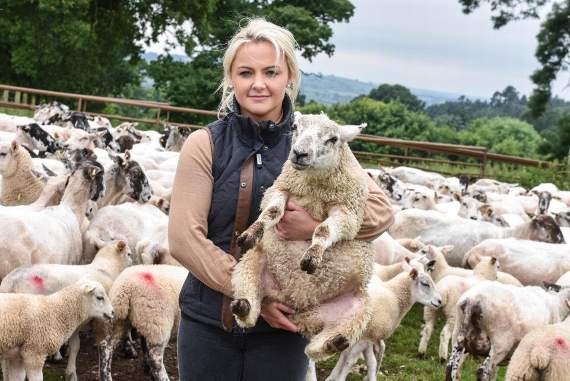
Farms are increasingly being targeted and it was little wonder that rural crime topped the agenda at the recent meeting of the NFU’s Carmarthen County branch.
Following recent sheep rustling incidents, the Union arranged for Dyfed-Powys Police, with local knowledge, to address members and explain more about rural crime and what is being done to alleviate the problem.
Chairman Garry Williams told me afterwards: “We as farmers believe that rural communities across West Wales would benefit from specialised rural crime officers in the county - the NFU insurers have seen a sharp rise in thefts from Welsh farms in the first half of 2017 and this can’t go on, because it’s costing farmers and the rural community a lot of money and stress.



“When dealing with incidents such as sheep rustling, technical knowledge is paramount and that is why a specialised rural crime team would be beneficial in the area.”
The police suggest that farmers could help deter would-be thieves if they: 1. Secure gates with good padlocks protected by covers to prevent them being cut off, also invert or cap the hinges; 2. Paint the top bar of gates so that they could be identified easily if they were stolen from your property - it will make these gates less inviting for any thief to steal as the paint could make it troublesome for them to sell on; 3. Install sensor controlled lighting to the yards and sheds -thieves do not like to be seen; 4. If you can afford it, install CCTV and signage around the yards and the sheds; 5. Close all sheds, garages or barns after you have used them mindful that an open door is an open invitation to a thief; 6. Consider marking all your tools so you can identify them if they are ever stolen; and 7. Remove keys from quad bikes etc. when not in use.
Simple measures like this could be off putting to thieves looking for an easy theft and Garry concluded: “The interaction between the police and members during the meeting was very positive and formed part of our continued working relationship with the force.”
Providing a listening ear
Highlighted by the Farmers Union of Wales during the Royal Welsh Show there is, quite evidently, grave stress and mental health problems affecting many of the agricultural population across Wales.
Loneliness, long hours, low incomes, health problems amongst the farm livestock and a growing mountain of bureaucracy are considered amongst the main causes.
As mentioned in this column last week, Mind Cymru and Call Helpline Wales are already doing wonderful work in providing practical support and, most essentially, a listening ear.
Whether you suffer with poor or good mental health, have that conversation, look out for the signs amongst friends and be that person to listen.
The more conversations had about mental health the more comfortable people will feel talking about it and the stigma that surrounds this awful illness that affects so many can be reduced.
Whilst most folk shun the very thought of accepting charity, we have to understand that a charity that helps farmers and farming families affected by poor mental wellbeing and provides practical and pastoral support through difficult times is The Farming Community Network.
David Williams, FCN’s regional director in Wales, is no stranger to the kind of difficulties that farmers face. His farm operated a dairy unit of 150 Holstein milkers before the 2001 Foot and Mouth outbreak took its toll.
As well as looking after the 35 FCN volunteers based in Wales, David is also FCN’s lead contact with the Welsh Government on farming-related issues.
He tells me: “People seek support from FCN for a number of reasons. They could be anxious about farm support payment, stressed about harvest or depressed about losing their cattle to Bovine TB but, the most common factor in almost all cases, is poor mental wellbeing.
“If this is not addressed, the consequences can be devastating. Mental health is less of a stigma than it once was in farming. People are beginning to realise that bottling up your emotions is the worst thing you can do. But there is still much work to do. Farmers and farming families need to continue talking openly about what they are experiencing.
“FCN is always on hand to listen to farmers who are struggling and will treat their case confidentially and without judgement.”
Gareth Davies, executive officer of Tir Dewi, is responsible for its development and operations and leading and coordinating a team of dedicated volunteers. Gareth joined Tir Dewi around eight months ago following a career in business and consultancy and is using his development and project management experience to help him in the role.
While he has never farmed, his mother is from a sheep farm in Mid Wales so he has empathy with farming. He also lives in the rural heartland of Pembrokeshire and is surrounded by dairy and arable farms.
The more he learns of the multiple challenges faced by our farmers the greater his passion for helping them to overcome their problems.
Gareth says: “The variety and intensity of challenges faced by farmers in Wales is staggering. Trying to deal with them all alone when already working 16 hour days is not sustainable.
“Tir Dewi wants farmers to know that they don’t have to be on their own, we are always ready to talk and offer support in whatever way we can.”
We want it and we want it NOW
The term affordable housing is used in national policy and locally, but it means different things to different people: to some it means that housing for sale should be affordable to first time buyers, but to others it means rented housing for people who are in low paid work or are not working but reliant on some support via benefits.
Councils say that the basic principle is that housing is only affordable if it costs no more than 25 per cent of gross household income. This follows the same principle that says households are in fuel poverty if they spend more than 10 per cent of their income on fuels costs.
The cut off point for help should be a household income of £40,000. Those above this income level should be able to find housing on the open market but the fact remains that few local households have incomes at that level.
In looking at the household incomes of those in need, and house prices in the area, both the council’s housing market assessment and the previous Affordable Housing Delivery Plan agreed that the type of housing needed to address this need was mainly social rent level, but that some households could afford a more intermediate product.
Guidelines suggest that any substantial dwelling, in an acceptable state of repair, on the market for less that £230,000 should be ‘affordable.’
However, feedback from local estate agents is that young couples today are turning their noses up at a great deal of the local housing stock in the £160,000-£170,000 range.
‘We really do need that extra bedroom,’ ‘Pity there wasn’t a toilet downstairs as well as upstairs,’ ‘The garden is a bit too small,’ ‘The kitchen is not what I had in mind’ and ‘How far away is the nearest pub’ all are oft repeated excuses.
Traditionally, we were only too happy to have our own roof over our heads and we would work and save hard to improve our lot, but the whole philosophy has changed to “That is what we want and we want it NOW - affordable or not.”
Adventure?
“Don’t let the expectations and opinions of other people affect your decisions. It’s your life, not theirs. Do what matters most to you; do what makes you feel alive and happy. Don’t let the expectations and ideas of others limit who you are. If you let others tell you who you are, you are living their reality - not yours. There is more to life than pleasing people. There is much more to life than following others’ prescribed path. There is so much more to life than what you experience right now. You need to decide who you are for yourself. Become a whole being. Adventure.”
The light in the heart
“Treat everyone with politeness and kindness, not because they are nice, but because you are.”
Comments
We've recently changed our login process. If you have an account for commenting, you will need to re-register on the login window.
This article has no comments yet. Be the first to leave a comment.