

Spare a thought
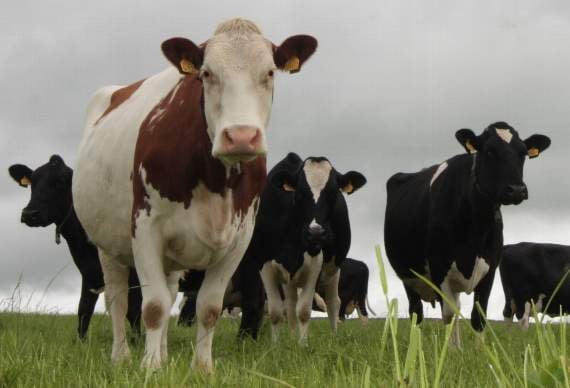
The milk that may be delivered to your door, available in the village or corner shop or off the supermarket shelves is mostly sourced fresh daily from family dairy farms that have set out voluntarily on an ongoing journey to farm sustainably.
Sustainable dairy farming is about striving to perfect and improve the natural environment, animal health and welfare and to enhance the quality of life of farm families and their local communities; while at the same time being socially just and humane, productive and efficient, and economically viable.
Over many generations farmers wives and daughters, and many dedicated young workers and students being welcomed into the industry have assumed the responsibility of producing a clean and healthy product.


Healthy individuals, healthy families, healthy farms and livestock and healthy ecosystems are a result of a vibrant, resilient and sustainable food system that seeks to meet the needs of the present without compromising the ability of future generations - to produce milk with a high nutritional quality which ensures that the end products meet existing and future customer needs and wishes while, at the same time, striving to keep family supply farms economically viable.
Furthermore, the constant aim is to ensure, through active management in a precautionary and responsible manner, that any adverse effects on the rural environment (principally water and air quality, soil, landscape and biodiversity from dairy farming activities) are minimised and that positive and continuous improvements are made wherever possible on a farm by farm basis.
Also to enable our family dairy farms and their local communities to protect and improve their well being and the environment in which they live by being respectful of nature.
Towards this end, the second of a series of meetings focusing on South Wales Women in Dairy was held at the Nant y Ffin on Wednesday morning of this week: Women in Dairy is an initiative from Promar International and RABDF, supported by AHDB Dairy, designed to bring women working in our industry together through regional meetings for training, networking and to promote the dairy industry, exchanging knowledge and experiences, to develop skills and confidence and encouraging innovative thinking and vision for the future of UK dairy.
Topics this week included the importance of financial planning, grants and funding options, law and legislation and work place pensions.
Ladies: Now is your opportunity to become a driving force that stimulates the continuous improvement of food quality and inspires consumers to adapt new values and ideas that give direction to more sustainable food products by creating a greater feeling of connections with nature, awareness and purity.
Information on future meetings may be obtained from Menna Davies (07875 098173).
Bird Count
The fourth Big Farmland Bird Count is taking place from now until February 12. All you have to do is spend about 30 minutes recording the species and number of birds seen on one particular area of the farm.
You may ask why count? Farmers and landowners are crucial in the survival and protection of many farmland bird species. However, several of these birds are in decline and efforts to monitor their numbers varies across the country. This is your chance to find out what you have on your farm and let us know!
A farmer’s perspective: “Farming can throw up its challenges, and I am not just talking about the current economic situation, though that doesn’t help. Our industry is asked to deliver on many things as we produce food, often with high expectations of the end results.
“There is continued change in the wildlife we see on our farms, as there has been for decades, if not centuries. The world is a very different place now to what it was in 1970, when many surveys hark back to - and many critics use this as a harsh lesson in all the bad things about farming in 2016.
“Yet I, and many farmers like me, realise that this oft-painted picture is far from the truth. Over 70 per cent of us have for much of the last 10 years being actively undertaking work on our farms to provide space for wildlife - this has been largely funded by stewardship schemes largely, but there has also been a huge amount of unmeasured un-paid for work carried our too.
“Since 2014, there has been a 134 per cent increase in nectar and pollen rich area managed by farmers and 30,000 km of hedges have been planted in the last 25 years. Fertiliser usage is down, with 35 per cent less nitrogen and 60 per cent less phosphate fertiliser being used, and pesticide use is also down, with 50 per cent less active ingredient applied and half the available actives available to use to ensure economic yields of safe affordable foods.
“This clearly paints the opposite picture to the one often purveyed, and to read the stories we hear in the media, you’d think that all this effort was being overlooked!”
A Food Chain advisor says: “I know through survey work on my farm that the areas I have devoted to wildlife and the way I farm the land have contributed to improving the ‘bird count’ on the farm quite significantly. The difference for me in the coming years is that I now will receive no funding to continue this work, which presents me with a real dilemma?
“We know it’s a different story on farm, and it is vital we demonstrate this to the wider public, and to ourselves and fellow farmers. Offering a few hours of your time, ideally with an enthusiast as they have sharper eyes and more importantly keener and well trained ears will help continue to build the bigger picture which has developed over recent years.
“Most importantly, it shows that we farmers are interested, we are bothered, we recognise that we have an important role in the countryside.
“There are winners and losers in the bird world, and it is clearly a complex of many things which sees some species struggling, while others flourish. Farming and environmental management are not necessarily the problem, but the solution. So get counting and submit your findings.”
Need ID help? Join one of Game & Wildlife Conservation Trust’s ID days by contacting The Campaign for the Farmed Environment, CFE Programme Office, Agriculture House, Stoneleigh Park, Warwickshire CV8 2TZ.
Quote
‘A man who dares to waste one hour of time has not discovered the value of life’ - Chinese proverb.
New CEO
The Pembrokeshire Agricultural Society are about to appoint a new chief executive officer.
He, or she, will replace Alex Bruce who moved on at the end of December to pursue other opportunities.
Brexit
‘It is not the strongest of the species that survive, nor the most intelligent, but the one most responsive to change’ - yet to be proved?.
Going nowhere
A number of years ago, acting upon instructions from goodness knows where (and at considerable expense) and based upon information that was already a century out of date, our county council erected hundreds of ‘public’ footpath signs.
Some of the signs remain there but the overgrown and unwalked footpaths are still going nowhere!
New ambassador
Nominations for the role of the 2017 lady ambassador to the Pembrokeshire Agricultural Show Society have to be in by Friday, February 17. The successful candidate will succeed Kim Griffiths.
Dust yourself off!
You fall, you rise, you make mistakes, you live, you learn.
You’re human, not perfect.
You’ve been hurt, but you’re alive.
Think of what a precious privilege it is to be alive - to breathe, to think, to enjoy, and to chase the things you love.
Sometimes there is sadness in your journey, but there are also lots of beauty.
We must keep putting one foot in front of the other even when we hurt, for we will never know what is waiting for us just around the bend
Comments
This article has no comments yet. Be the first to leave a comment.