

A proud industry
There are those amongst us who put the need to preserve wildlife above all else and see the future of providing our daily needs for sustenance by exporting food production out of Britain and increasing the country’s reliance on imports.
The farming industry fully acknowledges that, following government dictates, agricultural policies of the past focused on maximising food production resulting in the intensification of farming in the years after World War II.
However, since the early 1990s, in terms of inputs and in terms of numbers of livestock and area of crops grown by British agriculture has not intensified - in fact it’s the reverse.




Therefore, it makes little sense to attribute cause and effect with regards to the loss of some wildlife to ‘the intensification of agriculture’ in the UK in the last quarter of a century when there hasn’t been any. Other causes, such as urbanisation, climate change or increasing predator pressure, now demand much greater attention.
Farming in the present day is a living, breathing and dynamic industry; it produces food, delivers for the economy and takes responsibility for of the iconic British countryside.
British farmers have embraced the conservation agenda: they have planted or restored 30,000km of hedgerows, they reserve the borders of their fields to plant wildflowers for birds and bees, they are ensuring cleaner water and they are using less fertiliser and pesticides than ever.
Another factor is that the so called ‘greenhouse gas’ emissions from agriculture have fallen by 16 per cent since 1990 - in fact, two thirds of farmers have already signed up for Britain’s trail-blazing and world-renowned agri-environment schemes.
As proof of some success here over 130 different bird species - seven for the first time - were recorded by over 1,000 participating farmers on their own farms in the Big Farmland Bird Count this year.
NUMEROUS PREDATORS
According to RSPB figures across the UK, about half these species have increased in number over recent decades. But in amongst this, it is clear some bird species associated with farmland are struggling, not least due to four-legged and winged predators, and farmers are keen to work to reverse these trends.
The well-respected 2011 Foresight Report on the Future of Food and Farming set out very clearly the challenge of managing a food system at a time of an ‘unprecedented confluence of pressures.’
There is now a high degree of academic consensus that the world will also need to increase food production significantly to meet the needs of a growing population. This increased demand for food will have to be met using finite agricultural land, while our climate continues to change, which will inevitably place further constraints on production in many parts of the world.
The Farming Unions believe the sustainable intensification of agriculture will be an important tool with which farmers will help to make a significant contribution to the challenge of both domestic and global food security.
This means using a spectrum of approaches which enhance yields and other ecosystem services by promoting better use of resources. For example, using technology to precisely apply vital plant nutrients or fine-tune livestock diets to reduce waste and inefficiencies in the system.
Good husbandry, good animal welfare and good agronomy all play a major role in balancing the need to produce food using less - this is why farmers are best-placed to be part of the solution.
Above all the public needs to remember that farming is here to provide one of the fundamental staples to life: food. British farmers, in particular, are rightly proud of the high standards of production, traceability of the food they produce and their high animal welfare standards.
If this aspect is undermined, British farming’s competitiveness or its ability to produce food will be put at grave risk.
The way it will be!
According to some estimates 98 per cent of UK food law is based on EU law and according to Professor Lang, the enormity of renegotiating labelling requirements, trade agreements, safety regulations and labour rights - to name but a few - will be magnified because the UK currently does not have enough people to do so.
Professor Lang’s feelings of incredulity and anger have been echoed by others in the food sector, an industry not normally given to using dramatic words lightly.
Last week, director general of the UK’s food trade group Food and Drink Federation (FDF) Ian Wright told attendees at a conference held by the Grocery Code Adjudicator the country is now facing ‘a period of complete chaos.’
“The country is leaderless on both sides. The remain camp has no plan B and those who voted leave have no plan at all. We face months of profound uncertainty.”
Readers deserve better
The thinking of do-gooders in our society is so often far removed from what are the true views of the general public.
Not least amongst these issues is that various bodies, who should show themselves to be much more responsible, go blindly ahead with little signs of joined up thinking.
For most country folk, who continue to be vastly more knowledgeable than the boffins would have us believe, do not accept, in anyway, the need for ‘rewilding.’ People, who shame themselves because of their ignorance, and disgrace themselves further with their lack of understanding would have us provide a secure habit for scores of urban foxes (gathered together by the RSPCA), other and numerous other ground predators and birds of prey.
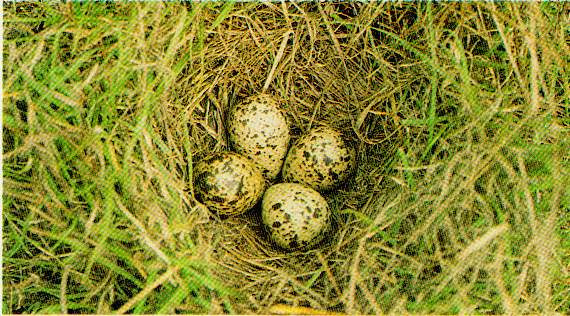
Modern farming methods are being blamed for there being fewer doves and buntings around but the true cause, as so many farmers know only too well, is that stoats, weasels, badgers, foxes, crows and jackdaws so readily raid nests - on the ground or in the hedgerows and, if they do not take the eggs, then they will come back for the chicks.
Over the years, foxes have been kept under control by various means but badgers - increasingly in recent times -are known to have infected many thousands of our cattle with tuberculosis and now the authorities are releasing into the wild scores of pine martins - members of the same badger family!
While stockmen and their veterinary advisors try desperately to eradicate bTB from their herds it is ironic that a writer like Rod Liddle in the Sunday Times should publish details about the badger cull and its role in tackling bovine TB showing so little understanding of the issues involved.
NFU president Meurig Raymond, who has first hand knowledge of the true scale of the problem, rightly responded: “It was hugely disappointing to see Rod Liddle eschewing the facts in favour of controversy in his column about the badger culls.”
Mr. Liddle states: “There is not the slenderest scientific evidence to suggest that killing badgers will stop the spread of bovine TB to cattle, which is the reason given for this slaughter.”
This is absolutely wrong -the biggest scientific trial of its kind ever undertaken - the randomised Badger culling trial - proved that culling badgers can have a positive impact on controlling the spread of bovine TB in cattle in areas where the disease is endemic. And further analysis of the results have reinforced this.
He goes on: “Checking the spread of the disease - which these days is of scant threat to the public - is best done by stopping the spread from cow to cow, or by vaccination” -again, this is wrong. Only an approach that includes all available options to tackle the disease will work. These options include cattle testing, cattle movement controls and dealing with the disease in wildlife in endemic areas.
Vaccination has a role to play too, but there is no cattle vaccine currently available for use and, unfortunately, badger vaccination has had to be suspended this year due to a shortage of the BCG vaccine for human use.
Mr. Liddle states the British Veterinary Association has withdrawn its support for the cull - again, this is incorrect. Last month BVA president Sean Wensley said: “BVA recognises the need to control the wildlife reservoir of disease as part of a comprehensive strategy to eradicate bovine TB.” He also said: “BVA supports the wider roll-out of culling to carefully selected areas where badgers are regarded as a significant contributor to the high incidence of bovine TB in cattle.”
And finally, Mr. Liddle says: “Farmers cannot see a wild animal without being possessed of a visceral desire to strangle, gas or shoot it…” - this is nothing more than a hugely ill-informed comment that does a great disservice to farmers across the country who are doing huge amounts of work to protect the environment and the wildlife that lives in it.
Mr. Liddle overlooks the plight of thousands of farming families who are seeing their futures destroyed by the spread of bovine TB. He ignores the 28,000 cattle that were slaughtered in England last year to help control its spread and discounts the £1 billion cost to the public purse over the next decade of not finding a solution.
The farming community, and the readers of the Sunday Times, deserve better - Meurig Raymond.”
What’s in a name?
The great explorers of the past 500 years had an unwritten right to name those lands they discovered. They often did what was politically correct and remembered their sponsors - usually a member of a royal family.
The English Capt. Cook, however, in 1770 when he first sailed north along the eastern coast of what is now called Australia chose to name it New South Wales.
Bill Bryson in his book, ‘In a Sunburned Country,’ wonders if Cook meant to signify that this would be a new Wales of the south or merely a new version of the existing South Wales. If the latter, why just South Wales and not the whole of it. No one knows. What is certain is that Cook had no known connection to Wales, southerly or otherwise. He did, however, attribute the name to all the island continent that lay to the west although he was never to see what lay there.
Other Welsh geographical references that intrigue are found in early maps of Canada: A 1793 map shows the south-west shores of Hudson’s Bay as New South Wales. It still shows on an 1848 map, but the coastal lands to the west of the Bay are shown as New North Wales - hardly flattering, but perhaps an acknowledgement to the explorer David Thompson.
Comments
This article has no comments yet. Be the first to leave a comment.