

Loss of vital tradesmen
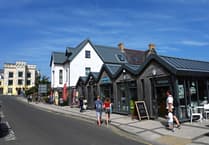
It would sadly appear that practically all our market towns have now seen the trusty ironmonger disappear.
For householders, farmers and gardeners this was always the one-stop shop where you could obtain everything from two or three screws to a handful - coach screws, counter sunk or whatever in galvanised metal or even brass.
There were nuts and bolts, wire nails from one inch to eight inches in length, fencing posts and wire, sheep netting or chicken wire, gates and chicken equipment, dairy detergents and weedkillers, spanners, screwdrivers and hand tools of every description, torches, batteries, gas cylinders - even Rayburns, tiled fire places for the lounge, coconut and rubber matting.


They story goes that once it is gone, it is gone - you don’t miss anything until you’ve lost it.
In the second half of the 19th century, Victorian ironmongery offered a treasurehouse of appealing metalwork, with elaborate manufacturers’ catalogues offering literally thousands of objects to meet each and every need, almost all of which sought to combine practicality with pleasing design.
Observe a penny token of Joseph Moir, advertising ‘wholesale and retail ironmongery,’ 1850.
The second half of the 20th century saw the steady decline of ironmongers’ shops. Although every small town in Britain used to have at least one, their fate has mirrored that of many traditional emporia.
However, there has been a simultaneous revival in the fortunes of old-style hand-forged ironmongery, with strong interest in the authentic restoration of period homes leading to demand for items such as traditional iron door handles, door knobs, door knockers, letter plates, locks, hinges, hooks, cabinet fittings and window furniture.
There has even been renewed use of ‘blacksmith nails’ - four-sided hand-made rosehead nails. This is typical of a trend that has seen greater appreciation of designs that have stood the test of time, that has allowed hand-forged ironmongery to find a much wider application than use in property restoration - although the practice of incorporating traditional ironmongery into contemporary housing has been helped by thoroughly modern techniques like galvanising and powder coating to inhibit rust.
Driving car owners to supermarkets
Parking measures that put common sense back in the driving seat were, last month, given the green-light by Local Government and Communities Secretary Eric Pickles and Transport Secretary Patrick McLoughlin
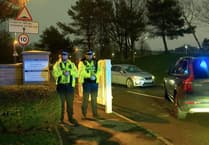
Under the new laws, supposedly to help local shops, drivers will get a 10 minute grace period when parked in a bay. This will prevent fines for being just a few minutes late back to the vehicle - be it in a paid or free parking space.
And, furthermore, the use of CCTV ‘spy cars’ has been banned in the majority of circumstances ending the tyranny of automated fines landing on doorsteps after being issued in industrial volumes.
These measures should stop over-zealous parking enforcement which often forces people to shop in out-of-town centres or online and were approved in the last reading of parking reforms in the Deregulation Bill.
Other welcome measures protecting drivers include new powers for parking adjudicators so they can hold councils to account to tackle parking problems such as poor signage at specific locations and a powerful new right enables residents and local firms to demand that their council reviews parking in their area, including the charges and use of yellow lines - why should it be that a Royal Mail post box cannot be located where there are double yellow lines?
No more bullying?
A welcome move by government is that there are to be tougher rules against heavy-handed action by bailiffs and an end to fines at out-of-order parking meters when there is no alternative way to pay. Guidance will also reinforce that councils cannot use parking to make a profit.
Councils were also asked to volunteer to trial a new pilot that allows motorists challenging a parking ticket to benefit from a 25 per cent discount on the fine if they lose the appeal. Currently, drivers are only offered a discount on early payment before challenging a ticket.
The parking measures are a victory for drivers and one of a number of initiatives introduced by the government to support high streets and give local shops a fairer deal.
“We are ending the war on drivers who simply want to go about their daily business. For too long, parking rules have made law-abiding motorists feel like criminals, and caused enormous damage to shops and businesses,” said Communities Secretary Eric Pickles.
Transport Secretary Patrick McLoughlin added: “Over-zealous parking enforcement undermines our town centres and costs councils more in the long-term. Our measures not only bring big benefits for high streets, motorists and local authorities - they put common sense back into parking.
“Helping local businesses thrive is a key part of our long-term economic plan. These measures will deliver a fairer deal for motorists and help boost the high street by ensuring that parking enforcement is proportionate, while also protecting school children and keeping key routes and bus lanes clear.”
Those growing up years
Many readers of this column will recall that, back in the 1930s, things were quite different to what they are today.
“Parents were certainly not as ‘well off’ as they are at present. Although always industrious, our mothers didn’t ‘go out’ to work - they stayed at home to take care of the family, doing all the necessary house work such as, cooking, washing, ironing, darning and keeping the home clean and tidy.
Boys and girls seldom had any money to spend on sweets and chocolate as our parents didn’t have the money to give us. Our fathers earned very small wages which had to be spent on food and clothing for the family.
Most of all the children’s clothes were often handed down from the older ones to the younger ones. ‘Best clothes’ were only worn on Sundays to go to chapel or church, second best clothes were always for school and changed on returning home, and nearly worn out things were put on to play.
These days children talk about their holidays ‘abroad’ whereas in those days the only places that ‘trips’ went to were Porthcawl or Barry Island. We travelled by what was called a ‘Charabanc’ - which was actually a large bus with an open roof which could be closed ifit rained!
In those days, many houses were without electricity or gas. The only lighting was by oil lamps (paraffin) and candles. Of course, everyone had coal fires for heating and cooking. The only oven was built into the grate at the side of the fire and, to keep the fire going, cooking could be done at anytime of the day. Several buckets of coal would be used daily.
Washing day was always on Mondays when a large ‘boiler’ was placed on the fire and all the dirty clothes were put in it and boiled for about an hour or so. They were then places in a tin bath of hot water and rubbed with soap on what was called a scrubbing board. (No washing machines in those days).
The tin bath also served another purpose, on Friday night which was bath night. A large saucepan of water was heated on the fire then poured into the tin bath which was put in front of the fire place. The same water was used by two or even three children, by just adding more water!
For our entertainment, the only thing that we had was the then called ‘wireless.’ Today, it is called a radio and, of course, television was not yet been invented.
In fine weather, all sorts of games were played outdoors by the boys, including football and cricket, and the girl’s games were skipping, hop scotch, hide and seek or whatever. Indoors, we would also play such things as Ludo, snakes and ladders, draughts or dominoes and we might also read books and comics which we exchanged with our friends after reading our own.
In summer, we would take long walks which would be safe to do in those days. Saturdays were always enjoyed. We often built a ‘camp’ which was made of old potato sacks and pieces of wood. We would build a fire out of old newspapers and bits of sticks and we even tried roasting potatoes and eating them, just like at a picnic! –no barbeques then.
One of the most exciting nights of the year was always ‘Bonfire Night’ and, when we would let off our sparklers, we would go and watch other children’s bonfires.
Christmas was of course the most wonderful time of the year. We would go in little groups to sing carols around the houses. The little money that we were given would go to buy a little present for our parents.
Our childhood was enjoyed to the full even though we had no money to spend, but surely you would have enjoyed those days as much as we did.”
(recounted by the late Godfrey Owen).
Comments
We've recently changed our login process. If you have an account for commenting, you will need to re-register on the login window.
This article has no comments yet. Be the first to leave a comment.