
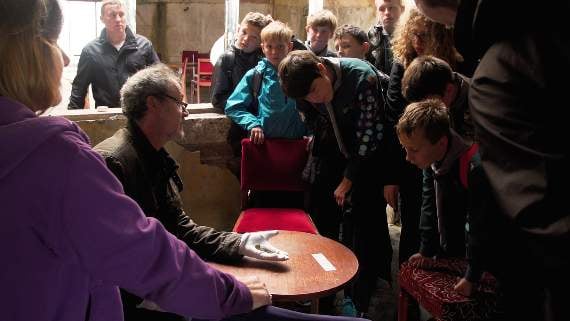
ST. Catherine’s Island would like to thank Mark Lewis (curator) and everyone at Tenby Museum and Art Gallery for escorting a very special visitor over to the Island a few weeks ago.
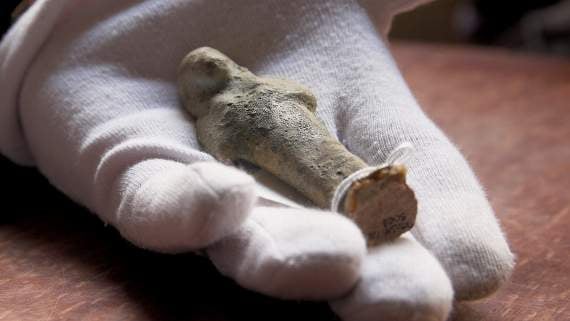
Mark was kind enough to take time out to bring a Ushabti figurine artifact that had been discovered when excavating the fort foundations back in 1867.
It is 150 years since the Ushabti figurine along with a number of other finds including two or three coins, one baring the date 1161 were found (as reported in the local press, December 29, 1867).
Tenby Museum and Art Gallery have dated The Ushabti Figurine to 1600 BC.
Ushabti figurines, which are also spelled ‘shabti,’ ‘uhabti,’ or ‘shawabty,’ are any of the small figurines that are made of wood, stone, or faience. They were often found in ancient Egyptian tombs in large numbers. Their height ranges from approximately four to 20 inches. The purpose of the Ushabti was to act as a magical substitute for the deceased in any menial tasks the gods might request in the afterlife. Ushabti translates to ‘answerer.’ The earliest figures, from about 1539-1075 BC, were often made to represent the tomb owner, looking like a mummy and in scripted with the owner’s name.
All the finds from the island, including Roman coins, were donated to the Tenby Museum and Art Gallery in the 19th century. The island caretaker/manager John Loring had recently requested to see the ushabti and was very grateful to see it actually returning to the island for a short visit as part of the island and staff familiarisation and ongoing training program.
A number of lucky visitors and the 32nd Swansea Scouts visiting at the time had a chance to view the artifact and ask Mark some engaging questions. After the visit, the Ushabti figurine was returned safely to The Tenby Museum and Art Gallery where it will remain in safe storage under controlled environmental conditions.



John Loring said: “Little is known on how the Ushabti figurine made its way to St. Catherine’s Island or even when, but the optimists amongst us could easily draw a tenuous link to St. Catherine of Alexandria who it is said the original chapel on the Island was named after. Very little credible information is available to confirm any such links, so we are left but to imagine!”
Comments
We've recently changed our login process. If you have an account for commenting, you will need to re-register on the login window.
This article has no comments yet. Be the first to leave a comment.