

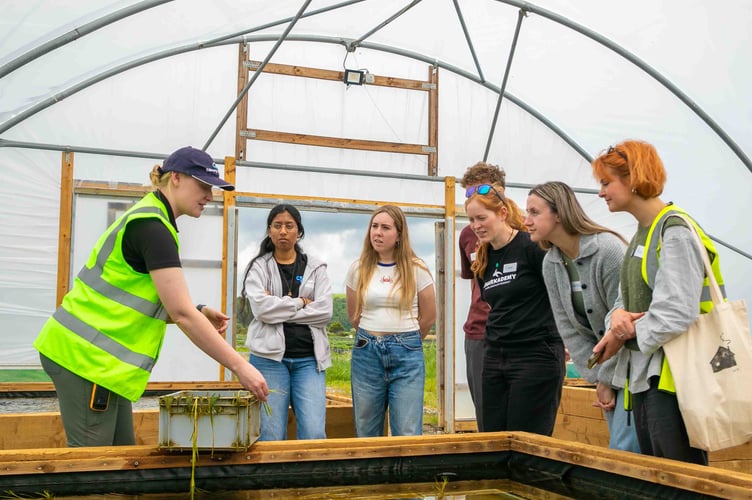
The Project Seagrass team hosted their annual Open Day at the Seagrass Nursery in Laugharne this month, an opportunity for members of the community to meet the team and learn more about the work taking place on site.
During the Open Day held on May 9, visitors had the opportunity to join Nursery Manager Emily Yates for a guided tour of the site.
This provided an insight into how the team are growing seagrass, their approach to storing seeds, and the research being undertaken into the best methods for seagrass cultivation.
Nursery manager Emily Yates said: “The Seagrass Nursery Open Days are among some of my favorite days of the year! They provide a fantastic opportunity to welcome the local community to the site to share what we’re doing in Laugharne, as well as the wider work of Project Seagrass.




“It is great to meet so many enthusiastic people interested in our work whether it’s a first time or a returning visitor. Each year the Open Days provide us with an opportunity to share how the Nursery is developing and evolving over time.”
During 2026, 3,300 seagrass transplants were sent out from the Project Seagrass Nursery to support restoration projects across the UK and over half a million seeds stored from in-field seagrass seed collections.
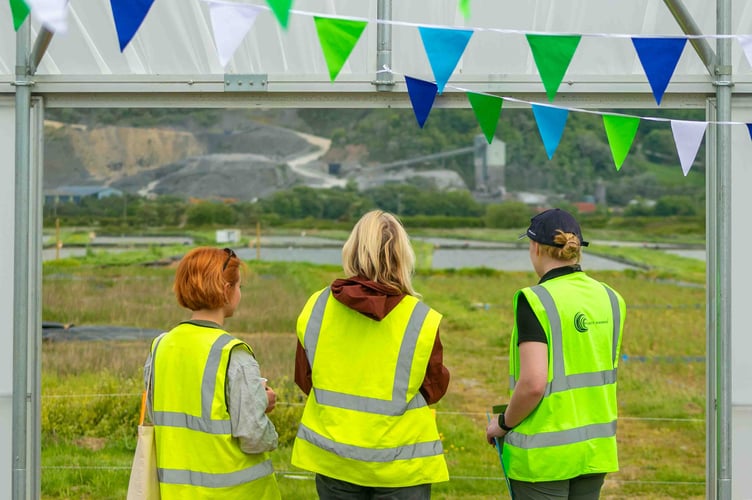
Significant developments are currently underway at the site, with plans for 12 additional ponds to be constructed within a second polytunnel over the summer. This will support the organisation’s ambitions to develop a reliable, scalable source of UK-grown seagrass plants to supply restoration projects.
A range of experimental work is currently taking place on the site. Visitors learned about the team’s recent restoration activity in the local area.
This has included planting trials across multiple Special Areas of Conservation in South and West Wales aimed at establishing the most effective methods of planting seagrass out into the field to support habitat recovery.
Katie Lee, Horticulture Supervisor at site partner Salix hosted a stand to discuss the work taking place on the wider site in Laugharne and their work to provide sustainable solutions to the challenges found in soil erosion control and river restoration projects.
.jpeg?width=752&height=500&crop=752:500)
Seagrass meadows are havens of biodiversity, providing habitat, food, and shelter to thousands of species of fish, invertebrates, mammals, reptiles, and birds.
Visitors had the opportunity to experience the abundance of life within a seagrass meadow through Project Seagrass’ new VR experience.
With music from the organisation’s patron Coldplay and footage from Welsh seagrass meadows, the experience provides an insight into the important role that seagrass plays for wildlife.
You can find out more about Project Seagrass’ work at: www.projectseagrass.org.
You can also support conservation efforts by becoming a SeagrassSpotter: www.seagrassspotter.org
Comments
We've recently changed our login process. If you have an account for commenting, you will need to re-register on the login window.
This article has no comments yet. Be the first to leave a comment.