
Eighty three people attended an open meeting to discuss Tenby's 2004 Pedestrianisation Experiment which was held at Church House, Tenby, last Thursday. Richard Walker, chairman of Tenby Walled Town Residents Association, who had promoted the meeting, welcomed all those present and especially the new faces that were not residents association members and had come to share their own particular experiences. Mr. Ian Westley, director of transport and environment for Pembrokeshire County Council, had kindly accepted the invitation to speak and answer questions.
DILEMMA SHARED
He first explained the background to the three experiments that had been held recently. He shared his dilemma with the meeting of how to find an acceptable solution for people who had diametrically opposed opinions on the 2004 experiment by giving examples of two letters he had received recently. One letter severely criticised him for allowing too many vehicles into the town during the pedestrianisation in 2004, and another from a business, who complained that the limited access was badly affecting their ability to provide the service his customers expected. The meeting was then thrown open to questions from the floor.
PARK AND RIDE SERVICE Views were expressed that the park and ride bus should finish later. Mr Westley said the trial early start had been curtailed, as there was poor uptake. It was reported that the 6 pm finish for the bus that serviced the Salterns and the overflow car park at the leisure centre had caught out users at busy times, particularly on South Parade. Taxis had reported carrying out rescue missions to car parks on more than one occasion. Better advertising of stop times was called for, on the buses as well as on the bus-stop sign itself. The Taxis Association also reported that real hardship had been caused to infirm people they had picked up from the train station and were staying within the walled town. The use of the serviceline had proved impractical on these occasions due to the time it took and the park and ride bus was of no use, as it didn't go near the place the passengers wanted to go.



UNFETTERED ACCESS
A resident who lives within the walled town expressed a view that residents who lived within the walled town should be allowed unfettered access to load and unload from their property. The concession of allowing those residents with off-street parking one return journey was welcomed and went some way towards solving most problems, but real hardship did still occur. Another view expressed by a resident who lived within the walled town without off-street parking also needed access to load and unload, and considered that while pedestrianisation was good for Tenby, residents were good for Tenby too. Residents should be looked upon as a valuable asset to the town, being the unpaid workers who help to keep Tenby a place where visitors wish to come. Generally the houses owned by full-time residents were kept in good order, with steps brushed and fresh floral displays, these being frequently photographed and appreciated by the tourists. They add to the social and living charm of the town. Houses with short-term lets generally did not put out flowers, do not clear the litter and are empty for a significant part of the year. It was acknowledged that Tenby needed holiday lets in the town, but if the delicate balance was lost between temporary visitors and the permanent residents, the whole community of Tenby would suffer and it would be difficult to regain. Around the harbour area and other parts of the town, many permanent residents had already moved out and it was asked that measures be taken to preserve and value the residents that are left and not look on them as an irritant.
RESIDENTS DRIVEN AWAY?
It was asked that the council continue to work with them to resolve their access problems and not drive them away with unreasonable restrictions. It was felt that the council should work to find a solution, which will satisfy both the needs of the local community and the needs of the pedestrian scheme. Looe, Salcombe and St. Ives were given as examples of places that had managed to have a living and breathing town and harbour with traffic restrictions. A resident of Bridge Street said that she was not renewing her lease and was moving to Saundersfoot, as she could not live with the restrictions for another year. Her landlord wanted the longer lets but could not get them with the restrictions on parking and loading for the property. A long-term resident of St. Mary's Street, said that following the experience of previous years, they had left Tenby for four weeks this summer due to the restrictions that were imposed on them. Being partially disabled, they felt cut-off as they were not on a bus route and taxis could not gain access. They also were concerned with the trend towards a loss of permanent residents and the ghost town effect that was felt. He was aware that St Mary's Street had now only 11 full-time residents in the street when there used to be 34.
NEW TREND
A new trend was noted with houses being sold to people who only inhabit them for two weeks in a year. It was commented that in the past, holiday houses were let by the week, but the trend now seemed to be for houses that are bought to be left empty for most of the year which appeared to have a major negative impact on the local economy and the feel of the town. Many agreed when a resident also stated that he felt that the first two to three weeks of the pedestrianisation scheme were a waste of time as the numbers of visitors did not justify the measures that were imposed and the hardship caused.
SCHOOL HOLIDAYS ONLY
A call was made to limit the pedestrianisation to the period of the state school holidays. Residents who lived within the walled town and had children in school stated they had experienced unnecessary problems as a result of extending pedestrianisation into the school term. Another resident of St. Mary's Street and has off-street parking thanked Mr. Westley for the concessions granted this year and said it had made a real difference to his life. Previous years had been intolerable with the restrictions it had imposed and he said that for him, he was able to live with the 2004 experiment, but sympathised with those who were still denied access and still suffered real hardship. It was also asked if the park and ride bus could have an official stop at the Health Centre? Examples were given of drivers refusing to stop and patients having to walk the distance from the official bus stop for no good reason.
TRAFFIC CONGESTION
Concern was shown with the traffic congestion that frequently occurred between 9 and 11 am, before the start of the pedestrianisation. It was stated that this was a result of the volume of traffic allowed into the town, lack of enforcement of parking regulations and a direct consequence of the pedestrianisation scheme that has been introduced. This did nothing to enhance the experience for many tourists and caused problems for locals having to complete their business in the only time allocated to them. The restriction on 7.5-ton vehicles after 10 am had been welcomed, but again was not always enforced. A resident had been issued with a medical pass for him and his wife to enter the town on two stated days in a one-hour time slot.When he asked for a more flexible permit to be used at other times as the medical condition was not sticking to a timetable, he was told it would be alright to use the permit. But he was always stopped at the barrier and told the permit was not valid and that he was abusing the system. It became very embarrassing and Mr. Westley agreed that this should not have occurred.
'ACCESS ONLY'
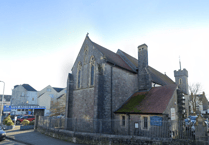
An 'access only' scheme was discussed and it was agreed it would have its merits at all times of the year, but only if it was policed effectively with suitable enforcement and clear signs. Members of St. Mary's Church also had experienced problems with the 2004 experiment and the 11 am start in particular. Although 10 minutes dispensation was given for the 10 am service to finish in practice it could not always be guaranteed either for the service to end on time or the warden to remember the dispensation agreed for parked vehicles outside. The sight of parishioners leaving during the last hymn to get out before the deadline was particularly distressing. Also the usual coffee and opportunity for the community to meet and chat at the end of the service had been lost. Again Mr. Westley agreed to help on this matter.
LACK OF ENFORCEMENT
The lack of enforcement of traffic regulations was sited as the main reason for the perceived traffic problems in Tenby. A safety issue was raised about the number of vehicles that habitually parked on yellow lines and were rarely booked. A consistent approach to enforcement was called for as only this would allow residents and visitors to adapt and work with the regulations and would reduce the number of vehicles entering the town. Traffic management with traffic restrictions should not just operate during the pedestrianisation hours, but all the time. The director of transportation and environment was also concerned with the high numbers of cautions that were given out and the number of offences that were recorded, but did not result in prosecution. In 2004, Mr. Westley said that fewer tickets were issued as the scheme went on which showed it was working and had stopped abuse. There was much discussion and agreement that the Telephone Serviceline whilst being alright in theory was not working in practice. There was a call for a need for the serviceline only to be necessary as a last resort, not used as the first resort at present for many people and that regulations be put in place to allow reasonable access.
CAFE CULTURE
It was felt that café culture had not developed into the experience that many had hoped for. In reality it had turned into beer culture - an extension of the pubs beer garden with an opportunity to drink beer and eat chips on the streets rather than drink wine or coffee in a relaxed continental atmosphere. There was a call for street peddlers to be controlled. It was felt that they did little to enhance the town and had set-up in the three aches and other historic locations and so spoiled the cultural heritage of the town and had become a nuisance. Defacing an ancient monument by tacking wares to it was never enforced by National Parks. It was stated that the amplification of music within the walls was covered by a byelaw introduced to limit the use of radios in the 1930s, but again this had not been acted upon. Consent streets within the walls approved by National Parks, had another year to run. Concern to licence hawkers was raised, especially the number of braiders and tattooists. The Sailing Club and harbour users felt that the concessions granted this year had worked well for the regattas and day to day usage, but there was capacity for further easing of the systems put in place to allow freer access. The lifeboat representative was concerned that despite assurances that lifeboat crews on emergency calls would be allowed vehicular access to the harbour area, in practice the crew had to be dropped off or leave their vehicles by W. H. Smith and run the rest of the way. This was unwarranted, delayed the launch and for the older members of the crew was a safety issue. Mr. Westley said he was unaware of the problem and would remedy this. A company with off-street parking within the walls that needed to use vehicles to carry out his business said that although the concession of one trip per vehicle was an improvement on previous years he was still experiencing problems trying to run his business within these restrictions. He called for unlimited access to his premises to enable to him to carry on trading and give the standard of service demanded by his customers. The problems of a long wait for drivers wanting to follow the park and ride bus along Crackwell Street were brought up. The perceived problem was due to the timing of breaks taken by the drivers and there was a call for a relief driver to cater for this. Concern over a tip box for drivers on the dashboard was raised. Mr. Westley said he had to stop this on two occasions before they were removed. Also some thought the bus exceeded the speed limit on journeys making it difficult for authorised vehicles to keep up. A café which operates in the Castle Beach area sited problems that his business was vulnerable to running out of stock on a busy day and restocking was out of the question. Frozen items could not be carried on the park and ride bus, and the telephone help line had proved to be of no help.
CHANGE IN TIMES
He called for delivery vehicles to be allowed access to restock when required. An alternative solution suggested to mitigate the problem was to reverting to a 12 noon start giving those making deliveries more flexibility. A 12 noon start was perceived by many present to be advantageous and many sited problems, that although present with any scheme, had become critical with the extra hour lost at the start and to a lesser extent with the 5 pm instead of a 4 pm finish. A builder with workshops within the walled town, echoed this and said that he had just about managed to live with a 12 to 4 pm experiment but the 11 to 5 was intolerable and the 2004 experiment had had a devastating effect on his business. Parking on the pavements outside the walls was the only solution he could resort to as loading bays were always full and parking restrictions were generally not enforced. It was noted that other trades and shops had written letters to the press and the council on the problems pedestrianisation had given them and the difficulties trying to service businesses and residents. An example of the problems that exist for service trades and the impractical solutions put forward by the service line was that of an aerial erector who was told to take his ladder on the Park and Ride bus. He tried it but was not surprised when refused by the driver. The problems that travelling representatives faced when showing stock to shops to sell gave a different aspect of the problems imposed by the scheme. A range of cloths was always bulky and the appointment was usually over two hours. The park and ride bus was of no use and visits to more than one client a day impractical. A resident reported that the restrictions placed by pedestrianisation meant that one job by a builder took four days working two hours a day that would have otherwise taken one day. A vision of Tenby that one person present gave was for a scheme, whether it be called a pedestrianisation or a restricted traffic scheme, that would allow all residents vehicular access to their homes at all times, and permits for service trades such as the milkman, window cleaner and builders to go about their trades unhindered and those businesses that needed to use their vehicles to be able to do so. An opinion was given that many of the vehicles that entered both the walled town and Tenby did so without knowing where they were going or. The reason for this was the poor standard of signs and a clear policy of directing and informing motorists which car parks to use and if they were full. It was noted other towns, Swansea in particular, had electronic signs showing where and the number of spaces available in the particular car parks. An opinion was given, that received widespread support that Tenby did not have a traffic problem only an enforcement problem for the traffic regulations that were in place. An example was given of a complete lack of enforcement in July and August both before and after the pedestrianised period with five wardens suddenly appearing at 11 am in Tudor Square when there were no vehicles present. It was also felt that the change to a 10 am ban on heavy vehicles was not strictly enforced and so it was difficult to assess its effectiveness. A final suggestion was made to reduce the load on the park and ride bus was to make an access tunnel under the railway line at the Salterns and so give direct access to those people on holiday that wanted to go to South Beach. Mr. Westley agreed to look at this proposal again.