
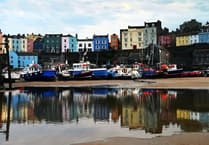
.jpeg?trim=0,0,3,0&width=752&height=564&crop=752:564)
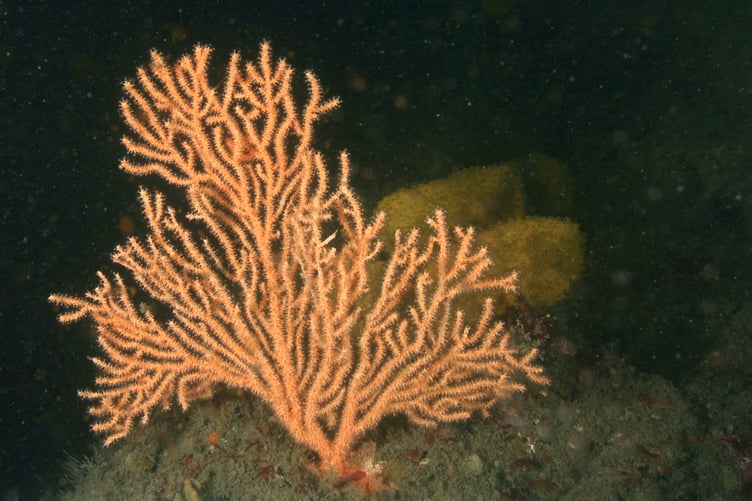
Four special pink sea fans have made a remarkable journey from London to Goodwick/Fishguard, giving people in Wales a new opportunity to see and learn about one of the UK’s most fragile and threatened marine species.
The initiative is part of Natur am Byth! - a national species recovery programme in Wales funded by the National Lottery Heritage Fund with support from Welsh Government and Natural Resources Wales.
Sea Trust aquarist Lloyd Nelmes said: “We’re delighted to welcome these pink sea fans to the Ocean Lab and look forward to watching them grow. They are beautiful, fragile animals that most people will never have the chance to see in the wild, so bringing them here gives visitors a rare window into Pembrokeshire’s underwater world.
.jpeg?trim=175,0,177,0&width=752&height=501&crop=752:501)
“We hope they will inspire people to value and protect the remarkable marine life found around our coast. Bringing these corals to the Ocean Lab is a powerful way to help people connect with life beneath the waves and understand why protecting places like Pembrokeshire’s seas is so important.”
Pink sea fans (Eunicella verrucosa) are slow-growing soft corals found in shallow rocky seas. In the UK, Pembrokeshire marks the northern edge of their range, making Welsh waters especially important for understanding how this species is coping with environmental change.
Young sea fans may grow by around 1cm a year, but growth slows dramatically as they age; larger fans can be several decades old, and some may be over a century old.
The species is under threat in the UK and is classified as Vulnerable on the International Union for Conservation of Nature Red List. Long-term diving surveys by Natural Resources Wales in the Skomer Marine Conservation Zone show a worrying decline: of 124 sea fans photographed annually, almost half have disappeared, with most losses recorded since 2015.
Possible pressures include rising sea temperatures, water quality, natural entanglement with shark eggs, marine litter such as plastics and angling line, predation by specialist sea slugs and sea snails, and damage from activities including fishing, angling, diving and anchoring.
The move has been made possible through collaboration between the Marine Conservation Society, the University of Exeter, the Horniman Museum in London, and Sea Trust’s Ocean Lab in Goodwick.



The pink sea fans were originally collected under licence from the south Devon coast by University of Exeter researchers and grown from fragments as part of PhD research by Kaila Wheatley Kornblum into the reproduction, larval dispersal and population connectivity of Eunicella verrucosa. Her work achieved a UK first by spawning and rearing pink sea fans in captivity.
The corals have been cared for in the Horniman Aquarium’s Project Coral lab, where staff shared specialist husbandry knowledge with Sea Trust aquarist Lloyd Nelmes to support the animals’ safe arrival and ongoing care.
The four pink sea fans were carefully packed in water, insulated for the six-hour journey, and transported by a Marine Conservation Society team before being delivered to the Ocean Lab.
Sue Burton from the Marine Conservation Society said: “The tag-team effort in bringing these animals to Wales was only possible because of the brilliant researchers that we’ve been working with. We’re proud to work with partners to showcase this remarkable species. Pink sea fans are extraordinary animals, but their decline shows how vulnerable our marine wildlife can be.”
Located close to the most northerly point in Wales where pink sea fans have been seen in the wild, the Ocean Lab will help bring this hidden part of Pembrokeshire’s marine life to thousands of visitors each year.
By giving people a close-up view of this delicate coral, the partners hope to raise awareness of the threats it faces and the importance of protecting Wales’ marine habitats.
Comments
We've recently changed our login process. If you have an account for commenting, you will need to re-register on the login window.
This article has no comments yet. Be the first to leave a comment.