
Emergency services, such as the RNLI continue to campaign this summer to reduce water-related deaths so that the people across Wales can enjoy the water safely.
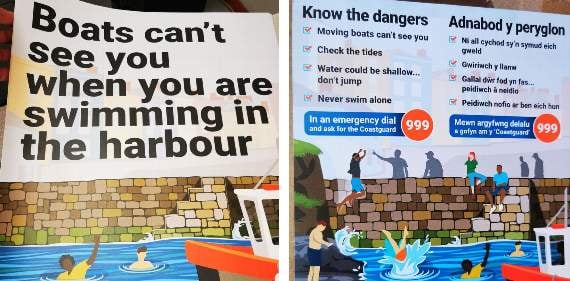
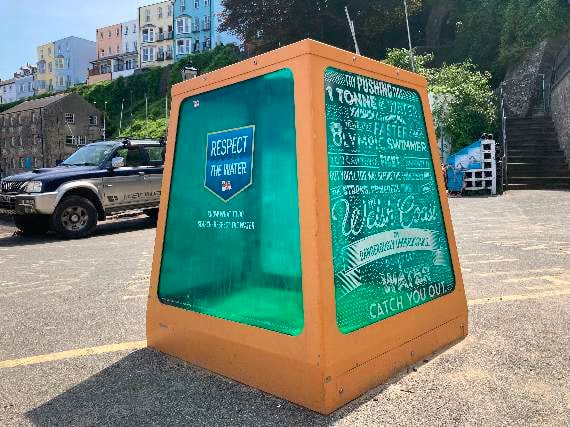
The ‘Tenby Water Safety’ group have shared images this week of a new campaign (with posters and stickers designed by Modern Print) that will be visible throughout the seaside town to spread the message of enjoying the sea safely this summer; highlighting the dangers of swimming and jumping in the harbour area.
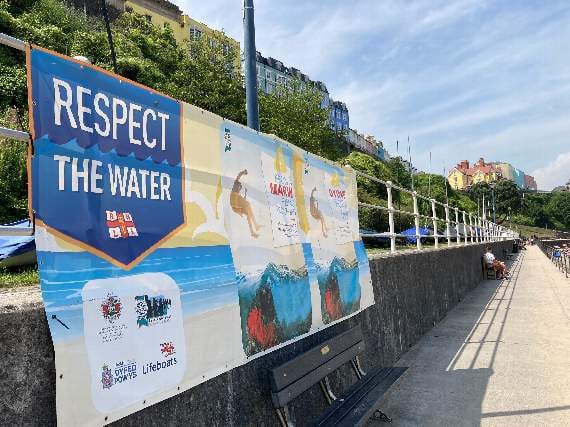
‘Respect The Water’ banners have also been placed around the beaches again this summer, with Dyfed-Powys Police; the Fire Sevice; Pembrokeshire County Council; and the RNLI?keen to get the message across.
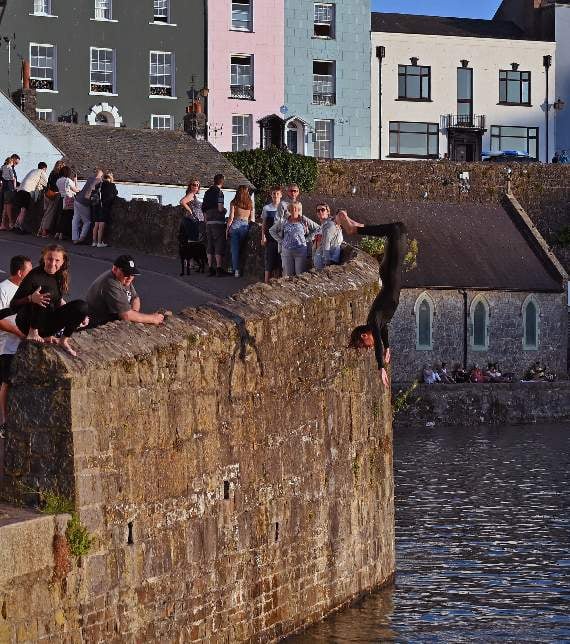
Earlier this year, after lockdown travel restrictions ended, police issued a warning to people not to take part in tombstoning or jumping from cliffs into the sea after an incident in Tenby back in April where a 23-year-old male was pulled out of the water at Castle Beach, unconscious and not breathing.
Fortunately, the man regained consciousness shortly after and was taken to hospital for assessment, via air ambulance.
Chris Cousens the RNLI Water Safety Lead for Wales and Chair of the Water Safety Wales Forum said this week: “On average 45 people in Wales die from accidental drowning each year.
“Not only is this completely heart-breaking for the families of victims but it also puts a serious toll on emergency responders, especially those who find themselves working on body recoveries rather than rescue operations.
“Safety advice from Welsh Water and other members of the Water Safety Wales Forum should be taken extremely seriously.
“If anyone is in trouble in cold water the RNLI encourages them to Float to Live - that means fight the urge to panic and relax and float on your back until the effects of cold water shock pass and you can self-rescue or call for help.
“If you see an emergency in the water, call 999 or 112 and ask for Coastguard at the coast and Fire and Rescue Service at inland waters like reservoirs, rivers or quarries.




“We are all working to reduce water-related deaths so that the people of Wales can enjoy water safely,” he added.
Roger Smith, RNLI area lifesaving manager and chair of the Pembrokeshire Water Safety Forum, said: “Whether it’s on the coast, or inland, we want people to be aware of the risks of jumping into water from height - known as ‘tombstoning’.
“The water is often shallower than it looks. Submerged items may not be visible and can cause serious life-changing injuries if you hit them.
“The water can be a lot colder than it looks, so the shock of cold water may also make it difficult to swim, and in the sea and rivers currents can sweep you away.
“It’s really important that people think about the possible dangers. We want people to be in a position to make better, more informed choices to keep themselves and others safe.
“The RNLI does not recommend‘‘tombstoning’. You should never allow others to pressure you into jumping.
“If you wish to jump into the water, first check for hazards such as rocks - especially hazards hidden below the surface. Water depths can change rapidly with the tide and waves: just because you saw somebody else jump in earlier doesn’t mean it is safe to do so now.
“Also, it is important to check for access, because it may be impossible to get out of the water. Coasteering or other activities with a registered company are a far safer alternative.”
The numbers of unauthorised swimmers in reservoirs increased drastically as the school holidays begin and temperatures soared last week, with a warning issued to coincide with World Drowning Prevention Day.
Amid the continuing spell of warm weather Welsh Water issued a reminder of the dangers of unauthorised swimming after having to ask 113 members of the public to leave the water in the space of just two days.
The warning comes after a number of people lost their lives to accidental drowning in open water in recent weeks.
As temperatures in Wales have soared, cases of unauthorised swimmers entering the water at reservoirs have leapt by almost 150 per cent.
In fact, the not-for-profit water company recorded almost 60 per cent of its total number of unauthorised swimmers this year in just one weekend.
Keen to enjoy the spell of warmer weather, individuals and families are taking to the water to swim, paddle, or use inflatables, often without full knowledge of the dangers below the surface.
Welsh Water’s Head of Visitor Attractions, Mark Davies said: “Despite looking peaceful from the surface, reservoirs are working bodies of water which conceal hidden machinery which can operate at any time.
“The water contains strong currents and freezing temperatures which can send swimmers into cold-water shock and overwhelm even the strongest swimmers.
“We know the public want to enjoy the water and we encourage people to visits our sites, but it is crucial that entering the water is only ever done at a safe, supervised session booked through one of our watersports centres.
“Unauthorised swimming remains banned. By entering the water in unsafe conditions, you are risking your life.”
The company has launched its ‘Beautiful but Deadly’ safety campaign urging people in Wales to educate themselves about the dangers hidden below the beautiful surface of some of Wales’ beauty spots.
Comments
We've recently changed our login process. If you have an account for commenting, you will need to re-register on the login window.
This article has no comments yet. Be the first to leave a comment.