

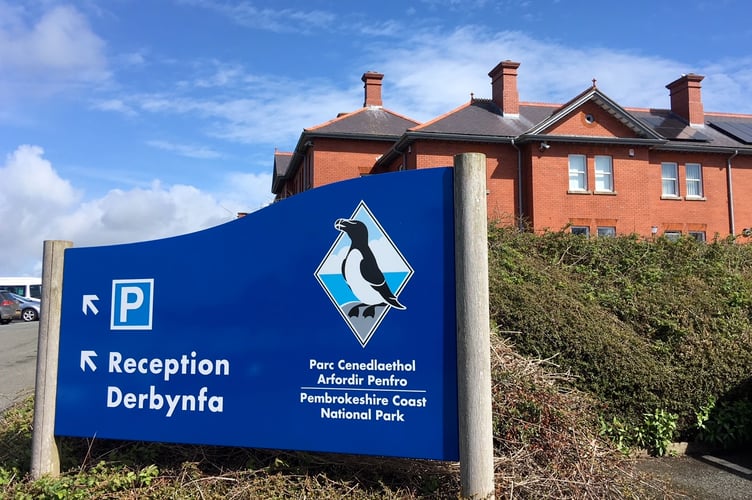
Plans to convert outbuildings at a Pembrokeshire farmstead, once the home of an Elizabethan historian, to houses have been given the go-ahead by the National Park.
In an application recommended for approval by the Pembrokeshire Coast National Park Authority, Daniel Start, through agent Kinver Kreations Ltd, sought permission for the conversion of traditional stone barns at Henllys, near Felindre Farchog, to eight open-market dwellings.
An officer report said: “This application for the conversion of a vernacular group of outbuildings of historical significance to residential units is recommended for approval. The scheme represents a sensitive proposal that respects the historical character and setting of the farm range.”
The application includes both a £70,950 contribution to affordable housing and an £8,000 contribution towards the upgrading of local public rights of way, with no local objections to the proposals received.

“Historically, Henllys Farm was the site of a post-medieval farmstead and in recent times the farm was open to the public as a visitor attraction offering farm tours, guided walks, Sunday dinners and afternoon tea,” the report says.
It adds that historical research by Heneb, The Trust for Welsh Archaeology, shows the buildings are recorded as forming part of a postmedieval farmstead once home of the Elizabethan historian George Owen.
“Recorded as originally two properties and thought to be of medieval origin, Henllys was sold to the Owen family in 1543. The upstanding structure of the Elizabethan mansion itself was demolished during the 19th century; however it was situated a little further to the S-E of the current farmstead.
“In addition to the main dwelling, Owen’s description of the manor complex in 1594 indicates an extensive range of buildings, structures and features, including a stable block, a substantial 13 bay barn, gardens and orchards.
“Subsequently there is a strong possibility that both buried features/deposits along with traces of earlier structures, still exist on site. Either as below ground deposits or as surviving structural evidence fossilised within the existing farm building range. The Authority also believe that the remainder of the site has significant archaeological potential.”
It went on to say: “The buildings are of high cultural value due to their important historical associations with the Owen family and their significance to Pembrokeshire’s history. Additionally, they represent a farmstead whose development reflects the trajectory of the family’s fortunes over time.”
It finished: “The proposed scheme is considered acceptable in how its responds to landscape setting, visual, aesthetic, historical, cultural and also physical characteristics of the site.
“The proposal preserves the historic character and traditional form of the vernacular range and its setting and in doing so will not create an unacceptably detrimental impact on the special qualities of the National Park.”
The application was approved with a long string of conditions.
If you want to keep abreast of what’s happening when it comes to statutory or planning notices, you can simply visit publicnoticesportal.uk and enter your post code.
The portal is a one-stop shop for all of the notices placed with local authorities across the UK.
The Labour Government said that it wants to limit the requirement for public notices when it comes to licensing and, previously, the Cardiff Bay administration backed down on a suggestion that you county council would not have to publish in print its plans for tax or services charge increases.
Comments
This article has no comments yet. Be the first to leave a comment.