

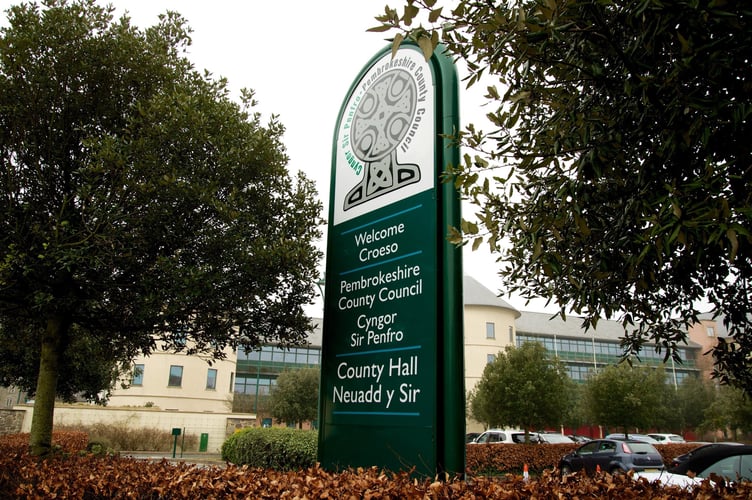
Pembrokeshire’s financial situation for 2026 is some £4m better off after a higher settlement from the Welsh Government, but the County Council still faces difficult decisions, councillors have heard.
While council tax makes up a proportion of the council’s annual revenue, a crucial area of funding is the Aggregate External Finance (AEF) rate from Welsh Government.
Pembrokeshire was to receive a 2.3 per cent increase on its settlement, a total of £244,318,000, amounting to an extra £5,493,000, placing it at joint 13th of the 22 local authorities in Wales.
Now, following a Welsh Government and Plaid Cymru agreement, local authorities including Pembrokeshire have received a better financial settlement.


Speaking at the December meeting of Pembrokeshire County Council, while presenting a report on the outline draft medium term financial plan (MTFP) 2026-27 to 2028-29, Cabinet member for finance Cllr Alistair Cameron said the recent rise in the financial settlement from the Welsh Government had decreased the expected funding gap for the next financial year for the county from £17.7m to £13.6m, but stressed: “There are still increased pressures we are going to have to face.”
His report for members outlined some of the pressures faced by the council in setting its budget for the next financial year.
“Based on the revised projected funding gap of £13.6m, it is evident that major budget savings as well as a significant Council Tax increase will be required in order to deliver a balanced budget for 2026-27. The lower the Band D Council Tax increase, the higher the budget savings requirement will be, with the consequential adverse impact on the provision of Council services and on the medium-term financial sustainability of the council.”
His report also noted the decision in October by members to cut the council tax premium on second homes from 150 to 125 per cent, which on its own has increased the funding gap for 2026-27 by £1.3m.
The report, listing the many pressures and potential savings, said that where possible, discretionary fees and charges income has been budgeted to increase by 3.8 per cent, with any increases above this level included as part of the budget savings options presented.
The report for members, prior to the revised settlement from Welsh Government, gave council tax increase options ranging from five to 10 per cent with 7.5 per cent highlighted as the most favoured option, the 7.5 rate equating to a £2.38 a week increase for the average Band D property; each one per cent increase or decrease in council tax being worth £0.908m for council coffers.
Leader of the Conservative group on the council Cllr Di Clements made a plea to the leader, calling on the council to use the extra money from Welsh Government to “contribute to making this authority financially sustainable in the long term,” adding: “We know it’s tough out there for our council tax-payers, let’s hopefully give them a break this year.”
Independent Group leader Cllr Huw Murphy said the better settlement was “a huge sigh of relief” for the council, adding: “The budget negotiations still won’t be any easier because we’ve had this pot of money; [but] we have to applaud Plaid Cymru on this.”
A long string of recommendations essentially noting the report, but including the fees and charges increase, was moved by Cllr Cameron, seconded by Leader Cllr Jon Harvey, backed by members by 46 votes to one, with three abstentions.
The actual setting of the budget and related council tax level along with any potential savings and cuts, will be decided at a later date, with a public consultation running to January 4, followed by committee scrutiny ahead of Cabinet considering a revised draft budget on February 9, before it is recommended to full council on February 20.
Comments
This article has no comments yet. Be the first to leave a comment.